


The Silent Draft: How the Kremlin Recruits a Million Soldiers in Plain Sight


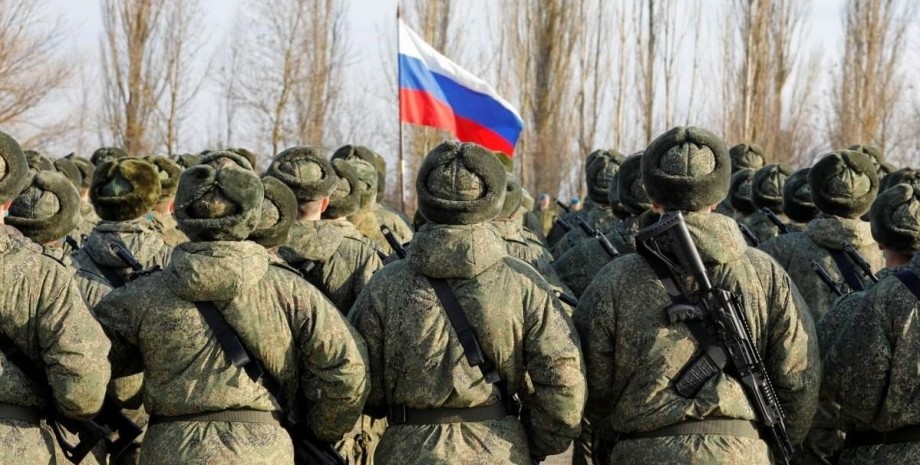
Фото: РИА Новости
As of January 1, 2026, Russia shifted to year-round conscription, replenishing its forces with what officials describe as “new blood.”
Under the new law, effective January 1, 2026, conscription will be conducted on a year-round basis, eliminating the traditional division between spring and autumn draft campaigns. The bill was introduced by Andrey Kartapolov, chairman of the State Duma Defence Committee, and his first deputy, Andrey Krasov.
Because Russian legislation is formally extended to occupied territories, the same policy threatens men of draft age in the occupied parts of the Kherson, Zaporizhzhia, Donetsk, and Luhansk regions, as well as in Crimea.
As a result, all men aged 18 to 30 living in the temporarily occupied territories (TOT) are now at risk. The occupying authorities are compiling a unified population registry to track addresses, monitor movements, and maintain detailed personal records.
In the occupied parts of the Luhansk and Donetsk regions—where metallurgical plants and coal mines were looted or effectively destroyed following Russia’s so-called “liberation”—Russian recruiters are exploiting the resulting economic collapse, leaving conscription as one of the few remaining means of survival.
People are effectively forced to sign contracts with the Russian Ministry of Defense to avoid economic dead ends.
An estimated 60 percent enlist not out of ideological conviction, but because employment opportunities have collapsed in the occupied territories. Industry has been shut down, legal sources of income have disappeared, and the occupation authorities have artificially created a single viable option: signing a contract with the Ministry of Defence. The working-age population is unable to realize its potential or support families and is left with no practical alternative.
At the same time, the Russian president signed a law allowing reservists to be assigned to the protection of strategic sites, including military and energy facilities
This followed an October decision by the State Duma to expand the scope of reservists’ duties. Together, these measures form a hybrid mobilization system that could replenish the Russian armed forces with at least one million personnel within a year.
On October 13 last year, a Russian government commission cleared a draft law proposed by the Ministry of Defence for submission to the State Duma.
The bill would permit personnel from Russia’s mobilization reserve to undertake so-called “defensive missions” during armed conflicts, counterterrorism operations, or troop deployments outside Russia.
Commenting on the decree signed by the Russian president, Kyrylo Budanov, head of Ukraine’s Defence Intelligence (HUR), said the government’s approval of legislation enabling the use of reservists for “defensive tasks” abroad signals the Kremlin’s preparation for covert mobilization.
This effectively enables a hidden partial mobilization. ”Everyone needs to understand this,” Budanov said. “The reason is obvious: excessive losses. They need to be offset somehow. The authorities keep increasing one-time payments, but steps like these show that financial incentives no longer meet their needs.”
The occupied territories will not be exempt. In the Luhansk region, Russian forces have already begun mobilizing the first reservists, officially claiming they are being deployed solely to protect infrastructure.
According to the occupation authorities, reservists may be assigned to so-called “special assemblies” tasked with guarding critical infrastructure—including energy facilities, transport hubs, and oil refineries—within their region. Their stated role is air defence against drones. As with other such deployments, the call-up of reservists will be authorized by a decree from the occupying forces’ General Staff.
The exact number of Ukrainians forcibly conscripted into the Russian army since the beginning of the full-scale invasion is impossible to determine. According to the Coordination Headquarters for the Treatment of Prisoners of War, the number stands at 46,327, while the Main Intelligence Directorate of the Ukrainian Ministry of Defence reports 60,000. The largest share—over 35,000—comes from Crimea, including more than 5,000 in Sevastopol and a similar number in the occupied part of Donetsk Oblast.
Thus, the Kremlin not only compensates for the catastrophic losses of the Russian army but also addresses demographic issues in the occupied territories, removing a potentially disloyal population.
Forced mobilization is another manifestation of Russia’s genocidal policy against Ukraine. Moreover, Russians are sending mobilized men to fight against Ukraine without any specialized military training.
“The first task Russia has set for itself is to ‘cleanse’ the temporarily occupied territories of the Ukrainian population,” stated Andrei Chernyak, a representative of Ukraine’s Defence Intelligence (HUR).
Russian citizens from economically disadvantaged regions and migrant workers are replacing the local population. These processes are rapidly slipping beyond any oversight. In the occupied Luhansk and Donetsk regions, the concept of “women’s villages” has emerged—settlements almost entirely devoid of men. The situation is critical even at essential infrastructure facilities, where there are no maintenance personnel. Coal mining companies are hiring women in large numbers to fill traditionally male roles, highlighting the severe shortage of skilled male workers.
The occupiers are currently attempting to recruit as many men of draft age as possible, conducting intensive military registration that begins with those still in school.
The main reason for the high casualties is the Ukrainian forces’ massive use of drones, which effectively destroys both armoured vehicles and personnel. Against this backdrop, the Ukrainian side has a proven strategy for countering the enemy’s superior manpower.
Let’s analyze the dynamics of Russian troop recruitment and losses. From January to November 2025, 336,000 personnel signed contracts with the Russian army. Meanwhile, British intelligence estimates Russian losses over the same period at 353,000. As a result, the death toll exceeds the recruitment capacity, despite monetary incentives ranging from 2 to 6 million rubles depending on the region. The program primarily targets economically depressed Russian areas.
The Russian Ministry of Defense expected to receive 30,000-50,000 new troops monthly without declaring mobilization.
However, the colossal losses preclude the possibility of compensation even from contract soldiers and special contingents—prisoners recruited by decree, which allows contracts to be concluded directly in the courtroom.
Also, follow “Pryamyi” on Facebook, Twitter, Telegram, and Instagram.
• The editorial board of prm.ua may not share the opinions expressed in the author’s material.
• The owner of the web page in the “THOUGHTS” section is the author of the publication.