


A year without the Assad regime: a possible repeat of the Syrian scenario in Ukraine


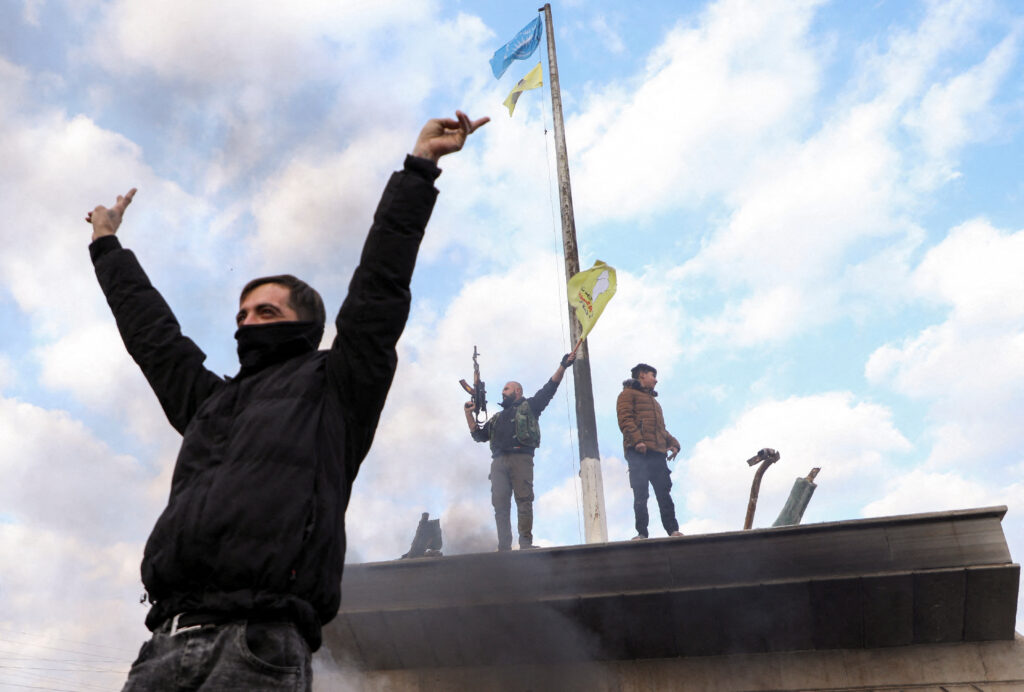
Фото: Reuters
On December 8, 2024, after an eight-day assault on the capital, Damascus was captured by forces of the al-Sharaa group Hayat Tahrir al-Sham, ending Assad’s 24-year rule. Assad himself fled to Russia.
It should be noted that it is Russia Ten years ago, Syria became a testing ground for war. And now, a decade later, the same strategy is at work in Ukraine.
In Syria, Russia was primarily interested in the oil fields of Deir ez-Zor. Partial control over the fields was given to private military companies like Wagner: they “guarded” the wells in exchange for a share of the oil profits. There was virtually no accounting, and trading was conducted through shady schemes. For the Kremlin, this is not only a financial resource but also an opportunity to influence the global oil market. The situation is similar in Ukraine. The main theater of military operations is the Donbas, where natural resources are concentrated, according to experts, worth $200-250 billion.
The economic logic of the occupiers is simple: the Kremlin views Russia’s spending on the war in Ukraine as an investment in future control over these resources.
In Syria, Moscow gained control of two key military facilities: the port of Tartus and the Khmeimim airbase, which became the main staging area for expanding Russia’s presence in the region. This allowed the Kremlin to influence Israel, pressure Turkey, and participate in shaping the rules of the game in the Middle East.
In Ukraine, the occupiers have a similar goal: control over Donbas creates a permanent zone of instability on NATO’s eastern flank. This is an element of blackmail: Moscow can either threaten escalation or use the war as a negotiating tool with the West.
In 2015-2016, Russian aircraft, along with Bashar al-Assad’s forces, employed a “scorched earth” tactic in Syria. This meant striking not military targets, but rather the entire territory then controlled by the opposition. Air forces dropped cluster munitions and high-explosive bombs on residential areas of Aleppo, destroying homes, markets, and schools.
Attacks on medical facilities have become systemic. Amnesty International and the UN Dozens of medical facilities were recorded destroyed. According to Syrian monitoring groups, during the 2016 siege of Aleppo, more than 70% of medical facilities were damaged or destroyed by such attacks.
A similar tactic of massive strikes is used by the occupiers. Ukrainian cities. Mariupol, Bakhmut, Avdiivka, and other towns were subjected to similar carpet bombing. High-rise buildings were reduced to rubble, and civilians perished in their homes.
Strikes on Ukrainian hospitals and schools: in Mariupol in March 2022, Russian aircraft destroyed a maternity hospital, killing pregnant women, children, and doctors.
In Syria, the Russians made extensive use of the “double strike” tactic. This consisted of launching a second strike after an initial strike, just as rescuers arrived on the scene. This killed not only civilians but also those trying to rescue them.
Similar tactics are used by the occupiers and In Ukraine, one high-profile example is the shelling of Pokrovsk in August 2023: after the first attack on the city center, police, the State Emergency Service, and medics arrived to help, but 40 minutes later a second missile struck, killing nine more people, including rescuers.
The goal is not so much military success as terrorizing the civilian population. In Syria, this Russian tactic resulted in a wave of migration: over 3 million Syrian refugees fled to Europe, triggering a political crisis.
In Ukraine, the tactics are repeating themselves: strikes on energy infrastructure, leaving cities without power and heat; massive drone and missile attacks on civilian areas; the destruction of entire cities – from Mariupol to Bakhmut.
The result: more than 6 million Ukrainians fled abroad, and several million more became internally displaced. This is not only a humanitarian tragedy but also a blow to the economy and demographics.
The Syrian scenario demonstrated that an uncontrolled flow of migrants could destabilize Europe. The Kremlin deliberately exaggerated the crisis, using it to pressure EU countries.
In Ukraine, the consequences are similar: mass emigration creates challenges for the Ukrainian budget, increases the social burden, and simultaneously influences the policies of neighboring countries hosting migrants.
In Syria, Russia temporarily became a key player in the negotiations and effectively preserved the Assad regime. This gave it the ability to dictate terms not only to the Syrian parties but also to its international partners.
In Ukraine, the Kremlin is pursuing the same goal: to block Kyiv’s integration into NATO and the EU, to create a “gray zone” between Russia and the West, and to impose its say in European security decisions.
Syria has become for Russia A kind of testing ground where he tested new methods of war. Ukraine is the next stage of this same strategy, only on a larger scale. It’s perfectly clear: the Kremlin’s tactics haven’t changed, only the scale of the tragedy.
Also follow “Pryamy” on Facebook , Twitter , Telegram and Instagram .
• Materials published in the “THOUGHTS” section reflect the opinion of the author of the publication, who bears full responsibility for the accuracy of the information.
• The editorial board of prm.ua may not share the opinions expressed in the author’s material.
• The owner of the web page in the “THOUGHTS” section is the author of the publication.