


Air defense, F-16, drones and deep strike: Khmara named the main priorities of the Ministry of Defense


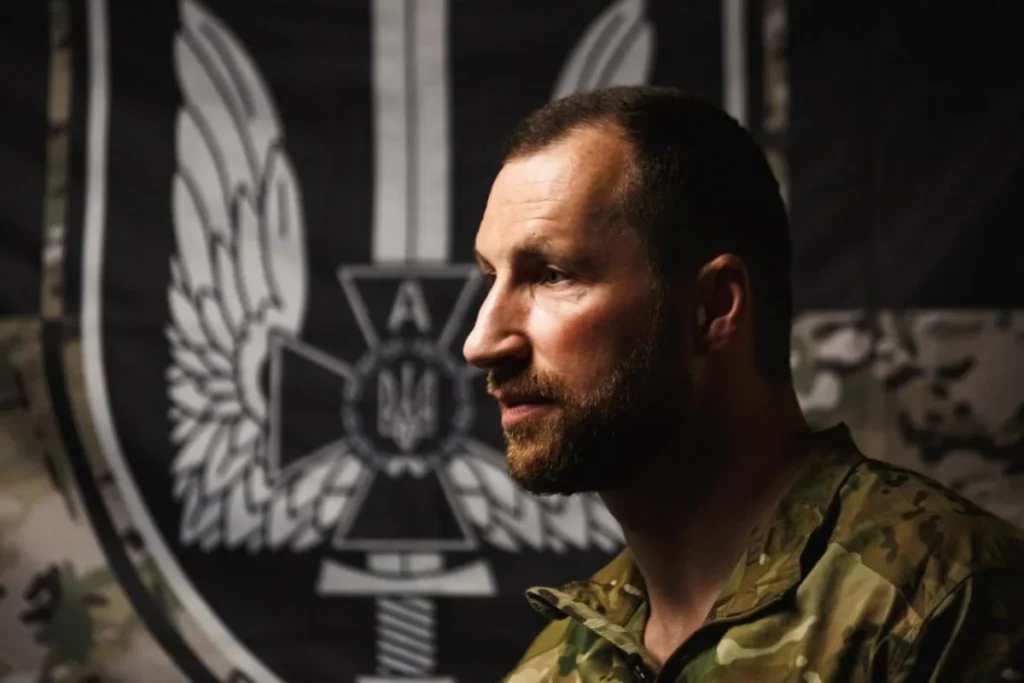
The Ministry of Defense has identified key areas for strengthening Ukraine’s defense. These include multi-level air defense, scaling up interceptor drones, strengthening aviation, countering ballistics and anti-aircraft missiles, developing middle strike and deep strike, and supporting the defense industry.
This was reported by ArmyInform following a conversation between Defense Minister Yevheniy Khmara and journalists.
Multi-level air defense
According to Khmara, Ukraine is building sky defense on a multi-level principle, since one type of means is not enough.
The system includes anti-aircraft missile systems, MANPADS, turrets, electronic warfare equipment, interceptor drones, “small air defense,” as well as aircraft – F-16 and Mirage.
The Ministry of Defense is simultaneously working on the procurement of interceptors, aviation ammunition, air defense systems, artillery systems, turrets, and electronic warfare equipment.
“We also know what solutions Russia is developing, this concerns jet drones with a speed of 800 km. We are also working on finding ways to counter the next generation of threats,” Khmara said.
Ukrainian manufacturers have already been tasked with offering appropriate prototypes and solutions.
Jet drones and interceptors
The Ministry of Defense claims that the effectiveness of countering conventional “Shaheeds” already exceeds 90%.
The main challenge remains jet drones, which require significantly higher intercept speeds.
One of the Ukrainian units has already deployed five Bars interceptors and destroyed five air targets. This experience is now being scaled up.
Ukraine also uses large-caliber turrets against jet UAVs. Their number in service is already measured in the hundreds.
F-16 and Mirage
Aviation remains one of the most effective means of combating jet drones.
The Ministry of Defense is working to increase the number of F-16s available for combat duty. One of the main bottlenecks is aircraft maintenance, so the relevant capabilities are being expanded.
In parallel, Mirage is used to counter air targets.
A separate task is to maintain ammunition supplies for both platforms for several months ahead.
Ballistics
The threat of ballistic strikes remains critical.
According to Khmara, the current and potential supply of missiles for anti-ballistic defense is insufficient.
The Ministry of Defense is trying not to wait for large long-term contracts, but rather to find available supplies from partners and accelerate their transfer to Ukraine.
“We need dozens and hundreds of missiles, not single deliveries,” the minister emphasized.
In parallel, Ukraine is using an asymmetric response – striking Russian launchers.
In September and early October, the Defense Forces struck eight Russian ballistic missiles : three were destroyed and five more were damaged.
According to Khmara, such strikes have already forced Russia to cancel or modify planned ballistic attacks.
Fighting drones before they even launch
Ukraine is working not only on UAVs in the air, but also on the entire chain of their use.
This includes production, components, factories, warehouses, training and launch sites, control points, and UAV crews.
Such strikes do not stop Russian attacks completely, but they reduce their effectiveness and force the Russian Federation to rebuild infrastructure and form new teams.
Counteraction to KABs
In the fight against guided bombs, the Ministry of Defense is not only relying on interception.
The priority is to destroy carrier aircraft and Russian airfield infrastructure.
Ukraine is also testing additional solutions that should allow it to more effectively counter aircraft using CABs.
Hunting for UAV crews
A separate direction should be the systematic destruction of Russian drone operators.
According to Khmara, this requires specialized second-echelon units that will focus on finding and destroying UAV crews and their ground infrastructure.
Ukraine already has examples where such work significantly reduced the capabilities of Russian aerial reconnaissance in certain areas of the front.
Middle strike
The Ministry of Defense is also working on scaling middle strike assets to the corps level.
Their main targets should be UAV crews, control points, logistics, air defense, radar, electronic warfare equipment, and other objects in operational depth.
Deep strike
Deep strike remains a separate priority.
According to Khmara, the task is not simply to determine the range of strikes, but to destroy the Russian Federation’s ability to continue the war.
The minister stated that systemic attacks on Russian oil refining have already had an economic effect.
According to him, since the beginning of the relevant operations , 51% of the Russian Federation’s oil refining capacity has been disabled .
Ukraine plans to further scale up deep strike and improve the ability of such assets to overcome echeloned Russian air defense.
Jet engines
A separate critical area for the Ukrainian defense industry is the production of jet engines.
They are needed for interceptors, middle strike, deep strike, and cruise missiles.
Ukraine’s need for one type of engine in 2027 may reach about 10 thousand units per month .
The Ministry of Defense notes that about two dozen manufacturers in three main categories of such engines already operate in Ukraine.
Reservation of defense industry workers
The Ministry of Defense advocates for maximum reservation of defense industry workers.
The logic is that if a company receives a government contract and the task of scaling up production of critical systems, it must have enough employees to perform the task.
At the same time, the system must take into account the real contribution of the enterprise to providing the Defense Forces.
Ukrainian weapons exports
Another direction is the creation of a system for exporting Ukrainian defense products.
The needs of the Defense Forces remain an absolute priority.
They plan to export only products that are produced in excess of the needs of the army and do not pose risks to its provision.
The Ministry of Defense is also working on a mechanism under which part of the revenues from such exports will be directed back to the needs of the Defense Forces.
Also follow “Pryamim” on Facebook , X , Telegram , and Instagram .