


Defending the Sky: The Challenges and Future of Ukraine’s Anti-Ballistic Shield


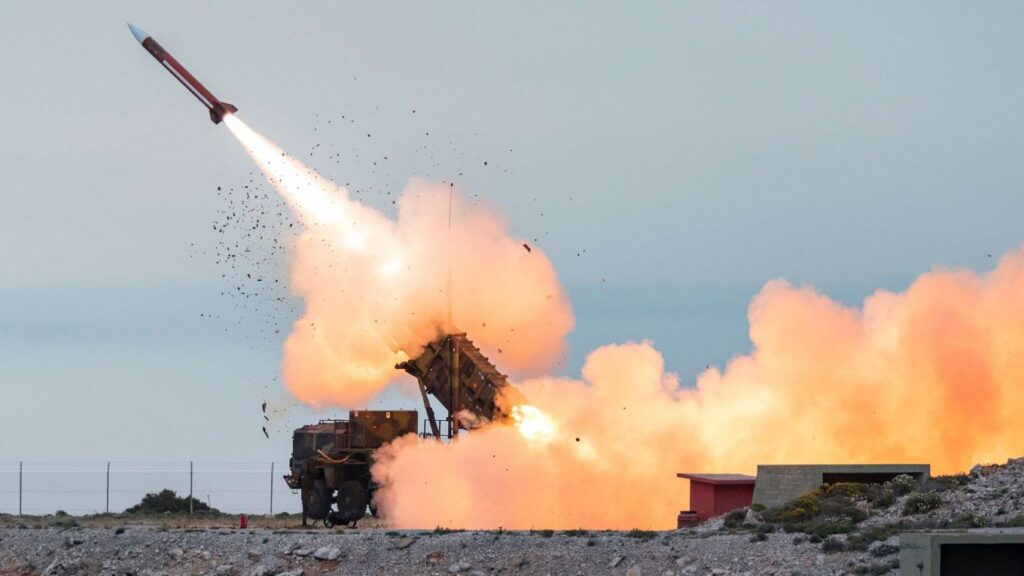
фото: Defense Express
As Russia continues to bombard Kyiv with waves of missiles and drones, Ukraine is facing a growing shortage of Patriot interceptors — one of the few systems capable of defeating ballistic threats. At the same time, Washington has approved the localization of air defense missile production in Poland, while Kyiv is still waiting for similar access, raising questions about the future of Ukraine’s anti-ballistic defenses.
The United States has granted Poland preliminary approval to localize the production of Patriot air defense missiles amid a global shortage of interceptors and escalating Russian missile attacks on Ukraine, according to Polish Deputy Defense Minister Cezary Tomczyk.
According to him, after lengthy negotiations, Washington agreed to the production of PAC-3 MSE missiles at Polish defense facilities. The US currently produces approximately 600 of these missiles per year.
Due to the critical shortage and high intensity of missile use worldwide (in particular, to protect Ukraine from ballistic attacks), the United States has launched a large-scale program to expand its defense-industrial complex.
Over the next seven years, annual production of PAC-3 MSE missiles is planned to more than triple to 2,000 units per year.
For 2026 alone, the US Army has budgeted $1.3 billion to purchase additional Patriot missiles, some of which are intended to support Ukraine and strengthen NATO’s eastern flank in Europe.
According to European Commissioner for Defense Andrius Kubilius, Ukraine consumes approximately 700 interceptor missiles during the four months of the winter season alone. This exceeds the entire annual production capacity of the American industry today, prompting the Pentagon to actively invest in expanding assembly lines.
Against this backdrop, Ukraine, which has repeatedly requested that the US grant licenses to produce Patriot missiles and the air defense systems themselves, has yet to receive such permission. According to the president, Ukraine proposed launching such production in collaboration with European partners, specifically Poland and Romania.
The problem is exacerbated by large-scale Russian attacks on Kyiv and other Ukrainian cities. Ukraine has previously reported a critical shortage of Patriot missiles during enemy ballistic attacks. According to the Ukrainian president, the Ukrainian military has occasionally reported running low on interceptors designed to repel new strikes.
Poland is becoming a key US partner in the production of air defense systems. In addition to Patriot missiles, Washington is also considering localizing the production of HIMARS ammunition and Hellfire missiles in Poland.
The US decision to allow Poland to localize production of Patriot interceptor missiles is directly related to the global shortage of air defense missiles and the increasing intensity of modern warfare. The current capabilities of the American military-industrial complex are limited—the US produces approximately 600 interceptor missiles per year, which is insufficient to meet the needs of all of Washington’s allies.
This is precisely why the United States has begun to relocate some production closer to potential conflict zones. Japan already produces Patriot missiles and is now planning to establish similar production facilities in Poland. This demonstrates that the United States is acutely aware of the scale of future threats to both its own military and its allies in Europe and the Pacific.
Localizing Patriot production in Europe will simplify logistics for Ukraine’s defense forces and partially reduce European countries’ dependence on direct purchases from the United States.
If intergovernmental agreements are reached, a certain portion of the missiles produced in Poland or Germany could be supplied to Ukraine. However, I would like to point out that this isn’t a quick fix; it’s a long-term commitment at least through the end of 2026.
I would like to point out that even European manufacturers are experiencing serious difficulties in producing anti-ballistic missiles.
As of 2022-2023, the production time for a single Aster 30 rocket was 40-42 months. Only in 2025-2026 was this period reduced, first to 30 months and subsequently to 18 months, with a planned rollout.
A severe shortage of nitrocellulose and special chemical components needed for rocket fuel remains a pan-European problem. Although the French company Eurenco has partially restored capacity, the crisis in the supply chain for raw materials (previously imported in large quantities from China) continues to slow production.
The main problem in the production of French anti-ballistic missiles (including the Aster 30 family, which forms the basis of the SAMP/T systems) is a slow, logistically complex production cycle that does not keep pace with the rapid depletion of stocks in real combat operations.
Despite Paris’s willingness to cooperate with Kyiv on missile defense, the slow pace of production directly limits the number of missiles France can transfer to the Ukrainian Armed Forces without compromising its own security.
I welcome the idea of Ukraine developing its own anti-ballistic missile program, but the key question remains: which air defense systems should these missiles be developed for? Ukraine does not yet have its own fully-fledged anti-ballistic missile system, and existing “hybrid” solutions based on modernized Soviet systems are incapable of effectively countering modern aeroballistic threats.
The US’s refusal to grant Ukraine the Patriot missile production license stems from several factors—economic, technological, and security. The United States effectively holds a monopoly on the production of modern anti-ballistic missiles, and Japan is the only country licensed to produce them.
American defense giants (primarily Lockheed Martin and Raytheon) view Patriot technology as an exclusive and highly profitable product. The emergence of a new, powerful manufacturer in Ukraine, capable of producing weapons more cheaply and in greater volume, poses risks to the long-term commercial interests of US companies in the global arms market.
At the same time, the US is concerned about the leakage of critical technologies to Russia. Patriot PAC-3 missiles have unique and top-secret homing heads. Transferring such documentation to a country where a full-scale war is being waged carries the risk of Russian intelligence intercepting the technology.
Furthermore, the American side is aware of the risk of physical destruction of potential production facilities in Ukraine due to constant Russian strikes. Any expanded production of anti-missile systems in Ukraine would immediately become a priority target for massive ballistic missile and drone strikes by Russia, calling into question the feasibility of building such plants under fire.
Furthermore, control over the interceptor missile supply chain allows the White House to maintain military and political control. Ukraine’s complete autonomy in producing effective anti-ballistic weapons will reduce its direct dependence on Washington’s decisions.
As a reminder, President Volodymyr Zelenskyy has set the goal of creating an anti-ballistic architecture jointly with European countries within a year. Thirteen countries and NATO representatives have already participated in negotiations on the production of anti-ballistic systems.
Also, follow “Pryamyi” on Facebook, X, Telegram, and Instagram.
• Materials published in the “THOUGHTS” section reflect the opinion of the author of the publication, who bears full responsibility for the accuracy of the information.
• The editorial board of prm.ua may not share the opinions expressed in the author’s material.
• The owner of the web page in the “THOUGHTS” section is the author of the publication.