


Belarus Forms Border Brigade Near Ukraine: What Does It Mean?


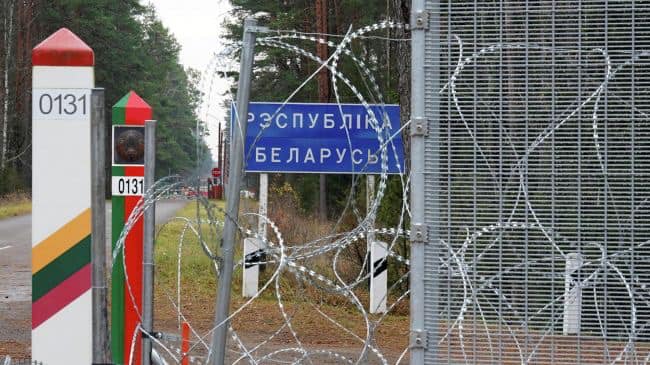
фото: facebook СЗРУ
Belarus has announced the creation of a new airborne assault brigade near the Ukrainian border, raising concerns over regional security. The 37th Separate Guards Air Assault Brigade will be stationed in the Gomel region and will operate under the command of the country’s Special Operations Forces.
Belarus has announced the formation of a new airborne assault brigade to be stationed in the Gomel region, near the Ukrainian border. This new unit, the 37th Separate Guards Air Assault Brigade, will fall under the command of the country’s Special Operations Forces.
The official rationale is the “strengthening of the southern direction.” According to the commander of the Belarusian Special Operations Forces, Major General Vadim Denisenko, the southern region is “the most unstable direction,” which directly influenced the decision to establish this new military structure.
“A decision was made to reinforce the southern axis. At present, it is the most, so to speak, tense direction, which keeps all of us on alert,” Denisenko stated.
Thus, Belarus is positioning a mobile strike force close to the Ukrainian border.
This move warrants a deeper analysis of the structure of the Belarusian Armed Forces and the potential implications for regional security.
The Armed Forces of the Republic of Belarus number approximately 55,000 personnel, including around 15,000 civilian staff. The Ground Forces comprise about 24,000 troops. Annual conscription adds roughly 50,000 individuals to the ranks, while the trained reserve stands at approximately 290,000. A quarter of all military personnel serve on a contractual basis.
The most capable combat units include:
-
The 38th Guards Separate Mobile Brigade (Brest)
-
The 103rd Guards Separate Mobile Brigade (Vitebsk)
-
The 5th Separate Special Purpose Brigade (Maryina Gorka)
These formations are the best equipped and most professionally trained within the Belarusian military, forming the core of the country’s defense capabilities.
However, the Belarusian Constitution prohibits the deployment of armed forces in military operations beyond national borders, limiting the direct use of these units in conflicts such as the war in Ukraine.
The creation of the new brigade does not appear to indicate an imminent military offensive against Ukraine. Rather, it likely serves multiple political and strategic purposes.
1. Regional Pressure and Signaling:
President Alexander Lukashenko may be leveraging this development as a tool of military-political signalling, particularly toward neighboring NATO member states such as Poland, Lithuania, Latvia, and Estonia — all of whom are regarded as unfriendly by Minsk. The establishment of new units allows Belarus to project strength and assert its strategic presence in the region.
2. Internal Control and Wagner Group Containment:
Up to 4,000 Wagner Group fighters are reportedly present in Belarus. The creation of a new, loyal brigade could be aimed at curbing the influence of these Russian mercenaries. During the 2020 Belarusian presidential elections, Wagner was seen as a potential destabilizing force. Consequently, the Belarusian leadership may consider the group a latent threat requiring containment.
3. Countering Russian Influence:
A third objective may involve Lukashenko’s effort to reinforce domestic control and reduce dependency on Russia. As Moscow continues to assert pressure over Minsk, forming new units under direct Belarusian command strengthens the president’s autonomy and negotiating power.
Belarus remains a significant geopolitical player at the intersection of Eastern and Western interests. Its actions are increasingly influenced by both China and the United States. The formation of a new brigade near the Ukrainian border must therefore be interpreted not as an isolated event but as part of a broader strategic posture shaped by evolving global alliances and power dynamics.
It is important to recall that at the height of tensions last year, joint military exercises between Belarus and China were conducted. These exercises effectively halted Russia’s attempts to destabilize the Belarusian-Ukrainian border and to once again use Belarusian territory as a launchpad for an invasion of Ukraine.
This signaled that China considers Belarus to be within its own sphere of military and political influence and, consequently, has no interest in destabilizing the situation within the country. Furthermore, China views Belarus as a strategic foothold for its political and economic expansion into Europe.
In this context, the United States is likely to become a second factor—if not fully eliminating, then at least significantly reducing—the likelihood of a Russian invasion from Belarusian territory.
Another noteworthy development occurred on 21 June, when Belarusian President Alexander Lukashenko met with Keith Kellogg, the special representative of former U.S. President Donald Trump for Ukraine. Kellogg is the highest-ranking U.S. official to visit Belarus in recent years. Previously, in 2020, then-Secretary of State Mike Pompeo visited the country, marking the highest-level U.S. visit to Belarus in two decades.
Following the meeting, the U.S. signaled its willingness to allow Lukashenko a degree of relief from Russian military and political pressure. This is a significant development, given that Russia had effectively considered Belarus as part of its geopolitical domain. Subsequently, certain economic measures were enacted, including the lifting of sectoral sanctions on Belarusian potash exports, which enabled Belarusian enterprises to re-enter global markets. Belarus, notably, holds a near-monopoly in this sector.
These developments suggest that both China and the United States are disinterested in the expansion of Russian military aggression via Belarus. This position is shared by NATO member states—Poland, Lithuania, Latvia, and Estonia.
Additionally, it is worth noting that following the Russian army’s withdrawal from the outskirts of Kyiv in the spring of 2022, Ukraine undertook substantial military and engineering measures to secure its northern border. These included the reinforcement of troop deployments, the construction of defensive fortifications, and the extensive mining of strategic areas to prevent the advance of enemy armored vehicles and personnel.
Regular tactical exercises are also conducted, focused on countering a potential invasion from Belarusian territory. In February of this year, Ukrainian President Volodymyr Zelenskyy stated that Russia intends to prepare 15 divisions, comprising between 100,000 and 150,000 troops, to strengthen the Belarusian front by 2025.
In April, President Zelenskyy warned that Russia might be preparing new actions in Belarus under the pretext of military exercises scheduled for the summer of 2025.
“Look at Belarus — this summer, Russia is preparing something there under the guise of military exercises. This is how its new offensives usually begin. But where will it be this time? I don’t know — Ukraine? Lithuania? Poland? But we must all be ready. All our institutions remain open to cooperation,” he stated.
Also, follow “Pryamyi” on Facebook, Twitter, Telegram, and Instagram.
• Materials published in the “THOUGHTS” section reflect the opinion of the author of the publication, who bears full responsibility for the accuracy of the information.
• The editors of prm.ua may not share the opinions expressed in the author’s material.
• The owner of the web page in the “THOUGHTS” section is the author of the publication.