


Burevestnik and the Bluff: How the Kremlin Fakes a NATO Showdown


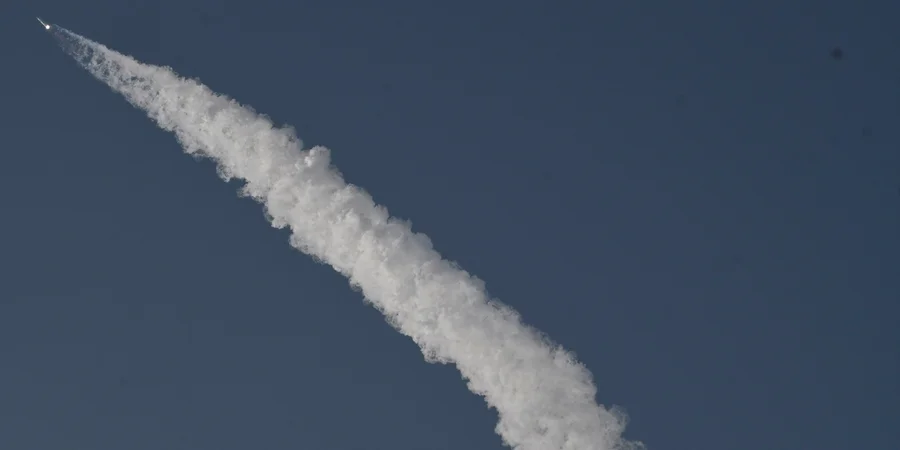
Ілюстративне фото Reuters/Gene Blevins
The Russian dictator met with General Staff Chief Valery Gerasimov to discuss the test of the Burevestnik cruise missile, powered by a nuclear reactor.
The Burevestnik cruise missile was tested on October 21. According to Russian sources, the missile traveled 14,000 kilometers and remained in the air for approximately 15 hours.
According to General Staff Chief Valery Gerasimov, the missile’s technical characteristics allow it to strike heavily protected targets with guaranteed accuracy at any distance.
The Russian dictator, in turn, claimed that the tests “once again confirmed the reliability of Russia’s nuclear shield” and described the Burevestnik as “a unique product that no one else in the world possesses.”
It should be noted that Russia’s current military activity is aimed at pressuring both the West and Ukraine. The Kremlin is pursuing a “multi-vector game” to impose its own plan for ending the war — one that demands territorial concessions from Kyiv.
Recently, the American Institute for the Study of War (ISW) reported that Russia has allegedly entered the “first phase of preparation” for a high-level war. However, the ISW also clarified that there is no evidence that the Kremlin has actually decided to initiate this phase or set a timeline. This contradictory reasoning — simultaneously talking about preparations for escalation and then immediately denying it — reflects superficial and inconsistent analysis.
Russia is feigning readiness for war with NATO to raise the stakes while signaling its “willingness to negotiate.” A clear example of this is the visit of Dmitriev, head of the Russian Direct Investment Fund, to the United States for “official” negotiations. Notably, this visit took place just days after US President Donald Trump announced new sanctions against Russia.
Dmitriev’s visit also comes amid statements from senior White House officials expressing disappointment with the Kremlin’s refusal to end the war in Ukraine and follows the cancellation of a planned summit between the American president and the Russian dictator.
It is therefore no coincidence that the Kremlin’s special envoy claimed that Russia, the United States, and Ukraine are allegedly “close” to a diplomatic solution that could end the Russian-Ukrainian war.
In essence, Russia is playing on two fronts. On one hand, the Kremlin is demonstrating military activity: testing the Burevestnik cruise missile, conducting maneuvers in international waters near NATO borders, violating the airspace of Poland, Estonia, Germany, and Denmark with unidentified drones, and sabotaging defense industry facilities in the UK. And yet, Putin talks about supposed “readiness for peace.”
This demonstration has a clear goal: to pressure the West into accepting Russia’s terms for ending the war in Ukraine. The Kremlin signals that if no agreement is reached, “we are prepared for escalation,” but if an agreement is reached, “we are prepared to remove the nuclear threat from the agenda.”
It is also worth recalling the escalation near the Swedish island of Gotland, which is of strategic importance for the Baltic Sea shipping. Russia has repeatedly hinted at the possibility of its capture.
At the same time, military infrastructure is being deployed along the Finnish border, with new bases being built in the Petrozavodsk area and brigades formed in the northern direction.
Thus, Russia is applying complex pressure on NATO countries, attempting to achieve multiple objectives simultaneously.
However, this is not preparation for an actual offensive — it is a show of force. Russia seeks to demonstrate its supposed ability to confront NATO if the Alliance expands military-technical cooperation with Ukraine.
It is worth noting that this strategy is not new. As far back as 2015, then-NATO Supreme Allied Commander Europe Ben Hodges warned of the potential for a “Suwałki Gap” — the same type of pressure strategy Russia is demonstrating today.
Therefore, talk of a so-called “phase zero” of war is simply misguided. Russia is not preparing for a major war; it is merely demonstrating readiness for a domestic audience — to show that “they’re still worth something.” These public statements and demonstrative actions have little to no impact on external audiences.
NATO Secretary General Mark Rutte’s comments that the Russian dictator is running out of resources to continue the war against Ukraine were particularly revealing. According to Rutte, the situation on the front demonstrates the ineffectiveness of Russia’s strategy and the enormous cost it is paying for minimal territorial gains.
Speaking in Slovenia, Rutte also commented wryly on the state of the Russian fleet, noting that “Moscow’s naval presence in the Mediterranean has come to nothing.”
These statements reflect NATO’s understanding of the challenges it faces, as well as the West’s grasp of the potential risks should hostilities intensify or spill over into European territory.
Earlier, US President Donald Trump called on Vladimir Putin to end the war and refrain from nuclear demonstrations, emphasizing that the United States possesses significant military advantages, including a powerful navy and nuclear submarines.
Also, follow “Pryamyi” on Facebook, Twitter, Telegram, and Instagram.
• Materials published in the “THOUGHTS” section reflect the opinion of the author of the publication, who bears full responsibility for the accuracy of the information.
• The editorial board of prm.ua may not share the opinions expressed in the author’s material.
• The owner of the web page in the “THOUGHTS” section is the author of the publication.