


Draconian prison terms are being prepared for Aidar fighters in the Russian Federation: what is known about the case


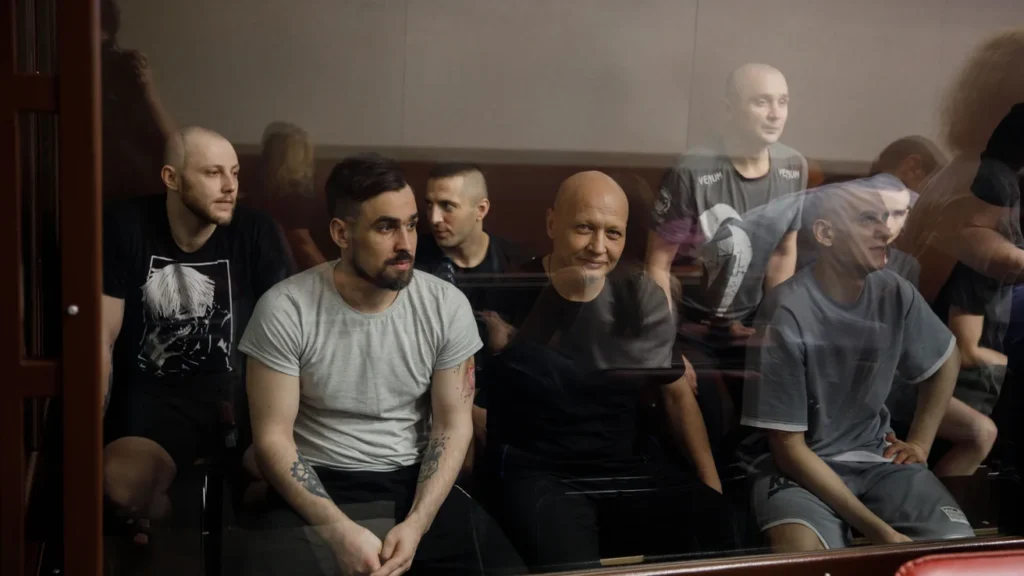
Полонені бійці батальйону "Айдар" у суді в Ростові-на-Дону. Фото - "Медиазона"
A fabricated trial against Ukrainian prisoners of war from the “Aidar” battalion is underway in Rostov-on-Don. The prosecutor’s office is demanding that the defenders of Ukraine be sentenced to 20 to 24 years in a maximum-security colony on trumped-up charges of alleged “terrorism.”
This is reported by ” Mediazona “.
According to her, the case involves 18 Ukrainian servicemen, who are accused of “forcible seizure of power” and “training for the purpose of carrying out terrorist activities.” The prosecution insists that the prisoners spend the first six years in prison, after which they should be transferred to a maximum-security colony.
The publication notes that during this trial, Ukrainian soldiers claimed to have been tortured by the Russians while they were in the temporarily occupied Donetsk region.
Meanwhile, the Aidar battalion called the verdicts falsified.
“We call on the Ukrainian and international community not to believe these verdicts and not to recognize them as legitimate. We ask you to spread information, put pressure on international human rights institutions, provide legal and humanitarian support – everything that can help speed up the boys’ return home,” the appeal says.
In addition, it became known that the Southern District Military Court in Rostov has already sentenced one of the prisoners of war. 31-year-old Roman Ataman, a senior sergeant of the Azov regiment, captured in Mariupol, was sentenced to 20 years in strict regime prison. He was found guilty of “participation in a terrorist community” and “training for the purpose of committing terrorist activities.”
The cases of Ataman and 17 other Ukrainian servicemen went to court in September 2025.
As a reminder, on June 14, a trial of 22 Ukrainian servicemen belonging to “Azov” took place in Rostov-on-Don, Russia. Of the 24 fighters who were charged with the so-called “charges,” two were exchanged for Russian prisoners of war, and eight more were women who worked as cooks in the “Azov” regiment.
Also follow “Pryamim” on Facebook , Twitter , Telegram and Instagram.