


FSB patrols cemeteries, and photos of graves get 14 years: how the Kremlin hides the cost of war


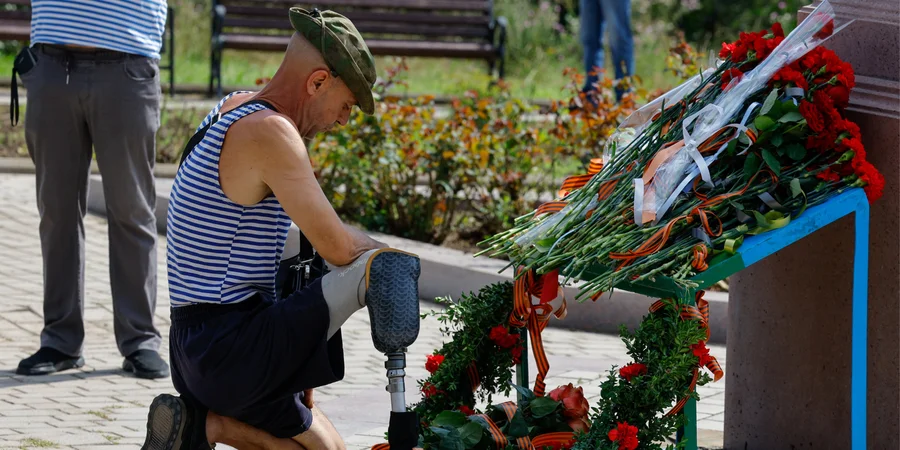
Фото: Reuters
In Russia, photographing the graves of soldiers who died in the war against Ukraine has become a reason for criminal prosecution. For such photos, a man from Yaroslavl received 14 years in a colony, and FSB officers began to be on duty at Russian cemeteries. The authorities are trying to limit the collection of information about the dead, but independent journalists continue to establish their names and count the losses of the Russian army.
Thisis stated in the Politico article.
According to the publication, in September a Russian court sentenced a middle-aged man to 14 years in prison for photographing the tombstones of Russian soldiers. The case was heard behind closed doors and the charges involved treason for allegedly collaborating with Ukrainian intelligence services.
Russian security forces are increasingly monitoring those who collect information about military graves. Since the summer, dozens of people have been arrested in various regions of the country. Authorities also warn that taking photographs of graves can lead to life imprisonment.
The reason for this attention is the data on the losses of the Russian army, which contradict the official information from Moscow. Independent “Mediazona” together with the Russian service of the BBC created the Russia 200 database, which contains the names of almost 283 thousand dead soldiers. The researchers use local media reports and posts on social networks, but admit that they are not able to identify each deceased.
Other estimates are much higher. According to the British Foreign Office and Dutch intelligence, Russia has lost more than half a million soldiers. Ukrainian President Volodymyr Zelenskyy in July of this year claimed 700,000 Russian deaths.
Jan Behrends, an expert at the Leibniz Center for Contemporary History, believes that the increase in the number of military burials creates a separate problem for the Kremlin, as it is much more difficult to hide them than official statistics.
“The increasing number of graves is probably what really worries the authorities, because it reminds them of the failure of Putin’s war. Too many people have died,” he noted.
The Soviet authorities used a similar practice of concealing casualties during the war in Afghanistan. At that time, relatives of the dead were forbidden to mark on tombstones where their loved ones died. Some families were even forced to hold funerals at night to avoid attracting attention.
“There was no way to mark the grave in a way that would make it clear that the person died in the war. Some relatives were even forced to hold the funeral at night so as not to attract attention,” said Jeff Jones, a history professor at the University of North Carolina.
Later, the phrase “died heroically in the line of international duty” was allowed on graves, but direct mention of Afghanistan was still prohibited.
After the full-scale invasion began, Moscow initially openly announced the death toll. In September 2022, then-Defense Minister Sergei Shoigu reported 5,937 Russian military casualties. After that, official figures were virtually non-existent.
In April 2024, a Kremlin spokesman said that information on casualties was a “state secret” and its publication was solely within the purview of the Defense Ministry. That same year, Rosstat closed access to excess mortality statistics, which had previously been published since the 1990s.
Also follow “Pryamim” on Facebook , X , Telegram , and Instagram.