


Germany to allocate 11.6 billion euros in military aid to Ukraine in 2027


Germany has earmarked 11.6 billion euros in its 2027 budget for military aid to Ukraine. Since the beginning of the full-scale war, Berlin has increased the annual volume of support nearly sixfold, and the total amount of aid over five years has exceeded 34 billion euros.
This is reported by the Ministry of Defense of Ukraine.
In 2022, Germany provided Ukraine with 2 billion euros in military aid, in 2023 with 5.4 billion euros, and in 2024 with 7.1 billion euros. In 2025, the volume of support rose to 8.3 billion euros, and in 2026 it reached 11.55 billion euros.
In total, from 2022 to 2026, Berlin provided Ukraine with 34.35 billion euros in military aid. This year, Germany accounted for approximately one-third of all support from Ukraine’s international partners.
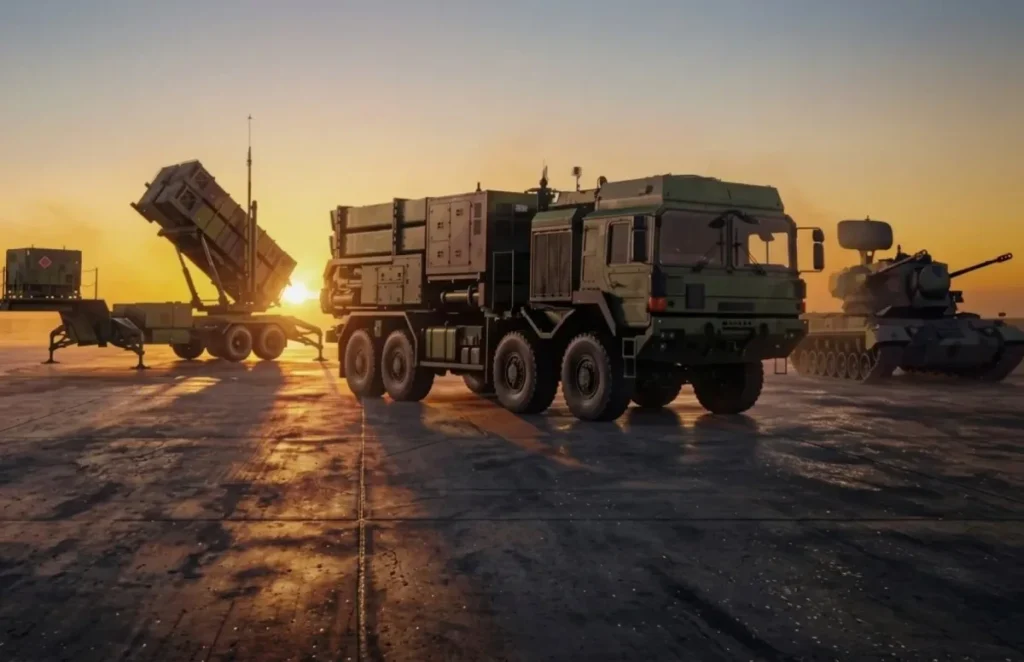
Strengthening air defense remains one of the main areas of cooperation. Germany supplies Ukraine with IRIS-T and Patriot systems and their missiles, assists with the repair of PAC-2 missiles, participates in the procurement of PAC-3, and maintains Gepard anti-aircraft guns.
In addition, Berlin has directed 20 million euros to the Interceptor Drone Development Fund to combat jet-powered Shahed drones.
Ukraine and Germany are gradually expanding cooperation from supplying weaponry to joint production. As part of the Build with Ukraine initiative, the countries have launched five defense projects in Germany with a total value of 1.1 billion euros.
With funding from the German government, joint ventures will produce Linza, Anubis, and Seth-X drones, Bars jet-powered drones, as well as TerMIT and Rys PRO ground robotic systems.
The countries have also agreed to share battlefield data, jointly develop countermeasures against ballistic missiles, and involve Ukrainian instructors in the training of German military personnel.
Furthermore, Kyiv and Berlin are working on the Drone Deal initiative, which provides for the sale of Ukrainian drones to allies, the transfer of technologies, and the creation of joint ventures.
In 2027, the priorities for defense cooperation will continue to include drone production, strengthening Ukrainian air defense, and developing the Freyja anti-ballistic program.
The parties are also considering the possibility of producing Leopard tanks, Marder infantry fighting vehicles, Gepard anti-aircraft guns, PzH 2000 self-propelled artillery systems, and other military equipment in Ukraine.
At the same time, Germany participates in eight capability coalitions to support the Defense Forces of Ukraine, three of which it leads. In particular, this concerns the Integrated Air and Missile Defense Coalition.