


Hundreds of workers are being laid off at an aircraft engine factory in Russia: what happened to the Superjet?


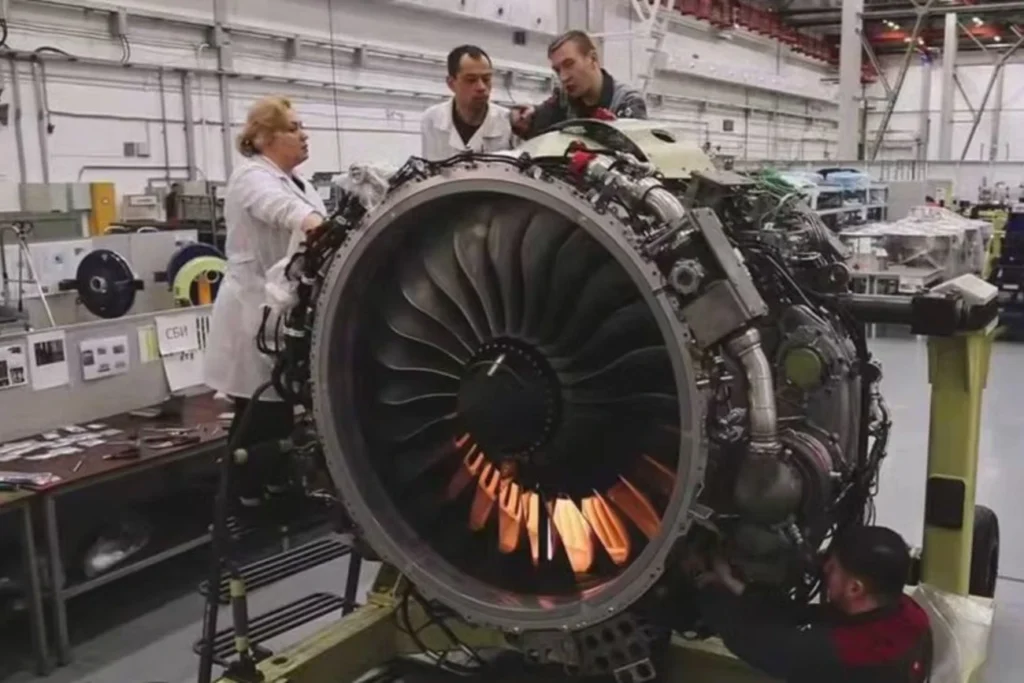
Фото: Ростех
The Russian aircraft engine plant “UDK-Saturn” in the city of Rybinsk, Yaroslavl region, is preparing to lay off hundreds of employees. 680 people are under threat of dismissal. This enterprise was supposed to ensure the serial production of engines for the Russian “Superjet” aircraft, but the launch of the project has faced many years of delays.
This is reported by The Moscow Times. The publication refers to a preliminary list of layoffs that the plant management submitted to the regional employment service.
Not all employees on the list will necessarily lose their jobs. Some may be offered other positions, some may be transferred to other departments, and some employees may resign of their own free will. However, economist Vyacheslav Shiryayev suggests that the actual number of those laid off may be higher.
The UED-Saturn plant is part of the Rostec state corporation and is one of the largest aircraft engine manufacturers in Russia. It produces engines for transport and military aviation, in particular for the Il-76 aircraft, Su-35 and Su-57 fighters, as well as components for cruise missiles. A separate area of the enterprise’s work is the PD-8 engine, which Russia planned to use on the import-substituted version of the Superjet-100 aircraft.
However, plans for PD-8 production have been steadily scaled back. Initially, the Russian aviation development program called for the production of over 300 of these engines for 142 aircraft, with deliveries starting in 2024. Due to delays in testing and certification, these figures were revised: only six engines were planned for 2025, and 44 for 2026. The main production volumes were postponed to 2027–2030.
The Russian manufacturer received the certificate for the PD-8 only in June 2026. In August, the corporation announced the transfer of the first two serial engines. At the same time, at the time of certification, the engine’s service life was about 80 flight cycles. Now Russia expects to bring its characteristics to the required level and begin serial deliveries of aircraft no earlier than the end of 2027.
An additional problem is the cost of re-equipping the already-produced Superjets. Replacing the imported SaM146 engines with Russian PD-8s is estimated to cost about 2.3 billion rubles per aircraft. This is about the same as the entire aircraft previously cost.
The cuts at UEC-Saturn come amid problems with the launch of Russian aircraft engine production. Economist Shiryayev also points out that, instead of expanding production, related enterprises and suppliers are also cutting staff. In his opinion, this may indicate much deeper difficulties in the industry than delays with a single engine.
Also follow “Pryamim” on Facebook , X , Telegram , and Instagram.