


Drone Hype or Drone Bluff? Russia’s Production Claims Under Scrutiny


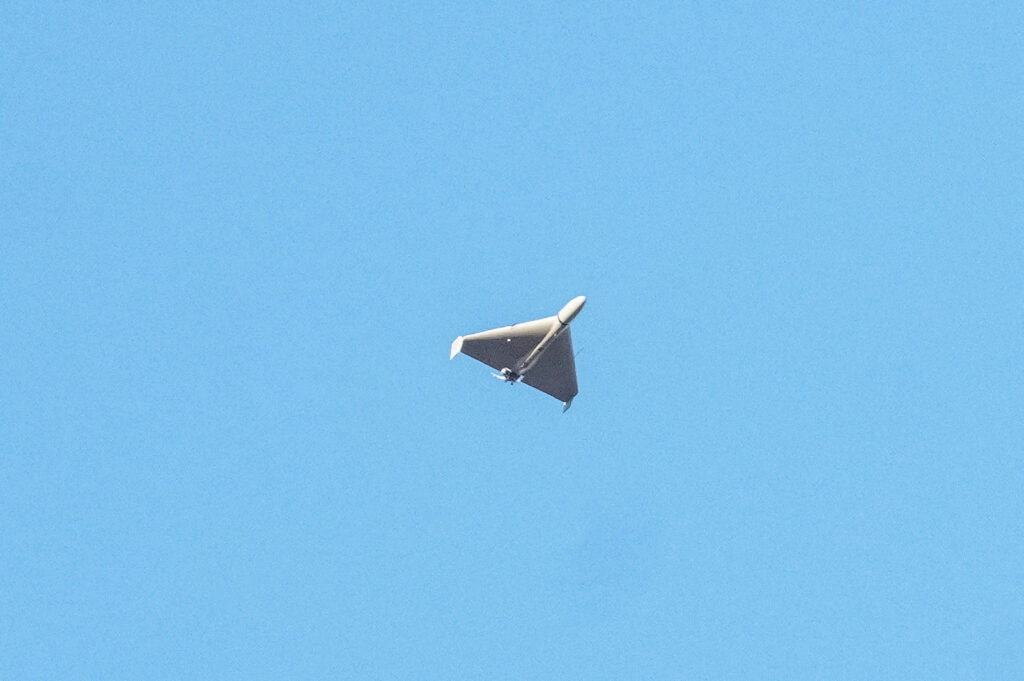
Фото: Reuters
Russia is preparing for a new escalation in Ukraine — according to Bundeswehr General Christian Freiding, Moscow may soon unleash swarms of up to 2,000 Shahed drones in a single coordinated assault. The goal: overwhelm Ukrainian defenses and shift the war’s momentum through mass destruction.
Russia is significantly expanding its drone production capacity, and the anticipated increase in attacks will present a serious challenge to Ukraine’s air defense system, according to Major General Christian Freiding, head of the Situation Center for Ukraine at the German Ministry of Defense.
Earlier, Ukrainian commentators described reports about Russia’s preparations to scale up drone assaults as speculative. Claims circulated that the Russian military would soon be capable of launching up to a thousand attack drones per night.
In response, the Ukrainian Air Force urged caution in interpreting such projections. Yuriy Ihnat, spokesperson for the Air Force, emphasized that such narratives are often amplified by Russian propaganda outlets.
“I urge analysts — both domestic and international — to treat these figures with care. As we’ve seen, Russian state media, including the Zvezda TV channel, quickly circulated a pre-produced video in support of this narrative,” Ihnat said.
Despite publicized claims of scaling up drone operations to unprecedented levels, there is currently no evidence of such mass production or deployment capacity.
The recent timeline of Russian drone activity reveals a mixed picture:
-
On the night of July 21, Russia conducted a large-scale airstrike on Ukraine, deploying kamikaze drones, cruise and ballistic missiles, including Kinzhal-type aeroballistic missiles. According to the Ukrainian Air Force, the assault included at least 200 Shaped-type attack drones and an additional 200 decoys.
-
On the night of July 22, Russian forces launched another wave consisting of 42 Shahed drones along with various types of drone imitators.
On July 23, Russian occupiers launched 71 Shaped-type attack UAVs and various types of drone imitators into Ukraine.
The available statistics indicate that Russia does not possess the capability to launch one thousand attack drones at once against Ukraine. The actual number of drones that Russian forces can use simultaneously is significantly lower than the exaggerated figures circulated in public statements.
Russia’s total annual capacity for producing attack drones is estimated at up to 50,000 units. However, following successful strikes by Ukrainian defense forces on military-industrial production facilities, this capacity has been reduced.
Claims that Russia can deploy thousands of drones per day should be viewed as components of an information and psychological operation (IPSO) aimed at sowing fear and undermining confidence. A breakdown of Russia’s actual drone production infrastructure helps to clarify the real picture.
One key facility is the Yelabuga plant, built in 2023 with the involvement of Iranian specialists. Initially designed to produce 6,000 drones per year, the plant expanded its capacity to approximately 10,000 units annually after modernization. A similar production site, the Kupol plant in Izhevsk, manufactures up to 15,000 drones per year.
Another facility, the Kronstadt enterprise in Dubna (Moscow region), was targeted in a Ukrainian drone attack and has since ceased operations.
Thus, the maximum total capacity of the Russian Federation to produce loitering munitions such as the Geran-2 and Geran-3 is currently around 45,000 to 50,000 units per year, which rules out the possibility of deploying thousands of drones in a single day.
According to the Main Intelligence Directorate of the Ministry of Defense of Ukraine, the Russian Federation currently produces up to 170 attack drones and drone imitators per day. By the end of the year, this figure could increase to approximately 190 units daily.
Ukrainian drones operated by the Defense Forces and military intelligence have repeatedly targeted not only facilities directly involved in drone production but also those responsible for manufacturing key components. For example, a plant in Saransk, the only facility in Russia that produces fiber-optic cable for drones, was struck. Ukrainian forces also conducted successful strikes on a factory in Yelets that produced batteries for UAVs, and a facility in Tambov, also involved in drone manufacturing.
On June 24, a strike on the Atlant-Aero plant in Taganrog, Rostov Region, disrupted the production of combat drone components and control systems.
Following Israeli and U.S. airstrikes on drone production facilities in Iran, the flow of both components and completed systems to Russia has significantly decreased. As a result, the Russian Federation is reportedly exploring the option of transferring drone production to North Korea, seeking to scale up manufacturing by exploiting low labor costs. This scenario also suggests the possibility of supplying drones to the North Korean armed forces.
It is important to emphasize that there is nothing fundamentally new in the Russian tactics related to drone strikes against Ukrainian territory. The attacks remain predictable in methodology, with periodic escalation depending on logistical capacity and political context.
The Russians continue to replicate tactics first employed by Ukraine. One such method is the so-called “swarm” attack, in which dozens of drones approach a target simultaneously to penetrate a layered air defense system. During the most recent large-scale assault, up to 50 Shahed drones targeted Kyiv. The underlying idea is that even if the majority are intercepted, a few — five or more—will break through and strike their intended targets.
For context: even the world’s most advanced multi-layered air defense system, such as Israel’s — which integrates Israeli, American, British, and Jordanian technologies — intercepted only approximately 84% of incoming threats during its last test under combat conditions. This means 16% of projectiles still reached their targets, despite the presence of systems like the Iron Dome and advanced Western interceptors.
It is essential to recognize that no air defense system in the world guarantees 100% protection. As such, criticism of Ukrainian air defense over occasional missile or UAV hits is unfounded and ignores global military realities.
Geographical shifts in Russian attacks also warrant attention. The number of strikes in western regions of Ukraine — including Ivano-Frankivsk, Lviv, Ternopil, Rivne, and Lutsk — is increasing. These attacks serve a psychological purpose: to signal to the civilian population that no part of the country is safe, thereby aiming to undermine morale and erode public confidence.
It is worth recalling that on September 30, 2022, the Kremlin’s leader referenced World War II tactics in a speech, accusing Allied forces of opening a “Pandora’s box” with the carpet-bombing of German cities like Cologne and Dresden. This narrative appears to inform current Russian military propaganda and their justification for terror tactics targeting civilians.
Back in 2022, the Russian dictator openly signaled to Western governments his readiness to target civilians and destroy civilian infrastructure in Ukrainian cities. His remarks were not rhetorical — they laid the groundwork for what has since become a sustained campaign of terror.
The escalation in the frequency and scale of drone and missile attacks should also be viewed as a deliberate tool of military and political coercion. Russia is attempting to pressure Ukraine’s leadership by intensifying strikes on the civilian population — a textbook tactic of hybrid warfare aimed at weakening internal stability.
Therefore, claims about Russia’s “plans” to dramatically increase drone production must be approached critically. Such statements are often strategic tools, designed either to exert psychological pressure on Ukraine and its allies or to serve as internal propaganda. Not all of these plans will materialize, especially in light of the continued success of Ukrainian preemptive strikes on key components of Russia’s defense industry.
Also, follow” Pryamyi ” on Facebook, Twitter, Telegram, and Instagram.