


Telethon Knockout: How State TV Is Beating Real Journalism to Death


колаж: рух "Чесно"
Source: Author’s Facebook page
The majority of Ukrainians now get their news from social media — a battlefield where truth bleeds daily. Telegram channels, anonymous posts, and amateur YouTube pundits have replaced editors and ethics. What we call “information” today is often just noise — loud, addictive, and dangerously unaccountable.
Ultimately, we can improve content and try to protect people from anonymous sources and foreign propaganda. But that won’t change the nature of social media — it will remain what it is. We’ve found ourselves in a reality where professional journalism has become an appendix to social networks rather than a genuine companion to people’s daily information lives.
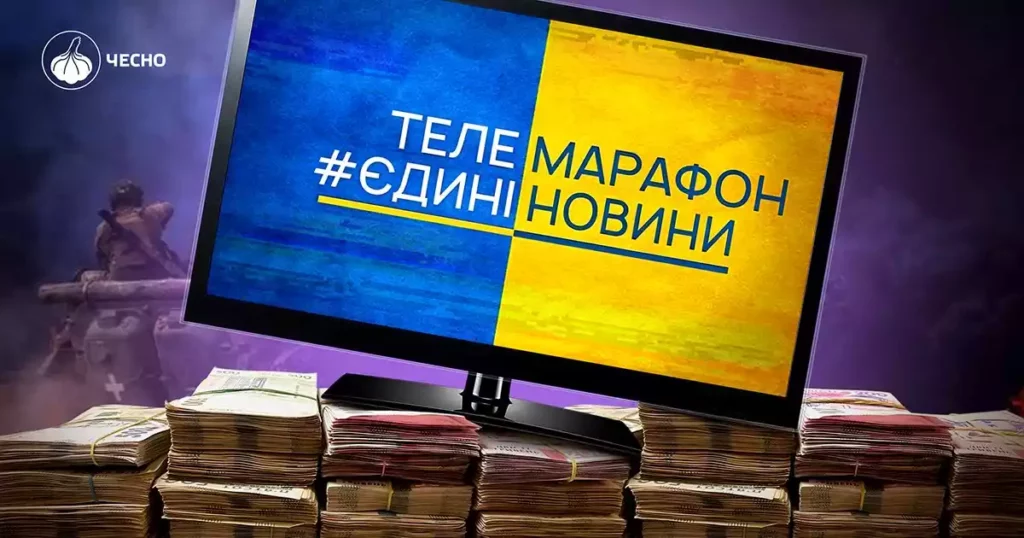
Thanks to the tireless efforts of our “brilliant” leadership, the role of television in Ukraine was dismantled far earlier than anywhere else in Europe. The creation of the so-called “Marathon” became nothing less than a knockout blow to Ukrainian television. And believe me, we won’t recover from it. Even when life returns to something resembling normal, and the idea of merging oligarch-owned TV channels into a single propaganda stream finally collapses, public trust in television will never return.
This administration has buried Ukrainian television — that’s not a forecast, it’s a fact. In many European countries, things haven’t gone this far: television there still holds some authority, though it, too, is in decline — only more slowly, because they are not at war.
Of course, these technological shifts are a serious challenge for the future of Ukrainian media. The question is: how do we respond to this challenge, especially when it’s layered on top of wartime realities?
First, we have to face it, not deny it. If we cling to the illusion that traditional media will somehow survive while social networks dominate — and while yesterday’s viewers and readers drift toward people who have never practiced journalism — we will simply vanish. To remain relevant, we must fight the competitor on their own field.
And when it comes to shaping public opinion, we must remember: Russian propaganda must also be fought on its own battlefield. Moscow built Russia Today for Europe and the West — and for Ukraine, it has built a swarm of anonymous Telegram channels (and some not so anonymous) that mimic the tone and style of pro-presidential Ukrainian media. The resemblance — both in form and substance — is no coincidence.
People frequently get lost and can’t tell where the Office is — or where President Putin’s administration begins. That, too, is a challenge, I understand. Each publication and each journalist with their own name and credibility must fight for a place in this information space. If we stay present and continue to defend the right to quality information, we gradually push out those who promote misinformation — let’s put it that way.
When I look at the top ten Ukrainian YouTube bloggers, I often think: on the one hand, of course, I’m not supposed to be a blogger. I’m a publicist, a serious professional; I shouldn’t have to compete with people who barely know what they’re talking about and just say whatever pleases the crowd. But on the other hand, I realize — if I’m not there, that entire list will be filled with even more amateurs, populists, and speculators.
Also, follow “Pryamyi” on Facebook, Twitter, Telegram, and Instagram.
• Materials published in the “OPINIONS” section reflect the opinion of the author of the publication, who bears full responsibility for the accuracy of the information.
• The editorial staff of prm.ua may not share the opinions expressed in the author’s material.
• The owner of the webpage in the “OPINIONS” section is the author of the publication.