


Kremlin’s Secret Weapon: Why Mass Mobilization Remains a Taboo


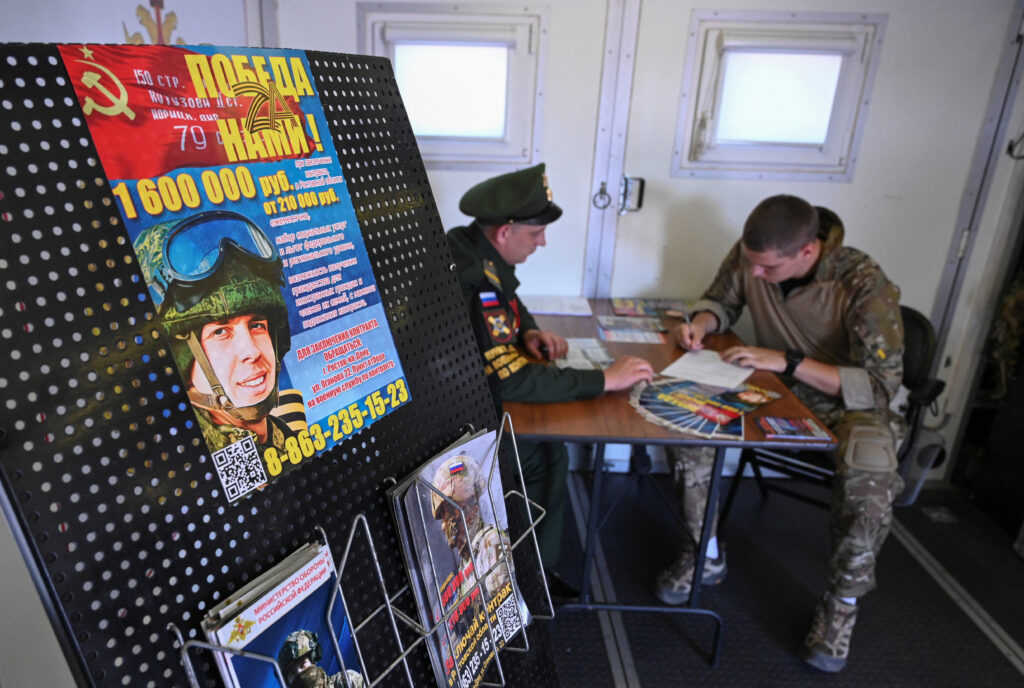
Фото: Reuters
Source: Author’s Facebook page
No mass call-ups yet: the Kremlin relies on a mercenary army to keep protests at bay, while Russian society remains indifferent to mounting casualties.
This situation is strikingly different from World War II or the war in Afghanistan. In those cases, people were drafted into the army without consent. Afterwards, their families would ask the authorities: Why were they sent there?
During World War II, such questions were fewer because people were defending their homeland, which was under attack. Still, there was outrage over the number of casualties and the way generals conducted the war without regard for soldiers’ lives. In Afghanistan, it was different. Conscripts—18- and 19-year-old boys—were sent to fight against their will. The greatest fear was being drafted and sent to Afghanistan. Students were forced to leave their studies and serve immediately upon reaching conscription age. Completing your first or second year at university could land you straight in the army, disrupting the course of many young lives.
Now everything is different. People are offered money to sign contracts. This approach is also a lesson from the Chechen wars. Back then, sending conscripts to Chechnya caused mass discontent. Protests erupted, and the Committee of Soldiers’ Mothers gained influence. As a result, it was decided that conscripts were prohibited from serving in active combat zones. In the current war, conscripts are involved only in isolated cases, such as in the Belgorod region, which is not formally a combat zone.
When someone is paid and voluntarily signs a contract, their death is perceived differently. It appears as a risky but well-paid job: some took the money and died, while others refused and survived. It is seen as a choice, not coercion. As they say, Putin didn’t force anyone—he offered the money.
But if one day the money runs out and open mobilization is announced, public reaction could be entirely different. Then the war will become truly “Russian.” People will start asking questions: Four years of war—what for? Why haven’t we won? If mobilization is now necessary, perhaps it’s time to question the generals and politicians why they didn’t act sooner.
This is exactly what is now being said – between the lines – in the questions that Donald Trump is addressing to Putin: “If you can’t solve this in four years, then what are you even trying to achieve?”
If mass mobilization begins, these questions will inevitably surface. The authorities will scramble for ways to avoid appearing as a regime that is calling people up again. After all, the experiences of Afghanistan, Chechnya, and the partial mobilization in 2022 taught them valuable lessons. Back then, men didn’t even hesitate—they fled to the borders immediately. The long queues to leave the country sent a powerful signal, especially amid a weak economy, when the state cannot afford to lose even a single active worker.
Also, follow “Pryamyi” on Facebook, Twitter, Telegram, and Instagram.
• Materials published in the “OPINIONS” section reflect the opinion of the author of the publication, who bears full responsibility for the accuracy of the information.
• The editorial staff of prm.ua may not share the opinions expressed in the author’s material.
• The owner of the webpage in the “OPINIONS” section is the author of the publication.