


NASA could not save the Swift space telescope: it falls to Earth


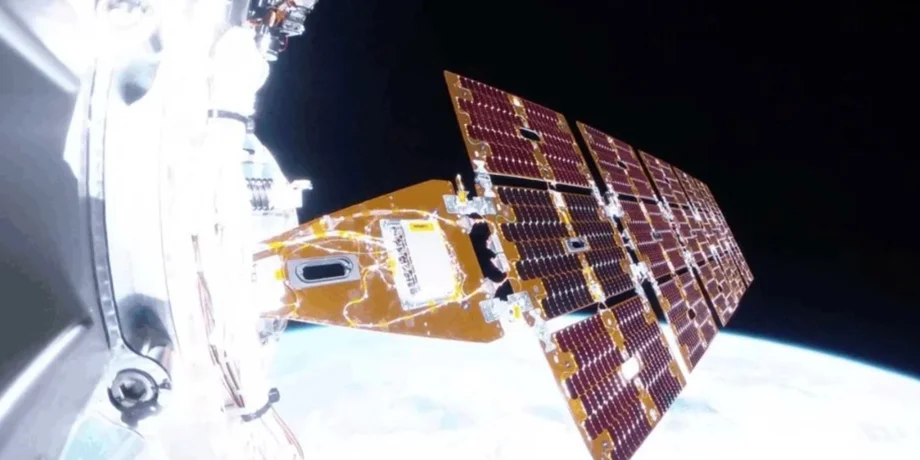
Фото: NASA
NASA’s Swift space telescope, which has been observing the most powerful explosions in the universe for more than two decades, has failed to be saved from falling to Earth. The Link spacecraft, which was designed to lift the observatory into a safer orbit, lost control due to engine problems.
NASA announced the completion of the rescue mission, Space reports.
Swift has been in orbit since 2004, studying gamma-ray bursts, supernova explosions, and other large-scale cosmic events. However, increased solar activity has caused the telescope to become more heavily slowed by the upper atmosphere, causing it to gradually lose altitude.
According to forecasts, the observatory should leave orbit by the end of 2026. It was assumed that a special Link device would be able to intercept Swift and transfer it to a higher orbit.
To this end, NASA signed a $30 million contract with Katalyst Space Technologies in 2025. Link was launched on July 3, 2026, but less than a month later, the mission encountered a critical problem.
On July 28, the spacecraft experienced a propulsion system malfunction. Link lost its stable orientation and began to spin. Specialists tried to regain control of the spacecraft, but it was not possible to return it to normal operation.
NASA now expects Swift to continue its descent until it re-enters Earth’s atmosphere. Most of the structure will likely burn up during the fall, although some fragments could reach the planet’s surface.
At the same time, NASA emphasizes that the likelihood that debris from the telescope will harm anyone is very low.
Despite the failure of the rescue operation, Swift could still be of use to scientists. NASA plans to restart the telescope after preparations for its deorbit are complete. This will give the observatory several more months to collect data on cosmic phenomena.
In addition, experts plan to use the experience of the Link mission for future spacecraft rescue operations.
Also follow “Pryamim” on Facebook , X , Telegram , and Instagram.