


Nationalism and Democracy: Ukraine’s Path to Self-Realization


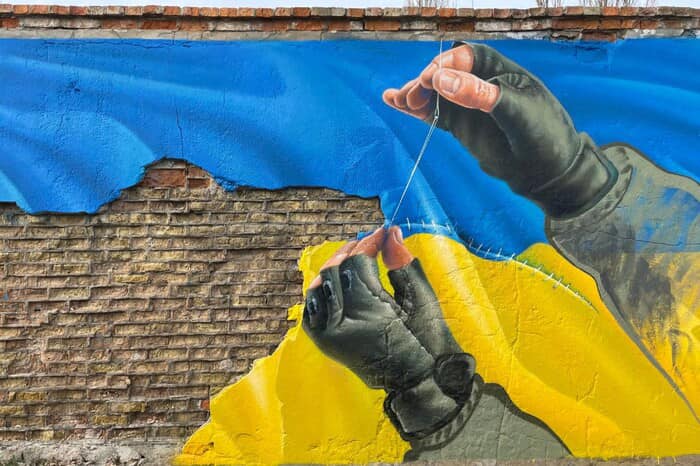
фото: facebook З.Казанжи
Source: Author’s Facebook page
Nationalism, in its pure and undistorted form, is a nation’s aspiration to achieve its full potential through an independent state.
It is not only about formal sovereignty but also about the ability to determine the rules of life, the direction of development, the system of values, and a nation’s place in the world. That is why nationalism is not rigidly tied to a single ideology: at different historical moments and in different countries, it can be combined with political systems and values that best help achieve this goal.
Ukrainian nationalism, which matured at the beginning of the 20th century in the struggle for an independent state, went through a complex and dramatic path of such combinations. During the Ukrainian Revolution of 1917–1921, it naturally interacted with the socialist ideas that dominated Europe at the time and promised social justice and the renewal of society.
In the 1920s, some groups within the Ukrainian movement sought common ground with communism, hoping that the Soviet experiment might allow for some form of national self-realization. By the 1930s, illusions began to emerge about a possible tactical rapprochement with fascism—as a reaction to the crisis of liberal democracies and the search for “strong” models of statehood.
All of these attempts proved to be either false or dead ends. They did not give Ukrainians what nationalism had sought from the very beginning – a stable, recognized, and viable independent state.
Instead, the most effective path was the “cooperation” of Ukrainian nationalism with democracy. It was through the national-democratic movement at the end of the 20th century that its primary goal was achieved—the restoration of Ukraine’s independence.
This is neither an accident nor a historical anomaly. Democracy has proven to be the environment that best allows the Ukrainian nation to realize its full potential. The key trait that defines us as Ukrainians and distinguishes us historically is our love of freedom.
The desire for self-government, distrust of excessive centralized power, and the willingness to defend one’s dignity and right to choose—these features do not go well with authoritarian or totalitarian models but naturally resonate with democratic institutions.
The external dimension is no less important. It was the international system, based on democratic values, the norms of international law, and the principle of self-determination of peoples, that gave Ukrainians the opportunity not only to proclaim their own state but also to receive its international recognition. Without this environment, independence would have remained a declaration rather than a political reality
Therefore, upholding democracy—as the foundation of Ukraine’s internal development and the cornerstone of a liberal democratic world order—is not merely a tribute to a passing trend.
It is an internal and external prerequisite for our most effective self-realization as a nation.
In the world of the “political law of the jungle,” where only the will of predators like Putin, Trump, and Xi reigns, Ukraine has no chance to realize its potential. Therefore, choosing democracy is not for us an ideological whim but a matter of historical survival and the guarantee of a worthy future.
Also, follow “Pryamyi” on Facebook, Twitter, Telegram, and Instagram.
• Materials published in the “OPINIONS” section reflect the opinion of the author of the publication, who bears full responsibility for the accuracy of the information.
• The editorial staff of prm.ua may not share the opinions expressed in the author’s material.
• The owner of the webpage in the “OPINIONS” section is the author of the publication.