


Orban’s Hostages: How Zelensky’s Words and the EU’s 90 Billion Led to the Cash Collector Scandal


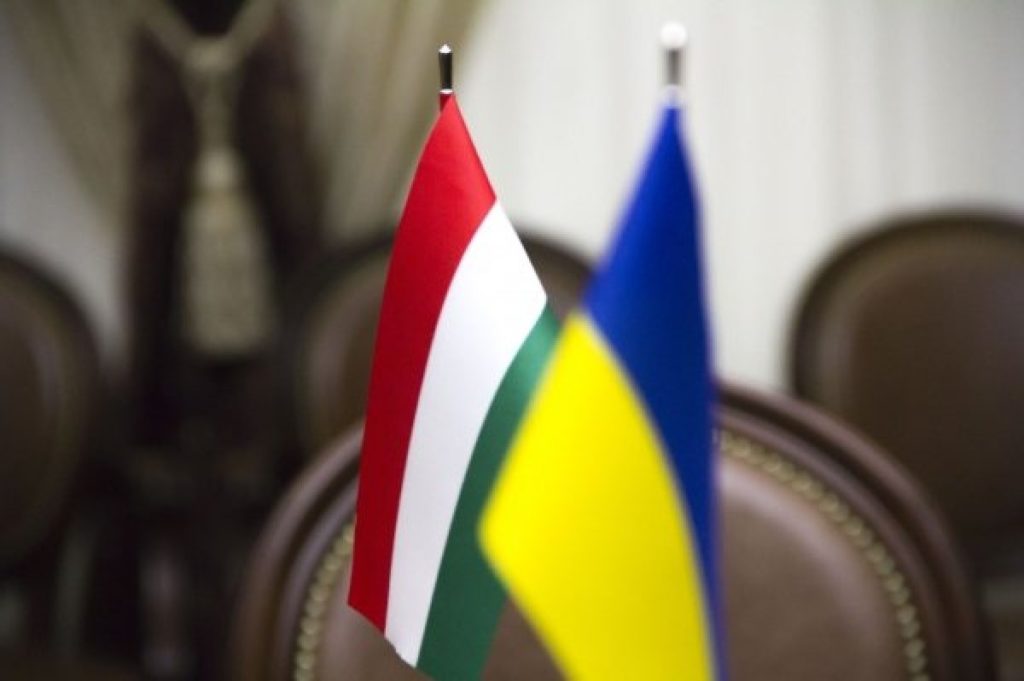
On the night of March 6, the National Bank of Ukraine reported the detention of cash-in-transit teams from the Ukrainian state-owned Oschadbank by Hungarian security agencies.
The collection teams included seven bank employees. According to Oschadbank, the collectors were transporting cash and precious metals – 40 million dollars, 35 million euros, and 9 kg of gold. Money and banking The gold was transported under an international agreement between Oschadbank and Raiffeisen Bank International. According to the Ukrainian side, the cargo was processed in accordance with international transportation regulations and current European customs procedures.
At Raiffeisen Bank International They stated that due to Austrian banking secrecy laws, RBI is not permitted to disclose information about its client relationships. However, they made it clear that the banking group was aware of the incident, noting that RBI itself was not harmed by it.
The Hungarian National Tax and Customs Authority announced an investigation Money laundering. Seven Ukrainian citizens are suspects, including a former general of the Ukrainian secret service.
The Ukrainian cash collectors detained in Budapest have now been returned home. And that, of course, is the most important thing.
But that doesn’t make the story any less alarming. Because we’ve effectively witnessed a situation where Ukrainian citizens can be detained in the center of the capital of a European Union country, and explanations come much later.
Foreign Minister Andriy Sybiha responded harshly to the incident, calling Hungary’s actions “state terrorism and racketeering.” He also described the cash collectors as “enthusiastic hostages,” to whom, according to the Foreign Ministry, Ukrainian consuls are not allowed access.
In my opinion, Ukraine should demand not only an explanation but also a full investigation into the kidnapping of people and vehicles. Because when armored vehicles are stopped, it means someone knew their routes.
Even more questions arise following the revelation that more than $900 million, €420 million, and 146 kg of gold were transported to Ukraine through Hungary this year. Hungary is conducting an investigation under the Criminal Procedure Act, involving the Anti-Terrorism Center.
But in reality, this story cannot be seen as a financial incident.
In my view, the events follow a clear political sequence. First, Volodymyr Zelenskyy made harsh statements against Viktor Orbán, followed by the Hungarian side’s actions.
Commenting on the blocking of aid to Ukraine, the Ukrainian president stated that he hoped “one person in the European Union won’t block 90 billion euros.” Otherwise, he said, it would be possible to “give this person’s contact information to the Ukrainian military so they could communicate with him in their own language.”
The discussion focused on Hungary’s position blocking 90 billion euros in aid to Ukraine.
These are very important resources—effectively supporting the Ukrainian economy and funding the defense forces. And when political conflicts arise around such an issue, both the Ukrainian military and the Ukrainian economy could find themselves hostage to the situation.
Even members of the Hungarian opposition reacted to these words. In particular, Tisza Party leader Péter Magyar stated that no Hungarian, much less a Hungarian politician, should be threatened, regardless of their political views.
President Zelenskyy’s comments about Orbán and the Ukrainian Armed Forces were also condemned by the European Commission. “Such language is unacceptable. There should be no threats against EU member states,” said European Commission Spokesperson Olof Gill.
That is, the situation resonated not only within Orbán’s government, but throughout the entire European political system.
When such things become actively discussed in the media and political circles, it can have the opposite effect. Because then the current Hungarian government gains the opportunity to talk about “external pressure” and mobilize its own electorate.
And that is exactly what may be happening now.
Such rhetoric effectively mobilizes Orbán’s electorate, who can position himself as a politician who protects Hungarian interests from external interference.
This is why I am sure that these events are interconnected.
It’s noteworthy that following Zelenskyy’s statement, Viktor Orbán made new statements. Specifically, he spoke of the possibility of a forceful solution to the issue of unblocking the Druzhba oil pipeline.
When you put all these events together – Zelenskyy’s statements, Orban’s position, the story with the cash-in-transit vehicles – a logical political picture emerges.
There is another factor added to this picture – the position of the United States.
Donald Trump openly supports Orbán. And only afterward did he claim that Ukraine was allegedly dragging its feet on the negotiations to end the war.
That is, the conflict around Hungary is effectively reaching the level of a broader political discussion between Kiev and Washington.
This is precisely why Ukraine needs to act with extreme caution in matters of domestic politics in neighboring states.
But at the same time, it is extremely strict in terms of protecting its citizens.
The Ministry of Foreign Affairs must utilize all diplomatic mechanisms. Moreover, it is necessary to exert political pressure through our American partners.
Because this is not just about one incident.
The issue at hand is fundamental: can Ukrainian citizens be detained on EU territory without clear and transparent explanations?
And Ukraine must receive an answer to this question.
As a reminder, Foreign Minister Andriy Sybiha stated that Hungarian authorities in Budapest detained seven Ukrainian citizens—Sberbank employees—and seized the money they were transporting.
It’s worth noting that Hungarian Prime Minister Viktor Orbán visited the country’s anti-terrorism center on the day the Ukrainian armored vehicles transiting Hungary to Ukraine were seized . Later that day, security forces from this unit seized the armored vehicles carrying currency and gold.
As reported, the Ministry of Foreign Affairs recommends that Ukrainians refrain from traveling to Hungary.
Subsequently, the media reported that seven Sberbank cash collectors, previously detained in Hungary, were deported from the country.
Also follow “Pryamy” on Facebook , X , Telegram and Instagram.