


Moscow’s Nuclear Tantrum: Threats Before the Fall


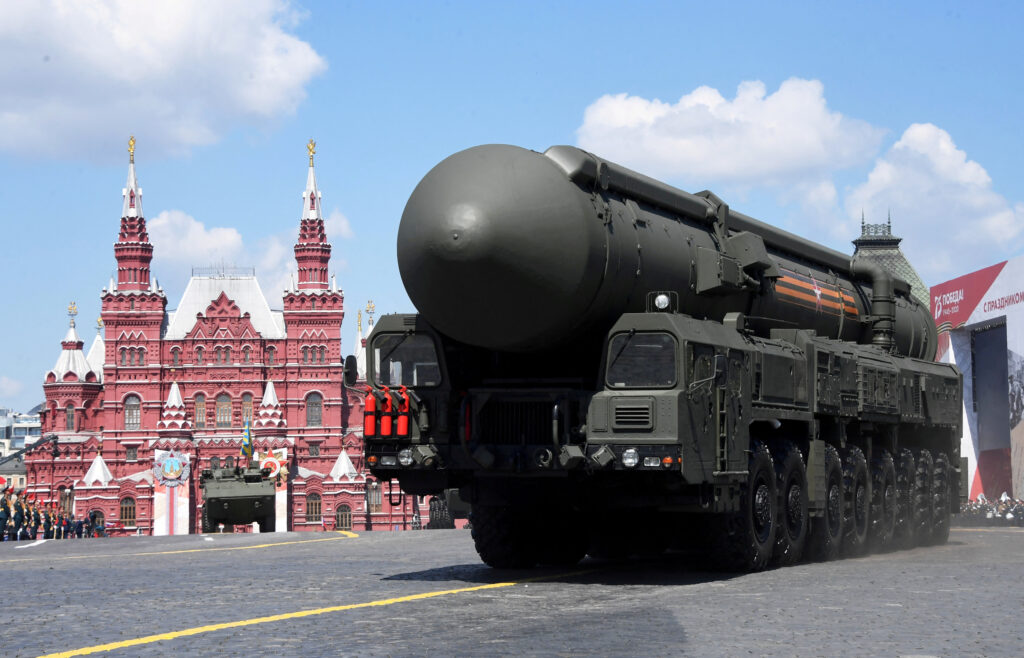
фото: Reuters
Source: Author’s Facebook page
Once again, Russian propagandists have discarded yesterday’s thesis—that Ukraine is exhausted, its economy shattered, trenches empty, and mobilization a failure—in favor of a far more dangerous narrative: portraying Ukraine as heavily armed, NATO-backed, and a direct threat to Russia’s existence.
The Kremlin’s conclusion is blunt: launch a preemptive nuclear strike at Ukraine or the West — simply to frighten people.
Vladimir Solovyov: “Ukraine is preparing an offensive; they will throw all the forces and means they have. They have enough people. We should not flatter ourselves with the illusion that there is no one to fight there. The West can supply them with equipment — the largest reserves lie in the West. NATO’s total mobilization potential approaches a billion, and its economic potential is enormous. We must be smarter, faster, and more ruthless. We need to switch to weapons systems that the West believes we will never use. Furthermore, we don’t need their love — we need their fear.”
What provoked this abrupt shift from contempt — the old narrative that Ukrainians are exhausted and about to capitulate — to alarm and proclaimed invincibility? Have recent Article 4 consultations with NATO rattled the Kremlin? Did the intimidation with drones and fighter jets over European airspace draw a different response than expected, forcing Moscow to cool its own militaristic fervor?
Did Donald Trump’s comments — that Ukraine could, “with time, patience, and financial support from Europe and NATO, restore its original borders” and even go further — nudge the propaganda pendulum? Or did Western reporting that Trump implicitly blessed a renewed Ukrainian offensive and pledged greater intelligence and matériel support push Moscow to ratchet up its threats?
Whatever the trigger, the result is the same: crude, reckless rhetoric that treats nuclear terror as a tool of policy.
As a reminder, Kremlin leader Vladimir Putin said that Russia will deploy medium-range missiles and abandon the moratorium. He also added that after the expiration of the agreement between Russia and the United States on measures for the further reduction and limitation of strategic offensive arms, on February 5, 2026, the Kremlin will adhere to the restrictions for another year.
Thus, according to the American Institute for the Study of War (ISW), the Kremlin is trying to draw Washington into arms control negotiations to achieve geopolitical concessions in the war against Ukraine. Moscow is using the topic of the New START treaty as a lever of pressure on the Donald Trump administration, playing on its readiness for strategic dialogue.
In addition, according to military observer Denis Popovich, Russian dictator Vladimir Putin seeks to test NATO’s strength by staging various provocations on the EU’s borders. The Kremlin is monitoring the West’s reaction to understand whether the Alliance is ready for a decisive response, and the lack of appropriate action may encourage Russia to take further aggressive steps.
Also, follow “Pryamyi” on Facebook, Twitter, Telegram, and Instagram.
• Materials published in the “OPINIONS” section reflect the opinion of the author of the publication, who bears full responsibility for the accuracy of the information.
• The editorial staff of prm.ua may not share the opinions expressed in the author’s material.
• The owner of the webpage in the “OPINIONS” section is the author of the publication.