


Resignations that change nothing and an appointment that could change everything


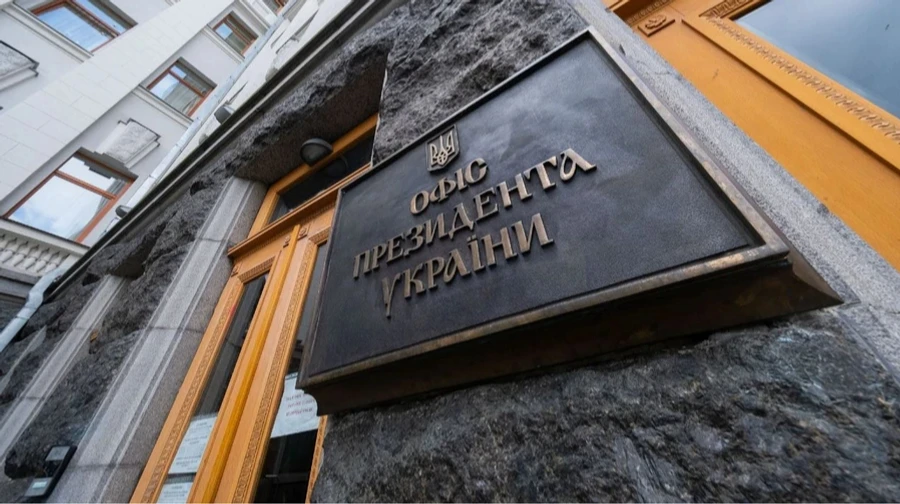
Фото: Офіс президента
Attempts to portray recent personnel decisions as a matter of “efficiency” are a public narrative. The reality is far harsher. We have three different cases that are mistakenly being conflated into a single story: the resignation of SBU head Vasyl Malyuk, the restructuring of the State Bureau of Investigation and the State Tax Service, and the reappointment of Kyrylo Budanov. These are different processes with different motives, but they share one common denominator: a trail of corruption.
The State Bureau of Investigation and the State Tax Service of Ukraine: not about management, but about escaping responsibility.
The situation with the leadership of the State Border Service isn’t about mismanagement. It’s an attempt to shield itself from corruption charges related to the illegal border crossings of individuals involved in the so-called “Midas Case.” These individuals were already under suspicion, or were being prepared to do so, by the NABU and the SAPO, and ended up abroad.
The fact is clear: border traffic is controlled. If there are millions of Ukrainians outside the country, we can assume that a significant portion of them left illegally. This, in my opinion, indicates systemic corruption. That’s why personnel decisions aren’t about efficiency, but rather an attempt to deflect political responsibility from the top official and the Presidential Office.
The SBU and the myth of “super-effective operations”.
The same applies to the Security Service of Ukraine. We’re being shown the effectiveness of operations like Operation “Web,” but if we strip away the media coverage, the question arises: whose operation was it, really?
On June 1, 2025, the SBU carried out the final stage of Operation Spider’s Web, a military operation to destroy Russian strategic aviation during the full-scale Russian-Ukrainian war. The deal targeted five airfields in Russia.
Following Operation Spiderweb, the occupying power redeployed strategic air forces closer to the US border. Kazakhstan, a CSTO member, signed a military-technical cooperation agreement not with Russia, but with the United Kingdom.
As a reminder, on June 6, the press service of the Kazakh Ministry of Defense reported that the Kazakh and British Defense Ministries signed a Military Cooperation Plan until 2026 in London.
On December 15, the SBU destroyed a Project 636.3 Varshavyanka submarine in Novorossiysk Bay, which was later identified as the B-271 Kolpino.
On the same day, an American airborne early warning aircraft was operating in the skies over Crimea. This, at the very least, indicates that the SBU was being shared with its American partners in real time. Therefore, it would be incorrect to claim that these were SBU operations exclusively.
A separate topic is attacks SBU drones against legitimate military targets on the territory of the occupying country.
The Security Service of Ukraine is a special-purpose government agency with law enforcement functions, ensuring the national security of Ukraine. The SBU is the specially authorized state body in the field of counterintelligence and the main body in the nationwide counterterrorism system.
Therefore, launching drones is not the SBU’s core business. The Unmanned Systems Force was created for that purpose. When each agency has its own drones and doesn’t coordinate with others, that’s not strength, it’s chaos. There needs to be a unified command system. Ukraine, however, has departmental feudalism.
Counterintelligence failure.
The worst thing is the failure of the counterintelligence regime. When people with obvious ties to Russian structures work for years in the formation of the country’s information policy, it’s no longer an accident, but a systemic flaw.
Persons who should be suspected of treason remain in the system.
For example, Vadim Mikhailovich Lyakh is the head of the Slavyansk city military administration of the Donetsk region.
In 2014, during the city’s seizure by the Russian terrorist Girkin’s forces, Vadim Lyakh was seen in contact with the self-proclaimed mayor, Vyacheslav Ponomarev. There are online A video from the French channel France24 shows Vadim Lyakh shaking hands with the so-called “people’s mayor” Vyacheslav Ponomarev.
On April 28, 2014, he voted for the creation of the so-called “Slavic People’s Militia,” and on April 30, for the transfer of ownership of the city council building to his “wife.” Vadim Lyakh is listed in the Mirotvorets website database as a “manual for terrorists and Russian occupiers.”
In 2015, Vadim Lyakh ran for election for the post of mayor of Slovyansk. In his election campaign, he used the slogan “Love Slovyansk like Nelya.” Nelya Shtepa is currently accused of treason. According to investigators, she facilitated the seizure of the city by pro-Russian militants in 2014.
In 2021, the mayor of Sloviansk approached Pavlo Kyrylenko, head of the Donetsk Regional Civil-Military Administration, with a request to dissolve the city council and establish a civil-military administration. In August 2021, Vadym Lyakh was appointed head of the Sloviansk Civil-Military Administration.
Let me remind you, The head of the military state administration of a populated area is appointed by the head of the relevant regional military state administration in agreement with the Anti-Terrorism Center (ATC under the SBU), or directly by the ATC if there is no regional military state administration.
It is noteworthy that the elder brother of the former chairman of the Donetsk military-civil regional administration Pavel Kirilenko, Yevgeny Kirilenko, defected to the pro-Russian terrorists of the so-called DPR in 2014 and has since worked in the so-called Ministry of State Security (MGB) of the DPR. Pavlo Kirilenko heads the Antimonopoly Committee of Ukraine.
By Decree No. 29/2024 of the President of Ukraine Volodymyr Zelenskyy dated January 26, 2024, Andriy Kovalenko was appointed head of the Center for Countering Disinformation of the National Security and Defense Council of Ukraine.
According to Kovalenko, the Center for Political Studies will counter the efforts of Russians, the FSB, the Igro, and the SRR, who are trying to influence the mood of Ukrainian society and spread fake news about Ukraine abroad.
It should be noted that, according to information from open (!) sources, the founder is resisting the efforts of Russians who are trying to influence the mood of Ukrainian society. Public organization “TORSKAYA HUNDRED OF THE GREAT MILITARY DON”.
Registered NGO at the address: 84187, Ukraine, Slavyansky district, Donetsk region, Orekhovatka village, Zelenaya street, house 21. Date of foundation: October 13, 2008.
PKO “All-Great Don Army” headed by State Duma deputy Vodolatsky of the occupying country. It unites the so-called “registered” Cossacks, that is, those in government service in accordance with Federal Law No. 154-FZ of December 5, 2005, “On the Civil Service of the Russian Cossacks,” and Its Charter was approved by the decree of the Russian dictator dated June 17, 1997, No. 612.
Public organization “International Union of Public Organizations “All-Great Don Army”, headed by the ataman Kozitsyn unites the so-called “unregistered” Cossacks. In 2014, Kozitsyn was an active participant in the Russian intervention in Ukraine.
Before his appointment as head of the Center for Countering Disinformation of the National Security and Defense Council of Ukraine Kovalenko was required to undergo a special background check by the SBU.
Corruption within the SBU.
The department supposed to fight corruption has itself found itself at the center of corruption scandals. These aren’t just individual officials, but rather the leadership at the highest level: wealth, family ties to Russia, and the dubious origins of assets.
According to open sources, the wife of Ukrainian Security Service General Viktor Dorovsky holds Russian citizenship and owns luxury real estate worth $1.3 million. Furthermore, during the war, Dorovsky’s father, Oleksandr, became the owner of one of Ukraine’s largest pharmaceutical groups, which was under investigation at the time. This pharmaceutical group, Zdorovye, was linked by Ukrainian law enforcement to former Russian MP, United Russia party member, and oligarch Oleksandr Shishkin.
In September 2025, the National Anti-Corruption Bureau (NABU) and the Specialized Anti-Corruption Prosecutor’s Office (SAPO) charged Ilya Vityuk, former head of the Security Service of Ukraine (SBU) cybersecurity department, with illicit enrichment and false asset declarations. Vityuk, an SBU brigadier general, was in the spotlight for purchasing a luxury apartment in Kyiv, which cost UAH 21.6 million but was declared at an undervalued UAH 12.8 million. The apartment was registered to Vityuk’s wife, who allegedly earned the funds as a sole proprietor, providing legal and consulting services since February 2022.
The structure that was supposed to cleanse the system became its own problem.
NABU as the real cause of the conflict.
The key to understanding Vasyl Malyuk’s possible resignation is the story of the pressure on NABU. This is where the SBU failed to fulfill the task assigned to it by Bankova. And this, in my opinion, was the real reason for the personnel decisions.
Not revenge or efficiency, but failure in the war against anti-corruption institutions.
Kirill Budanov: Balance or Political Trap
Against this backdrop, the story of Kirill Budanov emerges. Two scenarios are possible here.
The first is strengthening the system of counterbalances. Budanov is a highly trusted figure both domestically and among Western partners, with direct contacts with American and British intelligence agencies. This is a signal that the authorities are drawing conclusions and attempting to minimize reputational risks, particularly those related to the activities of the Office of the President and Andriy Yermak.
The second is political neutralization. Relegating an effective GUR leader to routine paperwork is a classic way to diminish his influence and potential ambitions. The simplest method of “removing” a powerful player is to give him a formally high-ranking but functionally limited position.
Result.
All these decisions have one thing in common: an attempt to shed the shadow of corruption and minimize negative information pressure, including from Western partners. The president distances himself from the problem: the structures, the leaders, the system are to blame. But not him.
At the same time, it’s worth emphasizing a fundamental point: the SBU’s attempt at political pressure through media campaigns is a dangerous precedent. If it had succeeded, the state would have acquired a social media-driven model for military and political decision-making.
It didn’t work out. And perhaps this was the only truly correct decision in this whole story.
Also follow “Pryamy” on Facebook , Twitter , Telegram and Instagram .
• Materials published in the “THOUGHTS” section reflect the opinion of the author of the publication, who bears full responsibility for the accuracy of the information.
• The editorial board of prm.ua may not share the opinions expressed in the author’s material.
• The owner of the web page in the “THOUGHTS” section is the author of the publication.