


Russia has begun launching new-generation “shaheeds” with AI and radio control: why are they dangerous?


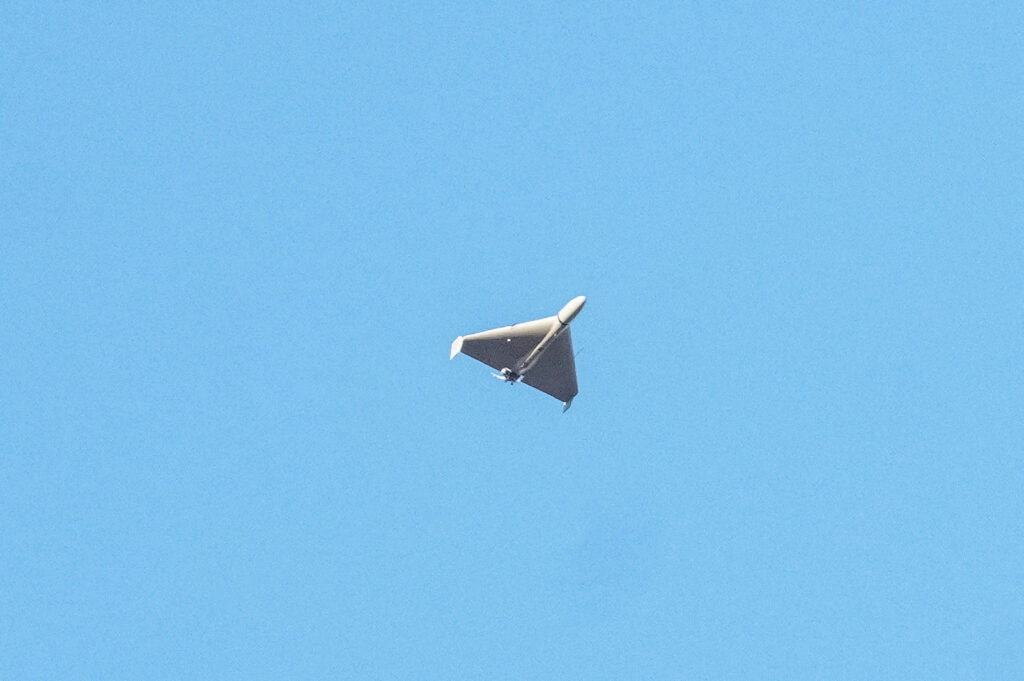
Фото: Reuters
Russia has begun using modernized Iranian Shahed drones equipped with the latest technologies: artificial intelligence elements, cameras, radio control modules, and Chinese-made antennas.
This is reported by the Associated Press.
According to journalists, the new models, known as “white Shaheds”, have already appeared in Russia’s air arsenal and have expanded functionality compared to previous versions, including:
- the ability to change the route in real time,
- hitting moving targets,
- targeted strikes on critical infrastructure facilities,
- reduced dependence on GPS due to improved navigation modules.
As David Albright, an analyst at the Institute for Science and International Security in Washington, points out, previously “Shaheeds” were “single-use suicide bombers with a fixed route,” while today’s drones are intelligent platforms with adaptive behavior.
“Previous models flew along a programmed route and were easy targets for air defense. Now, with cameras and radio communication, drones can ‘see’ and maneuver,” the expert explained.
Operators have the ability to control the flight in real time, change targets or cancel the attack. Communication with the drones is allegedly carried out from Russian territory, which increases operational flexibility.
The wreckage of the new drones shot down over Ukraine contained elements of Chinese antennas and Iranian electronic warfare modules, indicating the hybrid nature of the weapon. Sources suggest that some of the devices may have been assembled in the Russian Federation, in particular at the Alabuga enterprise.
The cost of such drones is very high, so their likely use is spotty and against strategically important targets. However, mass production of such high-tech models is unlikely. Instead, according to experts, Russia is preparing a mass production of simplified versions of the Geranium type, which still pose a threat due to their number.
Despite the technological breakthrough, the modernized “Shaheeds” remain vulnerable to Ukrainian electronic warfare. Since the new version of the drones actively uses radio communications, it can, according to experts, be intercepted or suppressed if modern electronic warfare systems are used.
The Ukrainian military has a chance to effectively counter these threats if they maintain a technical advantage in the field of electronic warfare and also receive additional Western air defense systems.
The emergence of highly accurate, intelligent and radio-controlled “Shaheds” is a new challenge for Ukrainian air defense, especially in the context of increased attacks on infrastructure. Ukraine must adapt tactics and intensify the development of domestic counter-drone systems, as well as strengthen cooperation with partners to obtain the most modern technologies in the field of electronic warfare.
It was previously reported that Ukraine recorded the first use of a Russian kamikaze attack drone of the “Shahed” type with a built-in camera, an artificial intelligence module with machine vision , and a direct radio control system from Russian territory.
Recall that during the recent air attack on Kyiv, which took place on the night of June 11, Russian troops first used a new type of kamikaze drone — a jet UAV, probably the Geran-3.
As reported, the Russian military is actively modernizing drones and missiles for combined strikes on the territory of Ukraine, using simulators in particular, and is also strengthening countermeasures against electronic warfare . However, the Ukrainian air defense forces are not lagging behind and are successfully developing relevant technologies.
Also follow “Pryamim” on Facebook , Twitter , Telegram , and Instagram.