


Russia is preparing a large-scale ecological disaster in Kherson: possible consequences for Ukraine and Europe


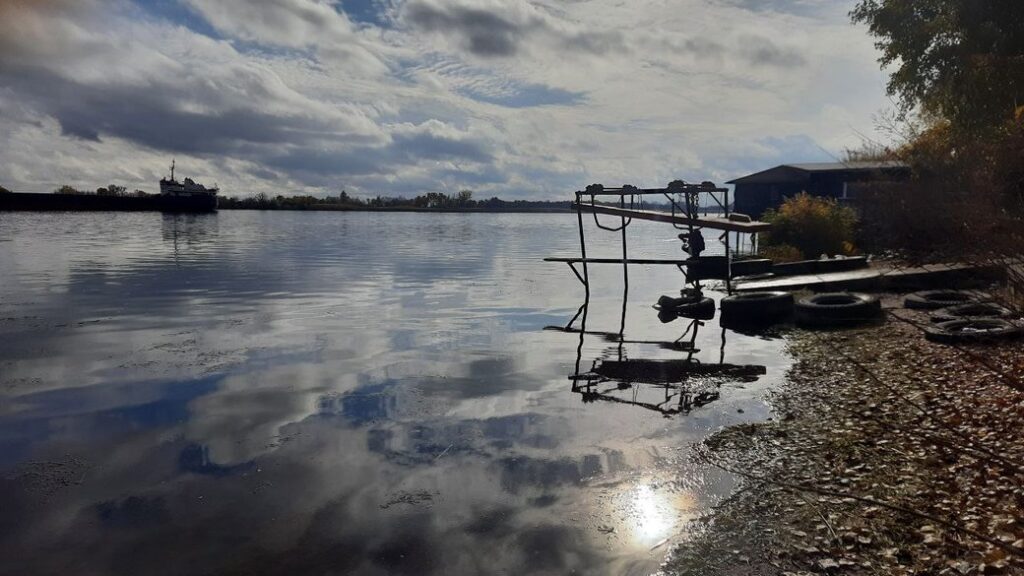
Фото: Суспільне Херсон
The Russian military is preparing for a large-scale attack on the critical infrastructure of Kherson, which could cause an ecological disaster in the region. The consequences of possible water pollution could affect not only Ukraine, but also European Union countries, including Romania, Bulgaria, and Turkey.
This is reported by “24 Channel” .
After the de-occupation of Kherson, Russia has systematically carried out strikes on the city with the aim of terrorizing the civilian population. The attacks are carried out using drones, artillery, and guided aerial bombs.
According to the Ukrainian Defense Forces, in October, over 9,000 FPV drone strikes were recorded in the Kherson direction. 1,500-1,600 artillery shells were fired daily in the area. The number of guided bomb strikes increased from 250 in September to over 550 in October.
Strikes are directed at civilian infrastructure, residential buildings, transport, medical facilities, rescue and humanitarian services. There have been cases of targeted attacks on minibuses, ambulances and rescue teams.
Journalists received an intercepted combat order from the hacker group 256 CyberShturm Division. The document was found in the official correspondence of Major Alexei Yatsenko, a serviceman of the 98th Airborne Division.
The correspondence discusses preparations for the escalation of large-scale war crimes in Kherson, in particular with the aim of creating an ecological disaster in the region. The documents indicate the intention to strike the city’s energy facilities and water treatment facilities using strike UAVs and ballistic missiles.
Previously, units of the same division participated in battles in Donbas, in particular during the battle for Bakhmut, where the tactics of complete destruction of the city’s infrastructure were used. In early autumn 2025, the unit was transferred to the Kherson direction.
According to available materials, in parallel with the plans to cross the Dnieper, the occupiers intend to intensify attacks on critical infrastructure facilities in order to make the city uninhabitable.
The possible destruction of energy and water treatment facilities could lead to the shutdown of pumping stations and treatment facilities. This would lead to the cessation of water supply, overflow of sewer collectors, and direct discharge of untreated wastewater into the Dnipro River.
Polluted waters can enter the Dnieper-Bug estuary and then the Black Sea. Given the current system, toxic substances can reach the coasts of Romania, Bulgaria, and Turkey.
The Dnipro-Bug Estuary is an important ecosystem covering an area of over 800 km². Pollution of this area can lead to the destruction of spawning grounds, the death of natural biofilters, the accumulation of heavy metals in bottom sediments, and eutrophication of water bodies.
The Black Sea is home to about 20 species of cyanobacteria, which can cause toxic blooms when the level of organic matter in the water increases sharply. In particular, Microcystis aeruginosa can release toxins that affect the human liver and nervous system.
Likely impacts for coastal countries include seafood contamination, increased disease incidence, tourism losses, and the collapse of fisheries within 2–3 years.
Romania is most at risk, as its coast near the Danube Delta receives pollution from both river runoff and marine currents. Mussel farms, coastal tourism and commercial fishing are also at risk.
After the explosion of the Kakhovka HPP and the damage to the Dnipro HPP, there are virtually no opportunities to compensate for the negative environmental consequences through controlled water discharge.
A possible environmental disaster could become an element of Russia’s hybrid war against the countries of the European Union.
Also follow “Pryamim” on Facebook , Twitter , Telegram , and Instagram .