


Increased Russian Activity in the Serebrianskyi Forest: Impact on the Lyman Frontline


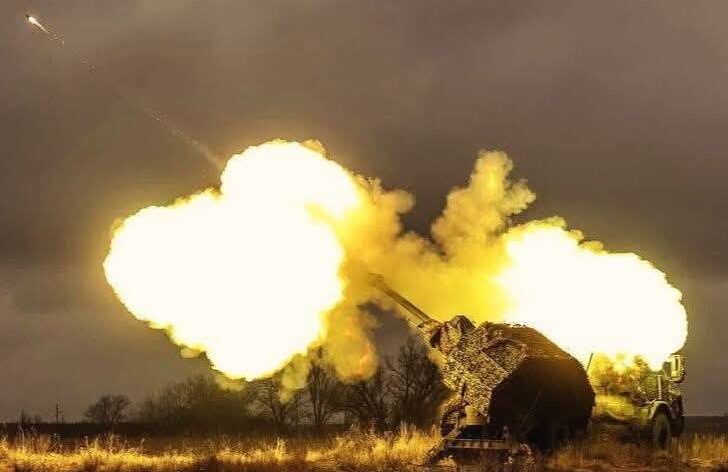
Фото: Генеральний штаб ЗСУ
Russian forces have significantly increased their activity in the Serebrianskyi Forest along the Lyman front. After a prolonged period of unsuccessful attacks, the enemy has managed to advance near Serebriansk and within the forest itself.
Nothing has changed in the Serebrianskyi Forest for months — the Russians attacked, but to no avail. This forested area of more than 107 hectares stretches from occupied Kreminna to the border with Donetsk Oblast. Since the fall of 2022, after the capture of Kreminna by Russian troops, the front line has run through the forest.
Until recently, the Russians used the dense forest to conceal their equipment and approach Ukrainian positions quietly. What is particularly dangerous is that the fighting is approaching Sieversk, an important city that controls access to the entire region.
In recent days, the situation has worsened for the Ukrainian defenders. The occupiers have achieved minor tactical gains in several areas of the forest.
Units of the 164th and 169th Separate Motorized Rifle Brigades of the occupiers continue to advance within the Serebrianskyi Forest toward the confluence of the Bila Zherebets and Severskyi Donets Rivers (in the direction of the village of Dronivka), which significantly complicates the situation for Ukrainian units defending east of Serebrianka. It appears that the enemy may soon fully occupy the forest up to the Bila Zherebets River.
The most difficult situation is in the forest on the northern bank of the Severskyi Donets River, from the settlement of Hryhorivka to Dronivka. In addition, the occupiers are pressing in the direction of Yampil.
At the same time, Russian forces have stepped up offensive operations near Serebriansk in Bakhmut Raion, Donetsk Oblast. They control the commanding heights in the Bilohorivka area, creating difficult conditions for Ukrainian defenders in the Serebrianskyi Forest. The main objective of the Russians is to eliminate the presence of the Ukrainian Defense Forces in the forest and advance toward the Sloviansk–Kramatorsk agglomeration.
Western intelligence reports indicate a shift in the focus of military operations westward, toward Sieversk. In fact, Sieversk is expected to become the arena of the most intense battles in the coming weeks.
The city is located on the Bakhmutka River and its tributaries, the Yama and Kamenets. The surrounding area is rich in natural resources. The Yamske dolomite deposit, the Yamske quartz sand deposit, construction sand, the Yamske chalk deposit, the Yamske clay deposit, and argillitic deposits have been explored and are being exploited here, which explains why the occupiers are so interested in the area.
The Commander-in-Chief of the Armed Forces of Ukraine, General Oleksandr Syrskyi, recently reported increased enemy pressure in northern Donbas and along the Lyman direction.
According to the General Staff of the Armed Forces of Ukraine, in the Lyman direction, Russian forces have attacked Ukrainian positions 17 times since the beginning of the day near the settlements of Novomykhailivka, Hrekivka, Kolodtsi, Novoselivka, Zelenodolynske, and in the direction of Yampil and Serebrianka. Units of the Ukrainian Defense Forces are waging heavy defensive battles against superior Russian forces, holding back assaults and, in some cases, carrying out active counteroffensive actions.
According to K. Mashovets, coordinator of the “Information Resistance” group, the Ukrainian Defense Forces repelled enemy tactical penetrations in the direction of Yekaterinivka–Hlushchenkove with several successful counterattacks and continue to defend Karpivka and Ridkodub effectively. Reports indicate that in the area of the 3rd Motorized Division of the enemy’s 20th Western Military District, Ukrainian forces either recaptured the village of Hrekivka or pushed enemy units out of it, placing the village into the gray zone (although this information is yet to be fully verified).
In the Sieversk direction, Russian forces have increased artillery attacks, with an average of 170–180 strikes per day. The occupiers are attempting to bypass Sieversk via the Serebrianskyi Forest to gain a position from which they can put Sloviansk under artillery fire.
The Liman direction is strategically important in the overall Russian offensive. The increased activity near Sieversk threatens the eastern flank of the Sloviansk–Kramatorsk agglomeration. Sieversk occupies a critical position, and its loss could complicate the defense of the entire region.
According to military expert and retired Ukrainian Armed Forces Colonel Oleg Zhdanov, the enemy is advancing along the administrative border of Donbas, attempting to bypass Sloviansk and Kramatorsk. The enemy understands that these cities cannot be captured, even if they are destroyed.
“That’s why they are trying to take a wide detour. Fortunately, our Lyman operational direction remains one of the most stable in terms of defensive capability,” Zhdanov explained.
For now, the occupiers have effectively reached the defensive line. Even if the Russians achieve tactical successes, they will not be able to capture the agglomeration strategically, due to the strong Ukrainian defenses and the challenges of assaulting heavily industrialized areas.
Moreover, the situation at the front is shaped not only by military factors but also by political ones. International pressure on the Russian Federation has played a role in slowing the pace of the offensive. The successful actions of Ukrainian forces in key areas have prevented the political objectives of the Russian operation from being realized — namely, the creation of buffer zones up to 20 kilometers deep.
Also, follow “Pryamyi” on Facebook, Twitter, Telegram, and Instagram.
• Materials published in the “THOUGHTS” section reflect the opinion of the author of the publication, who bears full responsibility for the accuracy of the information.
• The editors of prm.ua may not share the opinions expressed in the author’s material.
• The owner of the web page in the “THOUGHTS” section is the author of the publication.