


Split in Rome: How Internal Disputes Undermine Chances of Victory


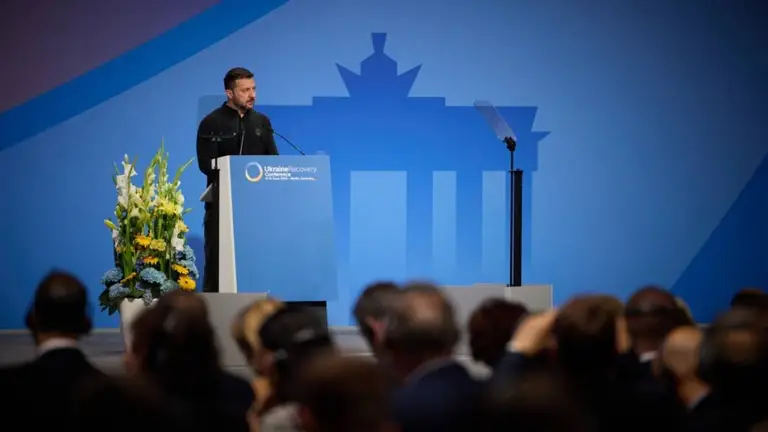
Фото: ОП
Source: Author’s Facebook page
Ukrainian public figures, entrepreneurs, politicians, and researchers who came to the conference on the restoration of Ukraine in Rome demonstrate two different positions, between which there is a deep split.
Some believe that we need to talk frankly with the West (governments, international organizations, investors, etc.) about our problems, about the failures of reforms, because this is the only way to encourage the Ukrainian authorities to solve these problems and implement these reforms – after all, they are not able to listen to society, so let them listen to Western partners. And without solving these glaring problems, it is impossible to achieve victory. Therefore, we need to talk frankly about corruption, about failures with the rule of law, about illegal pressure on business, etc. In essence, these people are asking international partners to put pressure on the Ukrainian authorities and not give them money unless decisive and, importantly, long-promised steps are taken in these directions.
The second believe that it is necessary, first of all, to ensure that Ukraine receives the necessary amount of money, otherwise Ukraine will simply collapse. And any talk about corruption and unfulfilled promises will certainly lead to a reduction in aid, and also strengthen the positions of our enemies against our sympathizers among the Western and international establishment, and also feed Russian propaganda. If the economy and the front do not hold up, everything will be in vain.
The former accuse the latter (often tacitly, but also publicly) of serving the authorities, perhaps even with their own interests. The latter accuse the former of neglecting the public interest, of their own ambitions, and of a tendency to talk instead of do. Both sides accuse each other of living in an illusory world and not wanting to face the truth.
Obviously, many of those in Rome are trying to take a middle path. Both asking for money and talking about problems. So that partners help Ukraine solve problems by putting pressure on the authorities, but not too much pressure, otherwise we will collapse; and so that they give the money in full. Theoretically, this is a possible strategy of behavior, but in practice it depends on personal talents to convey two contradictory ideas to the interlocutors at the same time and convince them that they can be combined normally. The interlocutors are also not idiots, they have experience, are well informed and understand everything. A kind of session of diplomatic schizophrenia.
And this is just one example of the great dilemma of “to speak or to remain silent.”
A similar discussion has unfolded regarding whether it is possible to criticize the Ukrainian authorities for their failures in mobilization. One side says: we cannot criticize, because such criticism disrupts mobilization, ultimately demotivates society, feeds Russian propaganda, and endangers the existence of the country. The other side says: we must criticize, because everything has already been disrupted, and if we do not urgently start correcting it, it endangers the existence of the country; and we can only start correcting problems when we shout about them loudly, because otherwise they will be ignored. Some say: shut up, because you are playing into the enemy’s hands. Others say: to remain silent is to play into the enemy’s hands.
There are many such hot topics. A popular example is local government. By talking about corruption in local government, you are helping the central government to finally eliminate local leaders, concentrate all power and all corruption in its hands, and lead the country to defeat. By keeping quiet about corruption in local government, you are directly protecting the corrupt and helping them lead the country to defeat.
The fundamental basis that has given rise to all these disputes is obviously that in a normal country, in a normal period of time, the government either does the necessary things or loses the elections. If war and elections are impossible, and the government refuses to solve the problems, we have a closed circle, a clincher. We are a democratic society with autocratic government in conditions of impossibility of changing it – such a chimera is unviable.
Can we solve this dilemma?
Here everyone has to choose their own path. For example, many people believe that in wartime there should be, in essence, an authoritarian system of governance, otherwise there will be no survival. Every issue is taken care of by the relevant officials. Other people cannot influence it from the outside. If the responsible persons need someone’s opinion – they will ask. If they don’t ask – go and mind your own business, because otherwise you will simply harm. Democracy, feedback, civil society – all this should be on pause in times of war. (This is not a caricature, but a quote from yesterday’s discussion on the problems of mobilization.)
Fortunately, in our country, everything is not like that. Because we have resisted because we are a democracy of free citizens, not an authoritarianism of silent subjects. Because all changes are made exclusively thanks to those who do it themselves when not asked, and terrorize responsible persons who do not ask, do not want and wave them away. We have resisted thanks to everything that is the opposite of authoritarianism: thanks to horizontal connections, violation of hierarchies and statutes, decentralized rapid innovations and free economic entities, open discussion of problems, decentralization and local self-government, multi-level people’s diplomacy, etc. If everything were done “as it should be”, the line of combat contact could already be along Zbruch.
If a large authoritarian country were to be confronted by a small authoritarian country, what hope could there be for victory?
The hope for victory lies in the opposite: in preserving and increasing democracy, horizontality, innovation, decentralization, and everything that is the antithesis of authoritarianism. This is the only way to overcome a much larger and more powerful force. David could not defeat Goliath in a sword fight.
So my choice does not even stem from values, but from a pragmatic understanding of the source of our strength. Not to be silent, to speak up. To raise issues that you are not asked to raise. To do what is necessary and possible, even when officials are against it. To openly discuss the problems of mobilization, corruption, governance, etc. To talk frankly with Western partners about how to put pressure together to solve problems. To not tolerate authoritarianism at any point.
This is the only way to victory.
Also follow “Pryamim” on Facebook , Twitter , Telegram , and Instagram .
• Materials published in the “OPINIONS” section reflect the opinion of the author of the publication, who bears full responsibility for the accuracy of the information.
• The editorial staff of prm.ua may not share the opinions expressed in the author’s material.
• The owner of the webpage in the “OPINIONS” section is the author of the publication.