


NATO Considers Restoring Marshes to Bolster Defenses, Drawing on Ukraine’s Experience


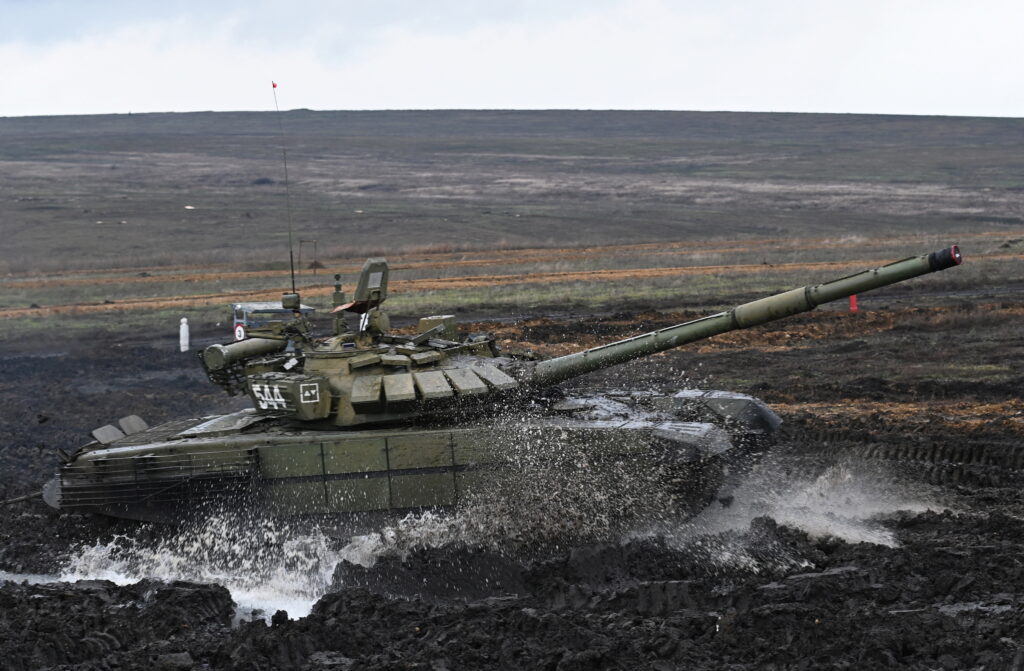
Фото: REUTERS
NATO is exploring new ways to counter a potential Russian offensive, drawing on lessons from Ukraine. Several European countries plan to restore marshes along their eastern borders, using the wetlands as a natural barrier against tanks and heavy equipment, while also contributing to climate change mitigation.
This is reported by Politico.
European Union countries are reportedly discussing an unusual but historically proven defense method—restoring wetlands on NATO’s eastern flank. The idea is based on Ukraine’s experience in 2022, when the explosion of a dam on the Irpin River caused widespread flooding and effectively halted the advance of Russian troops toward Kyiv.
Poland, Finland, and other countries are now exploring the strategic restoration of peatlands, which would serve both as a defensive barrier and as a natural tool for combating climate change. Wetlands significantly hinder the movement of heavy military equipment, and restored peatlands can store large amounts of carbon.
Poland has already incorporated this concept into its large-scale “Eastern Shield” project, valued at over €2.3 billion, which includes peatland restoration and afforestation of border areas. In Finland, MPs have proposed creating bogs along the border with Russia, with a pilot project scheduled to launch this fall.
In the Baltic States, plans remain at the discussion stage, while in Germany, the idea is approached cautiously due to dried-out peatlands and the potential limitation on domestic military maneuvers. Residents have also raised concerns about flooding and potential impacts on agriculture.
Experts stress that strategic wetland restoration will not replace modern defenses against drones or missiles but could serve as an effective complement, making a potential Russian blitzkrieg significantly more difficult.
Recall that in the Kaliningrad region of Russia, just 25 km from the border with NATO countries, large-scale construction of a potential intelligence center has been recorded.
By the way, NATO has created a plan to “neutralize” the Kaliningrad region in the event of aggression from the Russian Federation.
It was previously reported that Europe’s largest port, Rotterdam, is preparing for a possible NATO war with Russia, reserving space for ships with military cargo in the event of a conflict .
At the same time, NATO Secretary General Mark Rutte stated that Russia could attack the Alliance within the next 5 years.
The day before, German intelligence reported that it had concrete evidence of the Kremlin’s preparations for potential aggression against NATO . Thus, the Russian Federation plans to test the effectiveness of Article 5 of the North Atlantic Treaty, which guarantees mutual defense.
Also, follow “Pryamyi” on Facebook, Twitter, Telegram, and Instagram.