


Supersonic Alliance: How the C430L Missile Project is Turning the Moscow-Tehran Axis into a Strategic Threat to Ukraine.


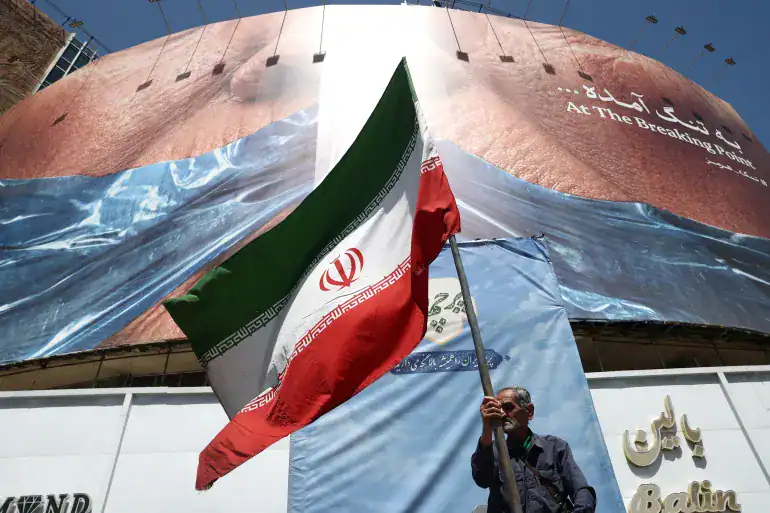
Russia is secretly assisting Iran in developing supersonic cruise missiles as part of a large-scale, classified military-technical cooperation program. The joint project, codenamed C430L, has been ongoing since 2023 and remains active in 2026.
Its main goal is to transfer critical military technology to Tehran, which the country has been trying to acquire for decades.
The formal contract between the Russian side and the Iranian Ministry of Defense was signed in November 2023.
In addition, Russian Security Council Secretary Sergei Shoigu made two key visits to Iran in August and September 2024 amid the escalating international situation.
Shoigu met with Iranian President Masoud Pezeshkian and Commander-in-Chief of the Iranian Armed Forces Mohammad Bagheri. Shoigu also met with the Secretary of Iran’s Supreme National Security Council.
“Shoigu’s visit underscores the close alliance between Iran and Russia, which has strengthened since the outbreak of war in Ukraine in 2022. Iran has provided Russia with military drones, and the two countries recently finalized an agreement to expand military and intelligence cooperation,” the publication noted. New York Times.
According to a major investigation by the Financial Times, based on leaked internal Russian correspondence, leading Russian engineers are helping Iran improve its ramjet engine.
A ramjet engine uses a counter-current flow of air to generate thrust and can maintain high speed after the initial boost. For cruise missiles, this combines significant speed with low-altitude flight capability.
This technology allows cruise missiles to maintain speeds several times greater than the speed of sound.
The program is organized by the state arms exporter Rosoboronexport in close cooperation with NPO Mashinostroyeniye, a leading Russian enterprise in the field of strategic missile production.
Documents indicate that Russian specialists regularly visit Tehran. Among the Russian specialists involved in the program were Alexander Dergachev, Alexander Chebakov, Yuri Prokhorchuk and Vladislav Kuzmichev.
In April 2025, Rosoboronexport offered to send about two dozen Russian specialists to Iran for technical consultations. Before the trip, Tehran was required to provide information on the test results.
It should be noted that the beginning of the Iranian missile program can be considered to be the mid-1980s. Then, in 1985, Iran was able to purchase in Libya R-17 missiles of the Elbrus system, better known as the Scud. Furthermore, Scuds were purchased from North Korea, which it received from Egypt in the 1970s and localized in the mid-1980s under the name Nodong.
According to experts, all Iranian missiles are based exclusively on two sources: the Soviet R-17 from the Scud and the 9M21 from the Luna-M. Not only Iranian specialists, but also North Korean specialists, participated in the modernization and development of derivatives. It should be noted that In 2006, the United States officially accused China’s Great Wall Industry of creating the Fateh missiles.
Let me remind you, According to the Security Council resolution, Parchin Chemical Industries, PB Sadr, and electronics manufacturers MODAFL and PCI are subject to sanctions. The Chinese company Zhejiang Qingji Ind Co. was included in the list of restrictions on the sale of centrifuges and other equipment to Iran. Also sanctioned were Hong Kong Ke.Do International Trade and China’s Qingdao Zhongrongtong Trade Development, which the US Treasury Department accused of selling dual-use non-ferrous metals to Iran.
“The United States will continue to target illicit transnational procurement networks that covertly support Iran’s ballistic missile production and other military programs,” said Brian Nelson, Under Secretary of the Treasury for Terrorism and Financial Intelligence.
Military experts and CIA analysts note that ramjet engine enhancement technology is intended to create highly effective anti-ship missiles. The emergence of such weapons poses a qualitatively new threat to US Navy ships and those of their allies in the Persian Gulf.
Supersonic cruise missiles combine high speed with the ability to fly at extremely low altitudes. This allows modern air and missile defense systems minimal time to identify and intercept a target.
As of the fall of 2026, Iran has already conducted the first tests of a ramjet engine. However, there is no direct evidence that the completed jointly produced supersonic missiles have already entered service or been deployed by the Iranian military.
Since Iran shares its modifications with Russia, these technological developments could be used by Russia in the future to create new weapons against Ukraine.
Notably, this missile program is part of a broader military alliance. Iran has been supplying Russia with Shahed-type attack drones for years and has helped localize their production in Russia. In turn, Russia provides Tehran with high-resolution satellite imagery for monitoring US military bases, as well as weapons components and ammunition.
Furthermore, one of Iran’s latest developments, the Khaibar-Shekan medium-range ballistic missile, may be of significant interest to the Russian Armed Forces. It has not yet been tested.
According to US intelligence estimates, cruise missiles may also be part of Russian-Iranian cooperation. Iran has a significant number of them. For example, this could include the Meshkat missile, which is very similar in performance to the Russian Kh-55, which has been used in strikes against Ukraine since the beginning of the war (range 600 kilometers, warhead weight 960 kilograms, accuracy 600 meters).
This missile plays a fundamental role in the development of Tehran’s missile program and has direct ties to Soviet technology. In 2001, Iran illegally purchased approximately 12 Soviet Kh-55 cruise missiles, left over from the collapse of the Soviet Union. Kh-55 missiles were designed to launch strategic bombers and could carry nuclear warheads. Project Meshkat became Iran’s official reverse engineering program. these missiles.
The Iranian Ministry of Defense first announced the creation of the Mishkat missile in September 2012. At that time, they stated With a range of over 2,000 km, the missile was designed for launch from land-based launchers, ships/submarines, and aircraft.
https://www.timesofisrael.com/iran-set-to-unveil-homegrown-cruise-missile/
It was on the basis of the Meshkat project that Iran was able to create a line of long-range cruise missiles, which were subsequently supplied or copied by the Yemeni Houthis for strikes against Saudi Arabia and ships in the Red Sea.
The very fact of Iran’s technological cooperation with Russia raises ongoing concerns that similar cruise technologies could circulate between Moscow and Tehran as part of an arms exchange.
According to the BBC, Russia’s production of shorter-range missiles was limited by the INF Treaty, which was in effect from 1988 to 2019. Russia, like the United States, was prohibited from testing and deploying ground-launched ballistic and cruise missiles with shorter and intermediate ranges (1,000 to 5,500 km). The treaty did not prohibit the design of such missiles, but Russia was by no means able to build a large arsenal before the war.
According to NBC News, Russia is supplying Iran with explosives, drone components, and ammunition via the Caspian Sea. The goal of the operation is to replenish Tehran’s military arsenal, which has been depleted during the fighting against the US and Israel this year.
Russia’s reasons for these deliveries are to divert US attention and resources from Ukraine. Iran and Russia have synchronized their actions globally. Russia’s massive strikes on Ukraine and the attacks by Iran and its proxies in the Middle East target the same weapons—Patriot interceptors, NASAMS, and other missiles. At the same time, the increasing complexity of US strategy in the Middle East has historically reduced the resources Washington has been able to devote to the war in Ukraine.
According to former CIA analyst Jim Lamson, Russian assistance in resolving technical problems could become one of the most important areas of Moscow’s military-technical support to Iran in recent years.
Military-technical cooperation between Russia and Iran poses a direct, long-term, and critical threat to Ukraine’s national security. This alliance has evolved beyond mere procurement and has become a strategic partnership, where the parties share technology, combat experience, and intelligence.
Also follow “Pryamy” on Facebook , X , Telegram and Instagram.
- Materials published in the “THOUGHTS” section reflect the opinion of the author of the publication, who bears full responsibility for the accuracy of the information.
- The editors of prm.ua may not share the opinions expressed in the author’s material.
- The owner of the web page in the “THOUGHTS” section is the author of the publication.