


The Asymmetry of War: Why Moscow’s Changing Shelling Tactics Requires New Approaches to Striking Behind Enemy Lines


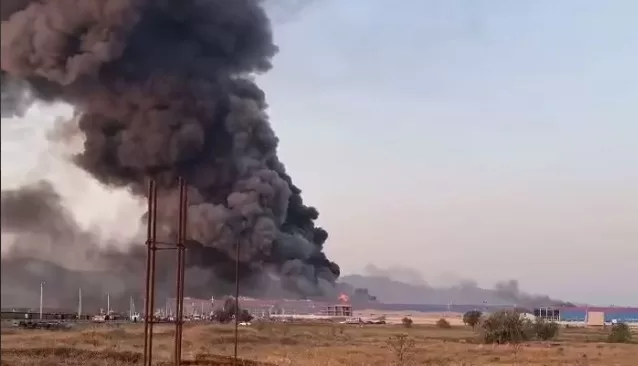
Фото з соцмереж
On the night of August 23, Russia attacked Ukraine with 127 drones of various types, with impacts and debris falling at 25 locations. According to preliminary data, air defenses shot down or suppressed 97 Russian drones in the north, south, and east of the country.
On the night of August 20, the enemy launched a massive attack on Ukraine with various types of missiles and 168 drones. The main strike fell on the Kyiv region, with air defenses neutralizing 186 aerial targets. According to the Right Sector, the Russians attacked the Kyiv region with Onyx, Zircon, Iskander-M, and S-400 missiles, which use ballistic trajectories to approach their targets.
While I I don’t see evidence of a long-term accumulation of missiles and drones. Numbers indicate the enemy’s usual capabilities.
There is no basis yet to say that the enemy has been stockpiling weapons for a final massive attack on Ukraine. First of all I draw attention to the number of drones – from 120 to 168 units.
When the enemy accumulates UAVs, the General Staff of the Ukrainian Armed Forces reports attacks with UAVs numbering between 400 and 600 units. Even the maximum number of 168 UAVs during the August 20 attack is essentially their daily count.
According to the Main Intelligence Directorate of the Ministry of Defense, Russian industry can currently produce approximately 3,000 Geranium-4/5 rockets per month. Meanwhile, Geranium-2 production is estimated at approximately 2,800 units per month.
The primary production site for Russian attack UAVs is located in the Alabuga industrial zone in Tatarstan. Additionally, drones of the Harpia family are manufactured in Russia at the Kupol Electromechanical Plant in Izhevsk. The Geran-4 and Geran-5 jet-powered drones are among the new Russian developments, created using technologies obtained through Russia’s cooperation with Iran in the Shahed project.
The same applies to ballistics. During the last massive attack, approximately 12–15 ballistic missiles could have been used. This, again, doesn’t mean they were stockpiling ballistic weapons. This is their average capability.
In total, the Russian defense industry is capable of producing more than 200 cruise and ballistic missiles monthly.
According to Ukraine’s military-political leadership, Moscow is seeking to scale up ballistic missile production to 100 units per month (approximately 1,300 per year), but has not yet achieved this rate by the end of summer 2026.
According to the official response of the Main Intelligence Directorate of the Ministry of Defense to media inquiries, as of August 2026, the immediate combat stock of ballistic systems in Russia’s arsenals is:
– missiles for the Iskander-M OTRK – about 130 units
– RM-48U missiles (up to S-400) – about 400 units
– hypersonic “Daggers” – about 50 units.
At the same time, I don’t believe that the enemy is experiencing a critical shortage of weapons. This is evidenced by the fact that under the latest massive The attacks used cruise, ballistic and hypersonic missiles.
Another telling moment is the launch of Kalibr missiles from the Novorossiysk area. I would like to point out that, despite Ukraine’s previous strikes against Russian Black Sea Fleet missile carriers, the occupying power still retains the ability to launch cruise missiles from there.
The General Staff of the Armed Forces of Ukraine reported the defeat of the missile carriers Admiral Makarov and Admiral Essen, but we see that the enemy has the ability to launch strikes from Novorossiysk Bay.
I also draw attention to the geography of the drone launches. The drones were flown from Kursk, Millerovo, Orel, Primorsko-Akhtarsk, as well as from the occupied territories of Crimea and Donetsk. Particular attention I’m focusing specifically on Donetsk. In my opinion, new drone launches from Donetsk indicate that the enemy has the ability to reactivate drone launch infrastructure near Donetsk Airport in a relatively short timeframe. Or, at the very least, the reports of the drone port’s destruction were exaggerated.
At the same time, the main difference between these attacks is not the number of missiles and the geography of the launches, but the choice of targets.
The strikes targeted logistics hubs. Food and medical supply depots, including Red Cross warehouses, were destroyed. Therefore, this is less a question of stockpiling weapons than of selecting targets.
The enemy systematically attacks food depots, logistics centers of large retail chains, warehouses with medicines and other facilities where significant stocks of essential goods are stored.
On the night of August 5, Russian strikes damaged or destroyed four Fozzy Group distribution centers, which supplied goods to the Silpo, Fora, and Thrash! chains. Six workers were killed in the attack.
On the morning of August 20, a massive Russian missile attack damaged a train belonging to the ECO Market supermarket chain. Russian shelling damaged a warehouse belonging to the Fora grocery chain in Martusivka, Kyiv Oblast, where fresh produce was stored. In Boryspil, a Russian attack damaged food warehouses and Red Cross facilities. Furthermore, on the night of August 20, a warehouse containing goods from Varus supermarkets in Boryspil was damaged. And on August 22, Russian attackers struck a distribution store belonging to the Aurora grocery chain.
I believe that in this way the enemy is trying not just to destroy a specific composition, but to disrupt the supply system itself and create conditions for an artificial shortage.
They are deliberately destroying Food warehouses and logistics centers of large retail chains, where refrigeration equipment is located. This could lead to queues and shortages of food, medicine, and essential goods.
This is precisely the fundamental difference between Russian strikes and some of the Ukrainian attacks on targets in the territory of the occupying country.
We’re attacking Wildberries marketplaces. It’s a good picture, but a marketplace isn’t a specialized grocery store or a pharmaceutical supply chain. Russians will survive the fall and winter without Wildberries.
When it comes to strikes on Russian territory that could have a real impact on Russian society ahead of the autumn-winter period, a much more important target is energy infrastructure.
We need to target what can actually make a difference. Without marketplaces, they’ll survive the fall, but without energy infrastructure, that’s a different matter. We need to stop exchanging memes and focus on striking the enemy’s energy infrastructure.
Also follow “Pryamy” on Facebook , X , Telegram and Instagram.