


The most scandalous construction in Ukraine: the government has set the deadlines for the completion of the Khmelnytskyi NPP power units


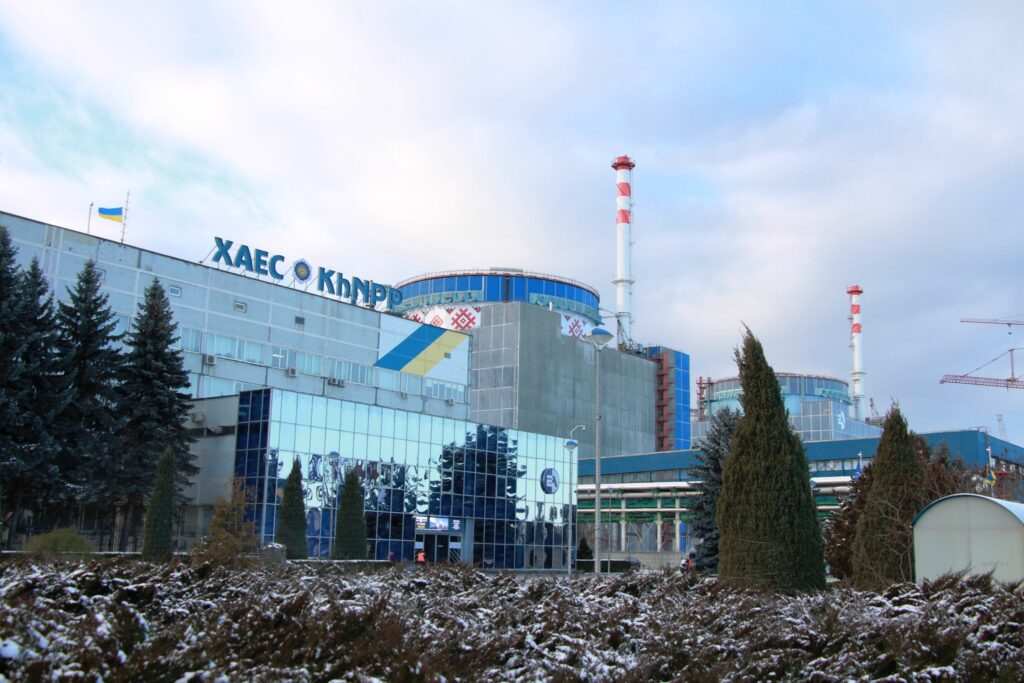
Фото: facebook Хмельницька АЕС
The Cabinet of Ministers of Ukraine announced that it plans to launch the project to complete power units No. 3 and No. 4 of the Khmelnytskyi Nuclear Power Plant in 2026.
This is stated in the government’s strategic initiatives program .
It is noted that this decision became another stage in the long-standing discussion surrounding one of the most scandalous construction projects in the country’s history, which remained frozen for decades.
The Cabinet of Ministers of Ukraine has set clear deadlines for the project: the feasibility study is scheduled to be updated by the end of October 2025, and the government is to submit a draft law on the location, design, and construction of power units to the Verkhovna Rada by the end of 2025. Direct work at the KhNPP site is expected to begin by the end of 2026.
This concerns the completion of two power units, which were planned back in Soviet times. Construction of power unit No. 3 began in September 1985, and No. 4 in June 1986. At the time of the suspension of work in 1990, the construction readiness was 75% for the third unit and only 28% for the fourth. The reason was the moratorium on the construction of new nuclear power plants after the Chernobyl disaster.
Currently, two VVER-1000 power units with a total capacity of 2,000 MW are operating at Khmelnytskyi NPP. At the same time, the project envisaged the creation of four units, and in the future, two more new ones using the American AP1000 technology. If all plans are implemented, the total capacity of the plant will exceed 6,000 MW, which will make it the largest in Europe.
In 2023, it became known that Ukraine had agreed with Bulgaria to purchase two nuclear reactors for the completion of the Kherson NPP, but the negotiations proved difficult. In September 2024, Bulgaria continued consultations, and in April 2025, Deputy Prime Minister Atanas Zafirov announced that the country would not sell Ukraine two VVER-1000 reactor vessels.
Despite this, in February 2025, the Verkhovna Rada adopted Law of Ukraine No. 4231-IX, which allowed Energoatom to conclude agreements with the Bulgarian state-owned company National Electric Company EAD for the purchase of equipment. However, the document only provides for the purchase of reactors and components, which limits the project costs to approximately $600 million. Further funds and financing should be determined by a separate draft law after the updated feasibility study.
The project has repeatedly caused controversy among experts and politicians. Energy Minister Herman Galushchenko stated that it is possible to complete the construction of the third power unit in three years, emphasizing that financing is planned at the expense of credit resources. On the other hand, some deputies and energy industry specialists, in particular Inna Sovsun and Oleksandr Kharchenko, called the initiative inadequate and without prospects. Former chief engineer of the Chernobyl NPP Mykola Shteinberg and diplomat Lana Zerkal generally dubbed the idea “chatter” and “fairy tale.”
At the same time, the international community is also paying attention to this issue. IAEA Director General Rafael Grossi supported Ukraine’s strategy for completing the Kherson NPP in February 2025, and President Volodymyr Zelensky signed a law on the purchase of equipment for the project.
Recall that in April, Bulgarian Deputy Prime Minister Atanas Zafirov stated that Bulgaria had officially refused to supply Ukraine with nuclear energy equipment intended for the unfinished Belene NPP.
Earlier, in November 2024 , Ukraine and Bulgaria discussed an agreement that provides for the transfer of surplus nuclear equipment from Bulgaria to the Ukrainian side for the completion of power units at the Khmelnytskyi NPP.
Also follow “Pryamim” on Facebook , Twitter , Telegram , and Instagram .