


Russia Seeks to Widen Battlefield by Seizing More Ukrainian Territory


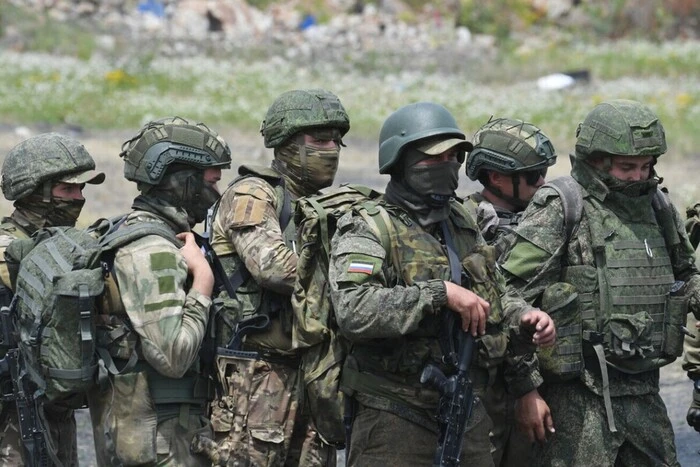
фото: росЗМІ
The intensity of fighting on the front continues to grow — on July 5 alone, Ukrainian forces recorded 170 combat clashes, with the fiercest battles unfolding in the Pokrovsk direction. This marks a sharp escalation compared to the previous day.
In my view, we should prepare for an expansion of the theater of operations into new territories. This will likely begin in the Sumy and Kharkiv regions, with a possible attempt by the enemy to push into the Dnipropetrovsk region as well.
Russia may use the expansion of hostilities as a tool of military and political pressure on the Ukrainian leadership during the so-called Istanbul talks on ending the war. This escalation is expected not only in the summer but also in the fall.
The recent phone call between Putin and Trump indicated that the Kremlin leader has no intention of changing the course of the war until at least the intermediate objectives of the so-called “special military operation” are achieved. Despite catastrophic losses in manpower, Russian occupation forces continue their push toward Pokrovsk and their attempt to reach the administrative borders of Donetsk region.
Russian occupation forces are continuing their attempts to gain direct control over the positions of Ukraine’s Defense Forces in the Pokrovsk direction. After securing control over the Pokrovsk–Kostyantynivka and Pokrovsk–Mezhova routes, their primary objective is to advance along the flanks to create an operational encirclement of Ukrainian forces in this area.
Progress toward Malynivka further opens a path for Russian troops to reach the opposite flank of the cities of Myrnohrad and Pokrovsk via the village of Novoekonomichne.
The occupiers clearly understand that a direct frontal assault on Pokrovsk–Myrnohrad is nearly impossible. The area is heavily fortified with echeloned defenses, dense urban infrastructure, and a significant industrial zone. Any assault would inevitably result in major losses for Russian forces.
Let me remind you: during the battle for Bakhmut, Russian losses were estimated at around 60,000 personnel. A similar situation was observed during the fighting for Kurakhove, where losses reportedly reached 30,000 troops. Faced with these unsustainable casualties and the inability to replenish them, the Russian Federation is now doing everything it can to avoid a repeat of such a disastrous outcome in the Pokrovsk direction. But as we can see, those efforts are failing
Pokrovsk is the last major urban agglomeration on the path to the administrative border of the Donetsk region. From Pokrovsk, Russian forces could pivot northward to attempt an encirclement of Kramatorsk or push southward along the regional boundary toward Zaporizhzhia.
In recent days, Russian armed formations have intensified their efforts to breach Ukrainian defenses near the approaches to the administrative border of the Dnipropetrovsk region.
The main Russian breakthrough attempts are concentrated in the Novopavlivka direction, which serves as a corridor for advancing from the Donetsk region toward the borders of the Dnipropetrovsk region. Russian forces operate in small assault groups supported by armored vehicles, motorcycles, airstrikes using glide bombs (KABs), and tactical FPV drones.
According to estimates by DeepState and other OSINT analysts, Russian troops advanced from a distance of 2 km from the regional border in early June to within less than 100 meters by the end of the month. However, there is still no official confirmation of any incursion into the Dnipropetrovsk region.
Commander-in-Chief of the Armed Forces of Ukraine, General Oleksandr Syrskyi, reported that Russian attempts to breach the administrative border were unsuccessful. The enemy seeks to reach the administrative boundary between Donetsk and Dnipropetrovsk regions to achieve both military and propaganda objectives. Last week, some Russian assault units approached the border but were repelled and pushed back.
If Russian forces succeed in gaining the tactical initiative and reach the border with the Dnipropetrovsk region, this advance will likely be used as leverage during international negotiations, as a tool of military pressure not only on Ukraine, but also on the United States.
Let me explain why it is no coincidence that I emphasize the likely expansion of the theater of operations into new territories. In the Donetsk region, the occupiers will eventually be forced to assault the Sloviansk–Kramatorsk agglomeration, which includes four large industrial cities: Sloviansk, Kramatorsk, Kostyantynivka, and Druzhkivka. It’s worth recalling that the enemy took nine months to capture Bakhmut — a much smaller city — and suffered enormous losses in the process.
Now imagine the scale of storming an agglomeration of four cities with dense urban areas, massive industrial zones, and well-prepared Ukrainian defensive positions. Realizing that such an operation could take more than a year, the Russian dictator may seek leverage by attempting to seize parts of Sumy and Kharkiv regions, or even push toward the Dnipropetrovsk region — to use these advances in a potential territorial “exchange.”
In this scenario, Russia signals that it might halt the offensive in Sumy or Kharkiv if Ukraine agrees to withdraw from parts of the Donetsk region. This possibility should not be ruled out.
So far, Russian forces have failed to achieve tactical success in the Sumy and Kharkiv directions. Putin’s stated goal of creating a so-called “buffer zone” has failed. The tempo of the Russian advance has fallen far short of the Kremlin’s expectations. According to their plan, Russian troops were supposed to penetrate up to 20 km into Ukrainian territory in these regions, but have only managed to advance a maximum of 6 km.
Meanwhile, the Ukrainian Defense Forces maintain a presence in parts of Russia’s Kursk region. In an attempt to dislodge them, additional units of the 22nd Motorized Rifle Regiment of the 44th Army Corps (Leningrad Military District) have been deployed to the village of Guevo, near the Ukrainian border, according to the public initiative “Prava Sprava.”
This suggests that operational reserves from Russia’s Bryansk and Belgorod operational-tactical groups — totaling around 100,000 troops — are no longer sufficient to contain the Ukrainian advance in the Kursk, Bryansk, and Belgorod regions.
Furthermore, “Prava Sprava” reports that additional units from the 137th Regiment of Russia’s 106th Airborne Division — one of the most combat-ready formations — have been redeployed to the area of the village of Gogolevka in the Kursk region.
The redeployment of Russia’s operational reserves from rear areas to the Kursk region contradicts President Putin’s claims of total control over the situation there, and it undermines narratives of a successful breakthrough or expansion of Russian positions in Ukraine’s Sumy and Kharkiv regions.
In reality, the situation appears to be quite the opposite. According to the General Staff of the Armed Forces of Ukraine, more than 30 combat engagements took place over the past 24 hours in the Kursk region alone, in the areas where Ukrainian Defense Forces are present. This reflects Russia’s ongoing — and thus far unsuccessful — efforts to push Ukrainian forces back.
Also, follow “Pryamyi” on Facebook, Twitter, Telegram, and Instagram.
• Materials published in the “OPINIONS” section reflect the opinion of the author of the publication, who bears full responsibility for the accuracy of the information.
• The editorial staff of prm.ua may not share the opinions expressed in the author’s material.
• The owner of the webpage in the “OPINIONS” section is the author of the publication.