


“The parade will be victorious”: how Russia rewrote the history of World War II


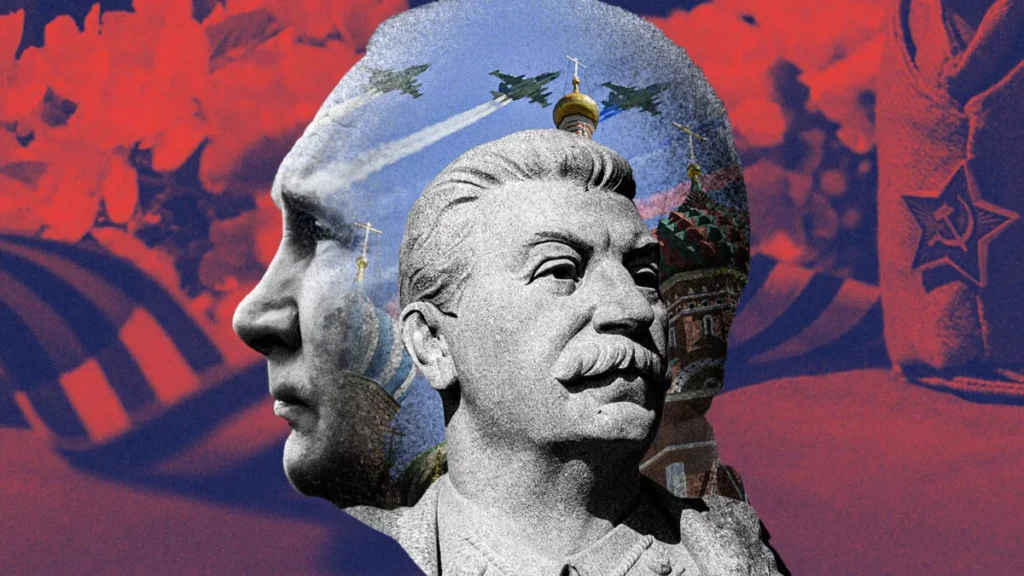
фотоколаж: EU vs Disinformation
On May 8 and 9, Ukraine celebrates the Day of Remembrance and Reconciliation and the Day of Victory over Nazism in World War II. These memorable days symbolize not the triumph of the victors over the vanquished, but are a reminder of the terrible catastrophe that became possible as a result of the coming to power and the conspiracy of two totalitarian regimes – Nazism and Communism.
Instead, for many years, Soviet propaganda created a myth that was later used by the Russian Federation to continue its aggressive actions that could lead to World War III.
The Russian ideological machine uses May 9 to reinforce its own narratives, deliberately ignoring the facts of the Soviet Union’s aggressive policy. For example, state propaganda silences the division of Poland with Hitler’s Germany, as well as the entry of Stalin’s troops into Romania.
For many years, the myth of victory over fascism or Nazism was cultivated in the public consciousness, while the Soviet Union represented a similar dictatorship with a cult of personality (Stalinism) and the sole rule of the “party general secretary”, a clear punitive apparatus, and secret services.

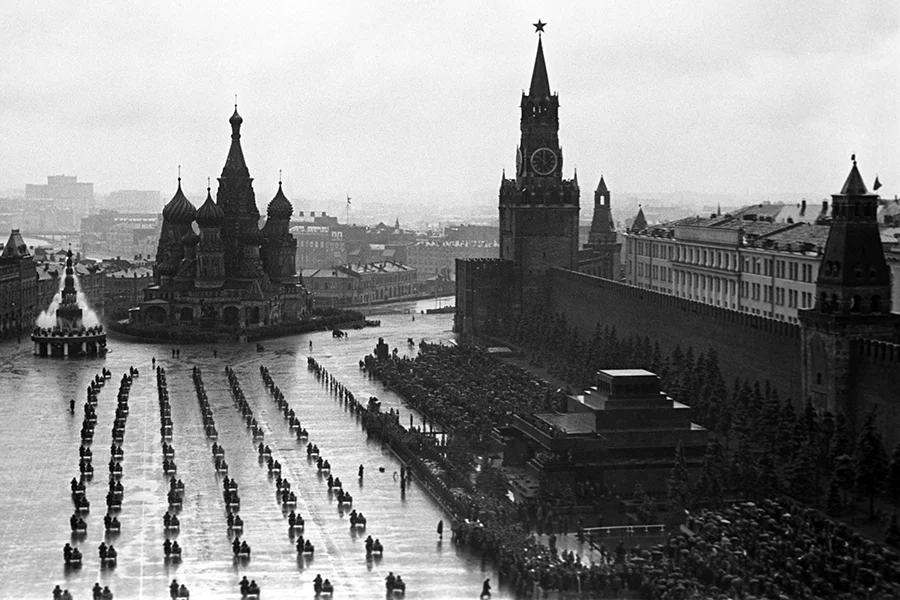
The tradition of mass celebration of this date appeared only in 1965, twenty years after the end of World War II. During the Soviet period, parades in Moscow on Red Square were not annual, taking place only in anniversary years, such as 1975, 1980 or 1985. Only after 1995 did military events become regular in the Russian Federation.
“The special structure “Rossotrudnichestvo”, which includes propagandists and agents of Russian special services, is responsible for the celebration of “Victory Day” in other countries.”
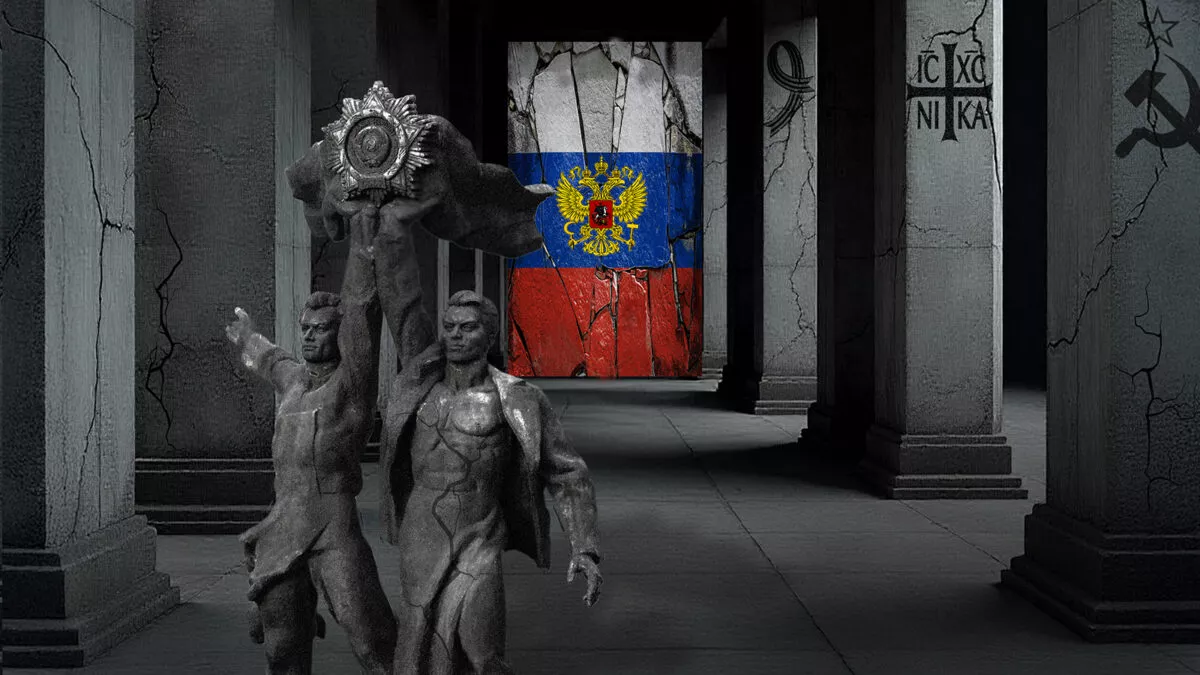
The organization coordinates the efforts of propagandists to create the necessary ideological background outside the country. This allows them to promote the concept of the “Great Patriotic War”, which artificially limits the time frame of the conflict to the period from June 22, 1941 to May 9, 1945, leaving out the previous aggressive actions of the USSR.
Military parades with the participation of veterans, which have been held annually in modern Russia since 1995, have become a tool of influence. Through Rossotrudnichestvo, these events are scaled to the international level, where the interests of secret services and attempts to whitewash Stalin’s dictatorship are hidden behind external ceremonial.

From “never again” to “we can do it again”: how the cult of May 9 was created
The so-called “Great Patriotic War” is a matter of pride for Soviet people. However, that terrible war did not immediately become a symbol. Similarly, “Victory Day” or “May 9” underwent a certain evolution in the USSR, and then, in Putin’s hands, turned into an ideological weapon against those with whom “grandfathers” fought side by side against Hitler’s Nazism.
The so-called “father of nations” Joseph Stalin issued an order on May 9, 1945, to hold celebrations “in commemoration of Victory Day.” At that time, everything Stalin ordered was incorporated into all spheres of life. The cliché “the Great Patriotic War” firmly took root in Soviet historiography and became the basic slogan of Soviet propaganda.
Thus, the global term “World War II” was replaced by the term “Great Patriotic War”.
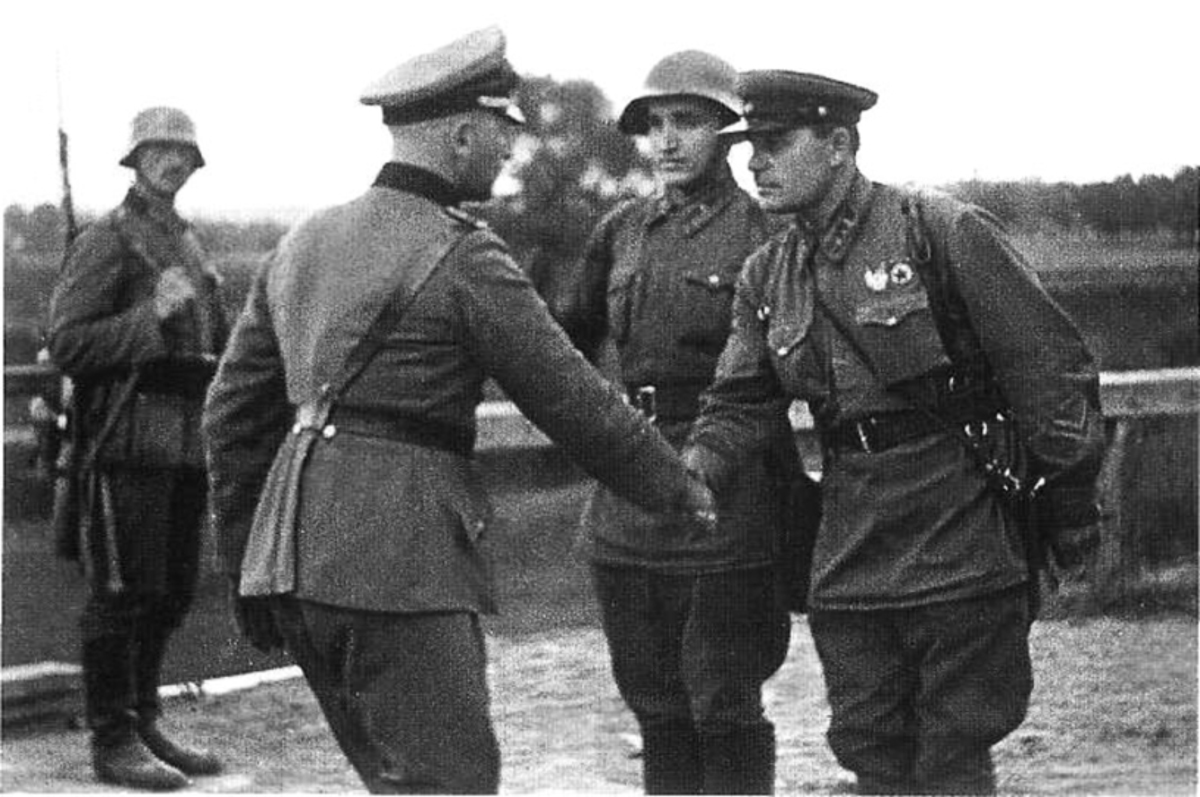
After all, it was inconvenient to talk about the fact that Adolf Hitler and Joseph Stalin divided Poland in September 1939. And that the “peace-loving” Soviet Union tried to take Finland in the winter of 1939 and 1940. True, they failed, but they took a considerable chunk of Finnish territory.
And in 1940, the Baltic countries – Lithuania, Latvia and Estonia – were annexed to the “great and mighty USSR”. And also – Northern Bukovina and Bessarabia. And all this by agreement with the so-called German fascist invaders – according to the secret protocols of the Molotov-Ribbentrop Pact, concluded just a few days before the start of World War II.
Under Stalin and even for a long time after his death, May 9 was not a red day on the calendar, actually a day off, because they did not want to remind people of the horrors of war and the numerous victims.
The Soviet myth of the “Great Patriotic War” and victory in it survived the collapse of the USSR. It was actively promoted in the Russian Federation, especially during the reign of Vladimir Putin. The myth of “victory” in the “Great Patriotic War” became, in fact, the main pillar of Putin’s propaganda, which was projected onto the events of our time.

Unfortunately, this myth was also promoted in independent Ukraine. “Thanks to Grandpa for the Victory” – such a slogan, created by Russian-Putin propaganda, was successfully spread in Ukraine. Now the Kremlin is using this myth, sending Russians to fight against Ukraine.
Russian propagandists actually identify Ukraine with Nazi Germany and convince their audience that just as “grandfathers fought” against Nazism, so now their grandchildren must fight against “Ukrainian Nazis.” And this propaganda works. Because the myth of “Victory Day” is deeply rooted in the minds of Russians.
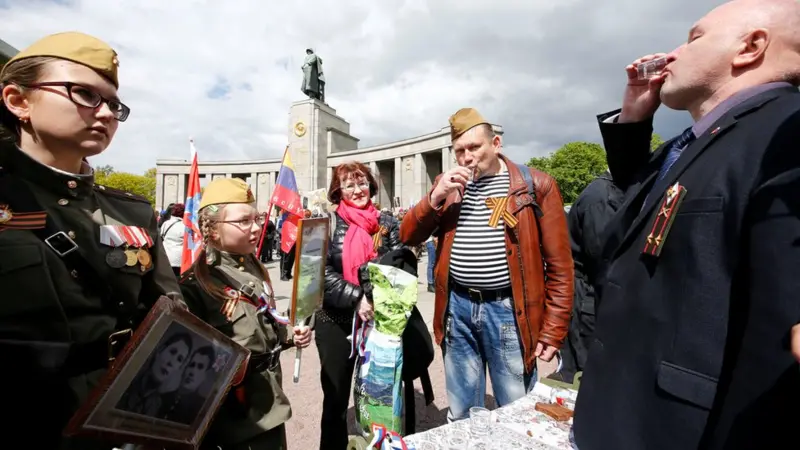
Under Putin’s rule, the celebration of Victory Day has undergone several fundamental changes.
Until 2008, the main idea of Victory Day was to honor the memory of the victims and veterans of World War II. On this day, society honored all the hardships of the war and the heroism of its participants, who shared their terrible memories to prevent a repeat of these events.

After 2008 – and after Russia’s war against Georgia in August of that year – the idea of celebrating Victory Day changed from “Never Again” to “We Can Do It Again.” Under Putin, the day has become an aggressive ritual that promotes Russian military might, the Kremlin’s willingness to use military force against its adversaries, and a day to glorify war itself and all its atrocities.
Based on materials from UINP , Radio Liberty , as well as information from open sources.
Also follow “Pryamim” on Facebook , X , Telegram , and Instagram.