


The Dangerous Illusion of Voting on Peace


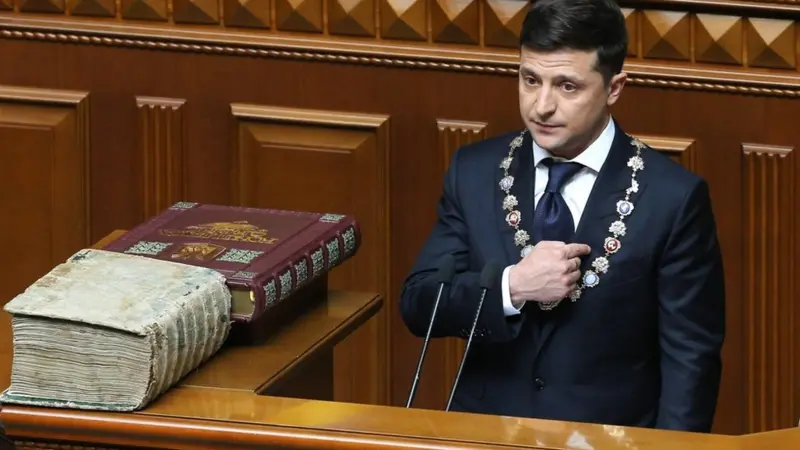
фото: Офіс президента
Source: Author’s Facebook page
Ukrainian law draws a clear line between democratic participation and constitutional self-preservation. Part 2 of Article 3 of the Law on Referendum explicitly prohibits putting to a national vote any issue that threatens Ukraine’s independence, state sovereignty, or territorial integrity.
That is why neither territorial issues, nor questions of limiting the army, joining NATO, or the status of the Russian church or language in Ukraine can be put to a referendum. All of these would constitute a violation of Ukraine’s state sovereignty.
Likewise, the issue of peace itself cannot be submitted to the Verkhovna Rada for deliberation. Doing so would amount to an abuse of power and, under Ukrainian law, a criminal offence.
Only one person is authorized to negotiate and sign peace agreements on behalf of Ukraine: the Supreme Commander-in-Chief of the Armed Forces of Ukraine — President Volodymyr Zelenskyy.
Once signed, such an interstate treaty must be ratified by the Verkhovna Rada in accordance with international law. That is the entire constitutional procedure. No referendums.
The Supreme Commander-in-Chief is not only empowered, but obliged, to decide on the terms of a peace treaty with the occupier. Delegating this responsibility would mean evading it.
Those who propose unconstitutional ways of forcing the President of Ukraine to hold a referendum are not engaging in democracy. They are humiliating the Supreme Commander-in-Chief and usurping his constitutional powers.
Such proposals rest on an implicit claim that the President of Ukraine is incompetent, incapable of fulfilling his constitutional duties, and unable to resolve complex state matters. This is an attempt to strip the Supreme Commander-in-Chief of his authority. During wartime, such usurpation of power is tantamount to high treason.
There is only one lawful way to resolve this issue. Decisions on the terms of a peace treaty can be made only by the President of Ukraine. This is his right, his duty, and his responsibility under the Constitution.
It is also his place in history. History will judge Volodymyr Zelenskyy by the outcome of this war.
This should be understood clearly. No one should engage in reckless or unlawful actions. Those who do will be held accountable.
As a reminder, the day before, President Volodymyr Zelensky presented details of a 20-point draft basic document on the end of the war between Ukraine, the United States, Russia, and the European Union. The head of state also announced that Russia’s reaction to the draft will become known after negotiations with the American side.
In addition, Volodymyr Zelenskyy stated that if the issue of territories cannot be agreed upon during the negotiations, the entire peace plan may be put to a referendum. The President of Ukraine emphasized that the issue of territories is the most difficult in the peace plan, which states that in the Donetsk, Luhansk, Zaporizhia and Kherson regions the contact line is fixed at the location of the troops on the date of the agreement – that is, “we stand where we stand.”
• Materials published in the “OPINIONS” section reflect the opinion of the author of the publication, who bears full responsibility for the accuracy of the information.
• The editorial staff of prm.ua may not share the opinions expressed in the author’s material.
• The owner of the webpage in the “OPINIONS” section is the author of the publication.