


Breaking the Myth: No Russian ‘Cauldron’ in the Pokrovsk Sector


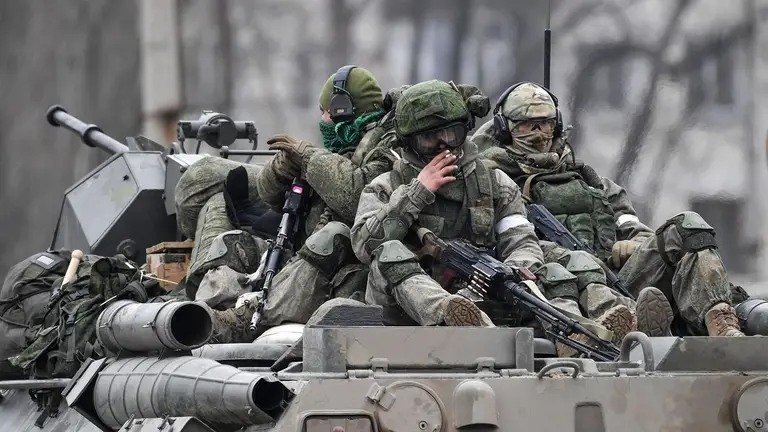
Фото: росЗМІ
On the evening of August 11, the analytical platform DeepState reported a rapid enemy advance in the Pokrovsk sector. OSINT analysts confirm that in recent days, Russian forces have stepped up their push toward Dobropillia, seeking to secure positions near the Dobropillia–Kramatorsk highway.
According to updated combat maps from the analytical resource DeepState, the enemy has advanced approximately 10 kilometers. DeepState analysts note that the occupiers, using an overwhelming number of infantry, have entered the settlements of Kucheriv Yar and Zolotyi Kolodyaz, where they are amassing forces for a further offensive.
From Kucheriv Yar, according to the resource, Russian forces have pushed toward the village of Vesele, where around 20 enemy soldiers were recorded over the past day. At the same time, Russian units are attempting to advance in the areas of Novovodyane and Petrivka, probing for weak points in the defense to reach the Dobropillia–Kramatorsk highway. DeepState warns that if Russian troops consolidate their positions in the captured villages and continue their offensive, Dobropillia could fall faster than Pokrovsk.
The Operational Strategic Group of Forces (OSUV) Dnipro reported that in the Pokrovsk and Dobropillia sectors, a small group of Russian troops — about 10 soldiers — managed to pass the first line of Ukrainian defenses. However, this does not mean they have taken control of the territory shown on analytical project maps.
“We need to understand that these are small groups of several people. Their presence is recorded, and therefore on open-source maps it may appear as, ‘Oh my God, the Russians have advanced 12 kilometers deep into Ukrainian territory.’ But that does not mean they control this territory. We are talking about a small group of 5–10 Russian soldiers who infiltrated the area. This is absolutely not how it looks on the map. It is not as if they took control of the entire route they traveled. No — they moved through and tried to hide somewhere in a basement. Naturally, reserves were deployed to eliminate them,”
emphasized Lieutenant Colonel Viktor Tregubov, spokesman for the Dnipro Special Operations Command.
In turn, the Strategic Communications Directorate (StratCom) directly denied claims of a breakthrough on one of the eastern front lines.
“Over the past day, various information platforms have reported an alleged breakthrough of Russian troops on one of the front lines in eastern Ukraine. This information is unreliable and does not reflect actual events,” the statement said.
The General Staff has confirmed this information and added that they are already responding to the situation. By order of the Commander-in-Chief of the Armed Forces, General Syrsky, additional forces and resources have been allocated to eliminate enemy assault groups infiltrating the defense line in the Pokrovsk direction. One of these units is the 1st Corps of the Azov National Guard, which secured its designated defensive sector in the Pokrovsk direction a few days ago.
“The situation remains complex and dynamic. The enemy, attempting to advance in this sector, is suffering significant personnel and equipment losses,” the press service of the 1st Corps of the Azov National Guard stated.
In particular, the corps units have planned and implemented measures to block enemy forces in specific areas. It is worth noting that the theater of operations has shifted to the flanks of the Pokrovsk front, toward Myrnohrad and Dobropillia.
According to the General Staff, in the Pokrovsk direction, Russian activity is highest around the settlements of Poltavka, Popiv Yar, Mayak, Dorozhne, Nykanorivka, Kucheriv Yar, Nove Shakhove, Novoekonomichne, Sukhetske, Rodynske, Promin, Udachne, Lysivka, Zvirovo, Horikhove, and Dachne.
The Russian Armed Forces are attempting to reach the highway near Rodynske to cut off the only asphalt road. Despite the challenging situation in the Pokrovsk sector and near the city itself, it is premature to claim that Russian forces have achieved any significant tactical success in Pokrovsk.
The main challenge for the Pokrovsk agglomeration — and not only Pokrovsk — is not a direct frontal assault by Russian forces. The occupiers are employing small assault groups of 8–12 personnel. These are not reconnaissance and sabotage groups (DRGs), contrary to earlier reports claiming DRGs were trying to infiltrate Pokrovsk. Instead, the tactic involves numerous small assault teams concentrated on narrow sections of the front, creating local superiority in firepower and enabling tactical advances deep into Ukrainian defenses.
It should be noted that Pokrovsk is a large industrial city with a dense urban environment. Therefore, it is inaccurate to claim that Russian forces already hold tactical advantages there, or that the city is at risk of falling. Such assertions are blatant Russian propaganda. For comparison, Chasiv Yar — a much smaller city in both size and population — has remained beyond Russian control for over a year and a half. In this context, assaults by small groups on Pokrovsk appear to be intended primarily to stretch the operational reserves of the Ukrainian Defense Forces from the flanks, where the main Russian attacks are concentrated.
It is reported that the information noise surrounding the alleged breakthrough of Russian DRG forces in Pokrovsk was merely a diversion. The occupiers have shifted their main effort to the right flank, toward the Myrnograd and Dobropillya areas. Their objective is to create a “small cauldron” that would complicate the defense of Pokrovsk. Currently, Russian forces are avoiding a direct assault on Pokrovsk itself and are instead employing tactics aimed at controlling the flanks and, crucially, the supply routes of the Ukrainian Defense Forces.
It is no coincidence that the primary theater of operations has now moved to the Myrnograd and Dobropillya directions, i.e., the right flank of the Pokrovsk Front. There, the occupiers are attempting to gain direct control over the highway near Rodynske from the direction of Razine. This is the only asphalt road along which Ukrainian forces transfer operational reserves and evacuate the wounded. Consequently, if the occupiers achieve tactical success, this could create a threat of operational encirclement. However, it must be emphasized that this is only a threat. The left flank of the Pokrovsk Front has been stabilized thanks to the successful actions of the Ukrainian Defense Forces. The main focus of Russian operations remains concentrated in the Myrnograd area.
Additionally, the occupiers are employing “human wave” tactics. Reports suggest that the Kremlin has committed more than 110,000 personnel in the attempt to capture Pokrovsk. Reinforcements of equipment, artillery, and ammunition are being delivered daily. The Ukrainian Defense Forces are tasked not only with preventing encirclement but also with destroying these enemy reserves.
Although Russian forces are making some progress, this does not constitute a breakthrough toward Dobropillya. Information about such breakthroughs is actively circulated by the Russians, particularly against the backdrop of preparations for the Trump-Putin meeting and the U.S. President’s statements about returning significant territories to Ukraine. This can be interpreted as deliberate information pressure from Russia, designed to project an image of tactical success. In reality, the Russian leadership, represented by its dictator, is signaling to Trump: “Why should we negotiate if we have already reached the administrative border of Dnipropetrovsk region? In a week or two, we can resolve the capture of the entire Donetsk region.”
Ukrainian President Volodymyr Zelenskyy, speaking to journalists on August 12, stated that he believes the purpose of the Russian advance in the Pokrovsk direction is to create an information backdrop ahead of the meeting between U.S. President Donald Trump and the Russian dictator.
“The goal of this advance is clear: to create a specific information narrative by August 15, particularly in the American media space, portraying Russia as advancing and Ukraine as losing territory,” he noted.
It is reported that the information noise surrounding the alleged breakthrough of Russian DRG forces in Pokrovsk was merely a diversion. The occupiers have shifted their main effort to the right flank, toward the Myrnograd and Dobropillya areas. Their objective is to create a “small cauldron” that would complicate the defense of Pokrovsk. Currently, Russian forces are avoiding a direct assault on Pokrovsk itself and are instead employing tactics aimed at controlling the flanks and, crucially, the supply routes of the Ukrainian Defense Forces.
Reports indicate that the information noise surrounding the alleged breakthrough of Russian DRG forces in Pokrovsk was merely a diversion. The occupiers have shifted their main effort to the right flank, toward the Myrnograd and Dobropillya areas. Their objective is to create a “small cauldron” that would complicate the defense of Pokrovsk. Currently, Russian forces are avoiding a direct assault on Pokrovsk itself and are instead employing tactics aimed at controlling the flanks and, crucially, the supply routes of the Ukrainian Defense Forces.
It is no coincidence that the primary theater of operations has now shifted to the Myrnograd and Dobropillya directions—the right flank of the Pokrovsk Front. There, the occupiers are attempting to gain direct control over the highway near Rodynske from the direction of Razine. This is the only asphalt road along which Ukrainian forces transfer operational reserves and evacuate the wounded. Consequently, if the occupiers achieve tactical success, this could create a threat of operational encirclement. However, it must be emphasized that this remains only a threat. The left flank of the Pokrovsk Front has been stabilized thanks to the successful actions of the Ukrainian Defense Forces. The main focus of Russian operations remains concentrated in the Myrnograd area.
Additionally, the occupiers are employing “human wave” tactics. Reports suggest that the Kremlin has committed more than 110,000 personnel in an attempt to capture Pokrovsk. Reinforcements of equipment, artillery, and ammunition are being delivered daily. The Ukrainian Defense Forces are tasked not only with preventing encirclement but also with destroying these enemy reserves.
Although Russian forces are making some progress, this does not constitute a breakthrough toward Dobropillya. Information about such breakthroughs is actively circulated by the Russians, particularly against the backdrop of preparations for the Trump-Putin meeting and the U.S. President’s statements about returning significant territories to Ukraine. This appears to be deliberate information pressure from Russia, designed to project an image of tactical success. In reality, the Russian leadership, represented by its dictator, is signaling to Trump: “Why should we negotiate if we have already reached the administrative border of the Dnipro region? In a week or two, we can resolve the capture of the entire Donetsk region.”
Ukrainian President Volodymyr Zelensky, speaking to journalists on August 12, stated that he believes the purpose of the Russian advance in the Pokrovsk direction is to create an information backdrop ahead of the meeting between U.S. President Donald Trump and the Russian dictator.
“The goal of this advance is clear: to create a specific information narrative by August 15, particularly in the American media space, portraying Russia as advancing and Ukraine as losing territory,” he noted.
Earlier, the spokesman for the operational-strategic group of troops “Dnipro,” Viktor Tregubov, said that Russian troops continue their attempts to break through and consolidate in the Novopavlivske direction to advance towards the administrative border of the Dnipropetrovsk region.
It is worth adding that the Russian occupation forces have accumulated a large number of personnel in three cities in the Donetsk region — Pokrovske, Dobropillya, and Kostyantynivka.
Also, follow “Pryamyi” on Facebook , Twitter , Telegram , and Instagram .
• Materials published in the “OPINIONS” section reflect the opinion of the author of the publication, who bears full responsibility for the accuracy of the information.
• The editorial staff of prm.ua may not share the opinions expressed in the author’s material.
• The owner of the webpage in the “OPINIONS” section is the author of the publication.