


The US, Russia and China plan to place nuclear reactors on the Moon: how safe is it?


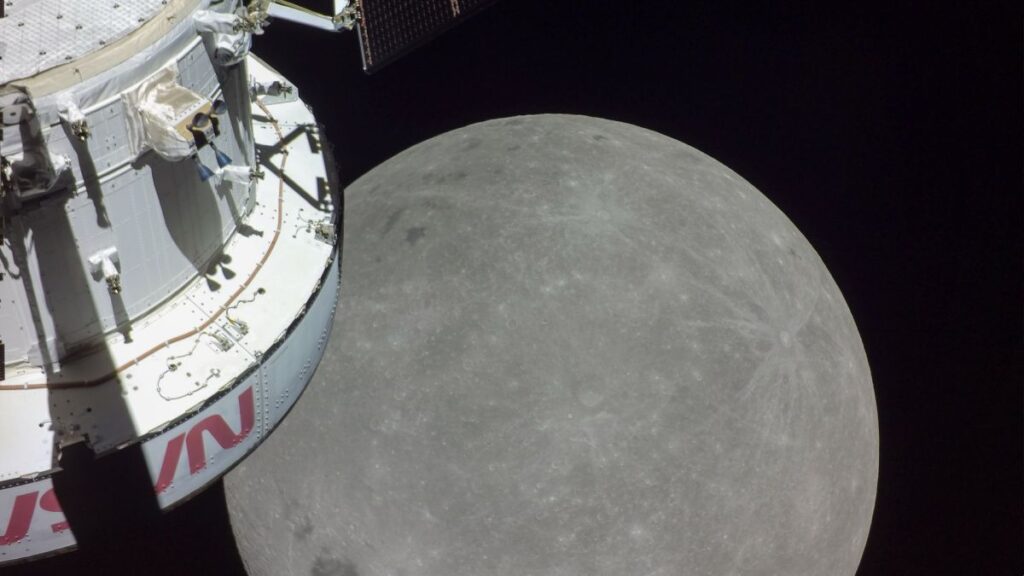
Фото: Space.com
The US plans to place a nuclear reactor on the Moon by 2030, while Russia and China are working on their own project, which is expected to be implemented by 2036. Scientists warn that the hasty deployment of nuclear power in space could create additional risks.
This is reported by The New York Times .
In late August, NASA asked contractors to prepare a nuclear reactor capable of withstanding spaceflight and operating without maintenance near the moon’s south pole. The agency plans to have it ready for launch by December 2030.
The United States and China are seeking to establish lunar bases, explore the moon’s resources, and use it for deep space missions. Nuclear reactors are seen as an important source of energy for such bases because they are independent of sunlight.
Russia is working on the Selena reactor, which is planned to be created by 2036 to provide electricity to lunar stations. According to the declared characteristics, it will produce up to 10 kilowatts of electricity and will be able to operate autonomously for 10 years.
NASA plans to build a 20-kilowatt reactor that can operate for five years without intervention. The agency also plans to use nuclear power to propel a spacecraft to Mars in December 2028.
Scientists warn that the implementation of such projects is associated with a number of risks. Over the past 6 years, several Chinese, American and Russian rockets have failed and exploded, and a Russian lander crashed on the Moon.
“The space race will always continue, and if you add nuclear power to it, the situation could become potentially more dangerous,” said Edwin Lyman, director of nuclear safety at the Union of Concerned Scientists.
Experts also draw attention to the risks of launching or returning a reactor to Earth. In particular, they recall the case of the Russian satellite “Kosmos-954”, which in 1978 entered the atmosphere in an uncontrolled manner and caused the dispersion of radioactive substances in northern Canada.
An additional problem on the Moon is the lack of protective infrastructure. According to experts, creating protective structures for the reactors will be technically difficult and expensive, and after the work is completed, the nuclear materials are planned to be left on the surface of the satellite.
NASA says it will use fuel that is not highly enriched. At the same time, the US is having difficulty producing enough of the fuel needed, and Russia is one of the largest producers.
The Russian-Chinese project has not yet disclosed the type of fuel that will be used in the reactor. Experts also note that none of the current projects have yet proven ready for full-scale operation on the Moon.
Also follow “Pryamim” on Facebook , X , Telegram , and Instagram .