


Trump’s inauguration anniversary: how promises turned into political myth


фотоколаж: О.Голобуцький
It has been exactly a year since Donald Trump took office as president of the United States (he was sworn in at approximately 7 p.m. Kyiv time on January 20, 2025), but his key campaign promise of an immediate cessation of hostilities has remained unfulfilled. Loud promises to stop the Russian-Ukrainian war in one day have turned into a political myth. Although this topic made the Ukrainian issue central during the American race, during the year in power, the White House has not demonstrated the expected breakthrough in resolving the conflict.
“Pryamy” decided to analyze Donald Trump’s actions and statements during the first year of his second presidency.
Despite the fact that during the campaign, the politician publicly emphasized his ability to cease fire before his inauguration more than 50 times, the armed confrontation continues. Washington has not yet used all possible levers of economic and diplomatic pressure on Russia.
Instead of actively forcing the aggressor to make peace, the administration is focusing on protracted negotiation processes. Many Ukrainians from the very beginning treated such a quick timeframe for resolving the problem with a significant degree of skepticism. Now it is becoming obvious that the reality turned out to be more complicated than the campaign slogans.

“It was a joke”: Trump explained his promise to end the war in one day
US President Donald Trump has dramatically changed his rhetoric on a quick resolution of the conflict in Ukraine, calling his previous statements a “joke” and a “figurative statement.” The current head of state is accusing the media of misinterpreting his words about ending the war in 24 hours. The politician is trying to distance himself from his own campaign promises, which previously sounded like a specific intention.
Trump continues to promote the idea that if he had been in power in February 2022, a large-scale invasion would not have begun at all. He bases his arguments on the existence of personal contacts with both Putin and Zelensky.
At the same time, the US president shifts responsibility for the current state of affairs to the actions of the previous administration of Joseph Biden. Instead of the promised quick result, the world is observing a transformation of Washington’s position, which is becoming less categorical compared to the times of active competition. The question of forcing Russia to make peace remains open, despite numerous manipulations with numbers and terms.

Trump’s altercation with Zelensky in the Oval Office: what was it?
A bilateral agreement on the establishment of the Ukraine Reconstruction Investment Fund was scheduled to be signed in Washington in late February. This document, known as the “minerals agreement,” was supposed to be signed just a month after the new US president officially took office. However, an unexpected public spat between the American and Ukrainian presidents in the White House halted the process, immediately raising questions about future assistance mechanisms.
Earlier discussions about financial aid had already included demands for compensation. Trump said that Washington should receive compensation in the form of access to our natural resources, believing that this is how he would be able to return billions of dollars from Ukraine to the United States.
The conversation between the current leaders was conducted in a heated tone, quickly turning into a conflict. This led to the failure of the signing of a key agreement. This event created significant uncertainty not only regarding future funding for Ukraine, but also affected the general perception of the security situation in Europe.

Peace in exchange for territory: why the agreement with the US did not stop the war
On April 30, 2025, a document was signed that was supposed to be the beginning of the end of the exhausting war. Ukrainian officials showed restraint in their statements, given the character of the 47th US President, Donald Trump. Kyiv officially supported the ceasefire, agreeing with the pragmatic and ambitious approach of the American side. At the same time, Russia is constantly delaying this process, trying to seize as much Ukrainian territory as possible.
For a whole year, Donald Trump, Secretary of State Marco Rubio, special envoy Stephen Witkoff and businessman Jared Kushner held intensive consultations. Despite numerous calls and meetings, these talks did not bring real peace. The Russian leadership continues to mislead partners, inventing various explanations for postponing the ceasefire.
The delay in negotiations allows Moscow to make new, groundless demands. While Washington’s representatives are looking for options to end the bloody massacre, the aggressor is focusing on obtaining territorial gains, ignoring previous agreements and the desire for peace.

Talks with Putin and a meeting in Alaska: why does Trump need this?
The US President has held seven meetings with Volodymyr Zelenskyy this year, while he has had only one personal meeting with Putin. Those talks took place in Alaska last August. Despite his status as a person wanted by the International Criminal Court, the Russian leader was given an official reception, which ended with only general statements about progress made towards a peace agreement, without any concrete results.
The American leader’s public forecasts regarding the timing of the end of the war have undergone significant changes. The initial thesis of establishing peace in 24 hours has transformed into statements about the possibility of resolving the conflict in two to three weeks. This position gives the Kremlin additional time to think instead of applying the full spectrum of political and economic pressure.
Following the meeting in Alaska, the parties limited themselves to declarations about the constructiveness of the dialogue. In fact, the negotiators only agreed to continue contacts, which does not stop the development of the armed conflict and does not create real obstacles for the occupation forces.
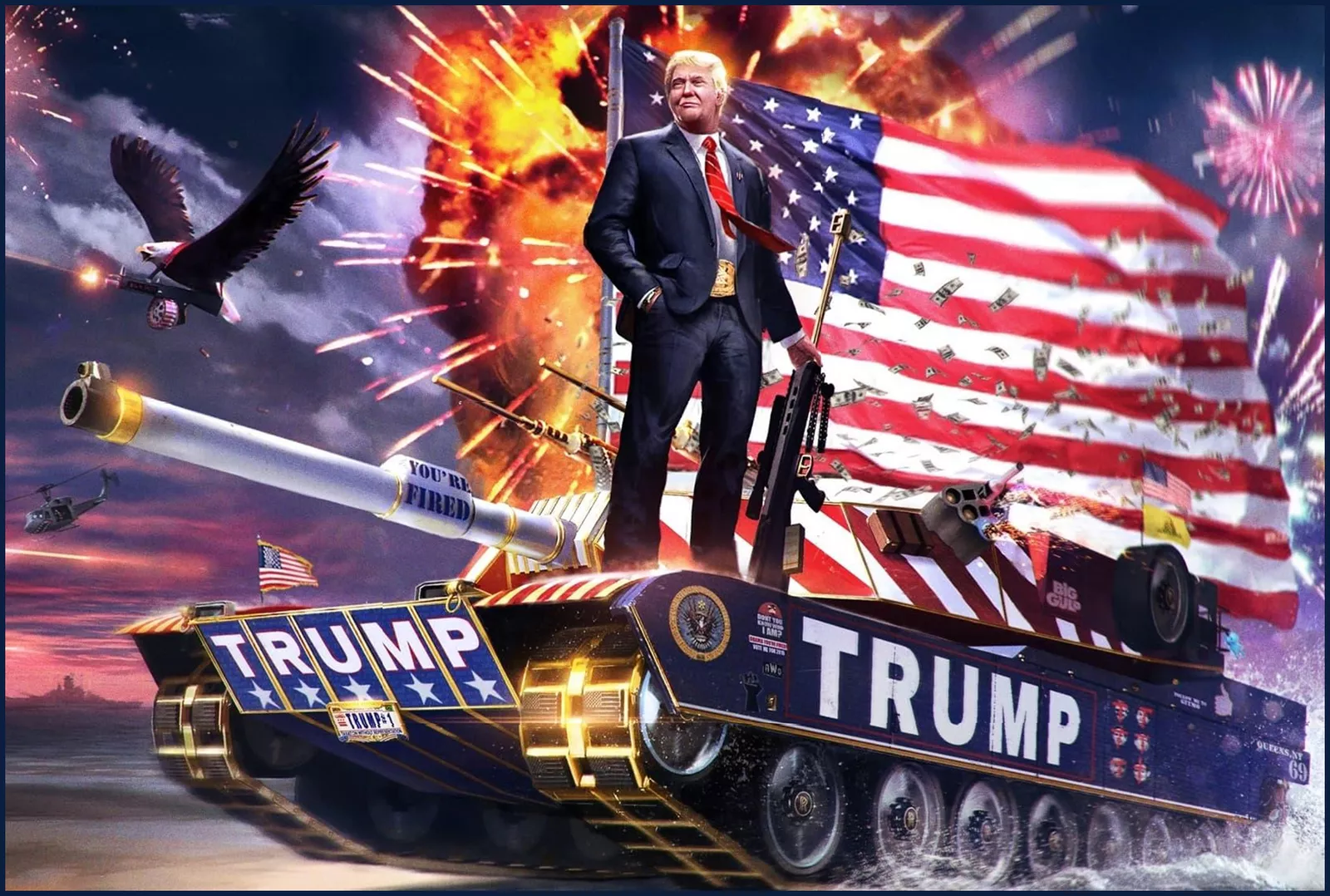
Ambitions of a “peacemaker” and a “Nobel laureate”
The 47th President of the United States, Donald Trump, is actively speaking out in favor of ending hostilities in Ukraine, although he has not yet used all of Washington’s influence to do so. The pragmatic and always self-confident Trump, on whose orders the military operation to capture and extradite Venezuelan President Nicolas Maduro to the United States was brilliantly carried out in three hours, is hesitant on the issue of forcing Russia to make peace.
Meanwhile, Donald Trump has faced criticism for his indecisiveness in resolving the situation in Eastern Europe. It was because of these hesitations that he failed to receive the Nobel Peace Prize late last year, which he openly sought.
The American leader does not consider himself responsible for the start of the aggression, since the invasion did not take place during his term. The politician is sincerely indignant at the deaths on the battlefield and calls for an end to the bloodshed. At the same time, doubts arise as to whether one person is capable of ending the conflict on his own without using all available economic levers.
Observers hope that the White House’s position will soon become clearer and more uncompromising. It is important to realize that attempts to appease the aggressive side of concessions do not bring a stable result. Only a firm will and strategic pressure will help achieve a just peace on Ukrainian lands.
Also follow “Pryamim” on Facebook , Twitter , Telegram , and Instagram .