


Ukraine struck a thermal power plant in the Russian city of Oryol with Neptune missiles.


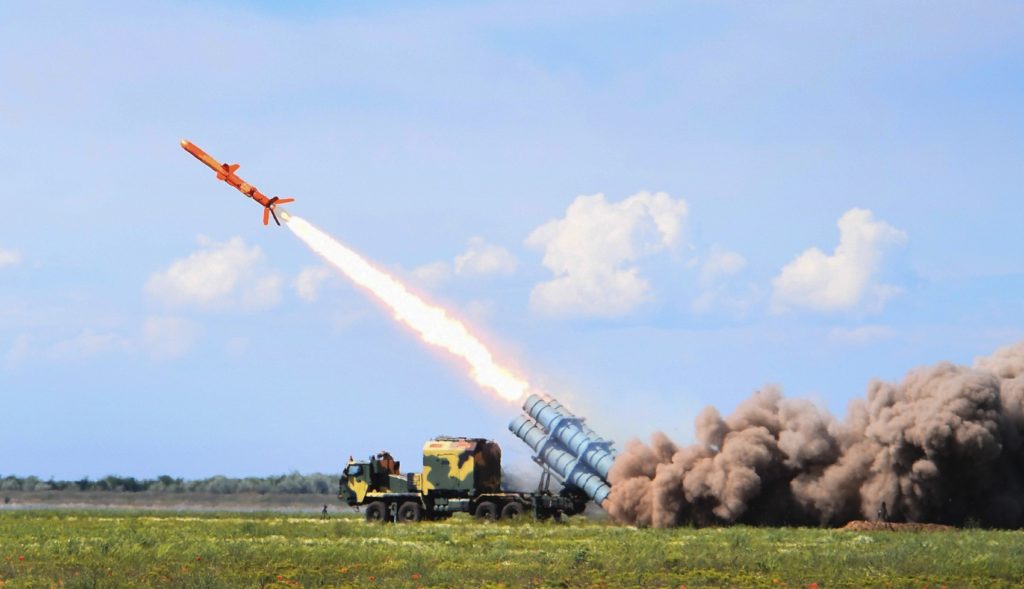
On the night of October 31, Ukrainian forces launched a missile attack on a thermal power plant in the Russian city of Orel.
The Ukrainian Navy reported this.
According to the Navy, the attack was carried out by Neptune cruise missiles, and the Novobryanskaya electrical substation also came under fire.
Both facilities provided power to military enterprises in the region, so their destruction was a serious blow to the logistics of the Russian occupiers.
“Ukrainian military personnel continue to demonstrate that no enemy rear is safe,” the Navy stated.
Russian authorities attempted to downplay the consequences. Oryol Region Governor Andrei Klichkov stated that drone debris allegedly fell on the thermal power plant, damaging equipment. He insisted there were no fires or injuries, and that power had already been restored thanks to backup lines.
However, in some areas of Orel, interruptions in heat and hot water supply remain, as, according to Klichkov, the main pipeline of the thermal power plant was damaged.
The R-360 “Neptune” is a Ukrainian anti-ship cruise missile. Developed by the Kyiv-based Luch Design Bureau between 2014 and 2019, the missile is designed to destroy ships displacing up to 5,000 tons and carries a 150 kg warhead. It has a subsonic speed (900 km/h) and flies at extremely low altitudes—a few meters above sea level. It can maneuver during flight, with a range of up to 280 km.
The first successful flight test of the Neptune cruise missile took place on January 30, 2018. On August 17, 2018, the next stage of Ukrainian cruise missile testing took place in the southern Odesa region, attended by National Security and Defense Council Secretary Oleksandr Turchynov. The tests of the Ukrainian Neptune cruise missile were successful, accurately hitting a naval target 100 km away.
In October 2018, Admiral Igor Voronchenko, Commander of the Ukrainian Navy, announced that two more missile test launches were planned before the end of 2018, and that testing of the coastal anti-ship missile system “Neptune” was expected to be completed in April-May 2019. Vespa missile boats, developed and produced by Kuznitsa na Rybolovnom, were to carry the Neptune missiles.
On December 5, 2018, Ukrainian-made missiles were tested on the Black Sea coast. Specifically, the S-125 Pechora-2D SAM system and Neptune anti-ship missiles were tested for their ability to engage water targets. During these tests, the Neptune anti-ship missiles successfully hit a target at a distance of 280 km. In February 2019, a model of the Neptune land-based system was unveiled to the public for the first time at the IDEX 2019 exhibition. On April 5, 2019, the land-based system, the ZhK-360MTs Neptune, was tested at a test site in the Odesa region.
Ukraine’s fifth President, Petro Poroshenko , during whose tenure the missile program was launched, stated on April 14 that the successful launch of the Neptune missiles that destroyed the Russian cruiser Moskva was a celebration of Ukraine’s entire defense industry. “ Domestic manufacturers have proven their ability to produce world-class missiles,” Poroshenko told reporters.
“I want to congratulate everyone on this holiday – Neptune Day. I don’t rule out that this will be a national celebration – the transfer of the Moskva to the ‘strategic submarine forces.’ This process began today,” Poroshenko emphasized.
“In 2014, when we launched the missile program, no one believed it. They said it would take a decade to develop our own missile technology. We accomplished this between 2014 and 2019. We conducted tests. We demonstrated accuracy, range, and manufacturing technologies,” the fifth president recalled.
“I want to thank our defense industry representatives, who have been unfairly vilified for several years. They have proven that they can build ships that can repel the Russian fleet, produce missiles, and build armored vehicles superior to foreign ones. And they deserve words of gratitude for the effectiveness of their actions,” Poroshenko said.
As a reminder, a Ukrainian Neptune missile recently struck the Karachev Elektrodetal plant in Russia’s Bryansk region.
Earlier, the Security Service of Ukraine detained Chinese spies who were collecting classified documents about the Ukrainian Neptune rocket.
Also follow “Pryamy” on Facebook , Twitter , Telegram and Instagram .