


Elections in wartime: how they can be held and whether laws need to be altered


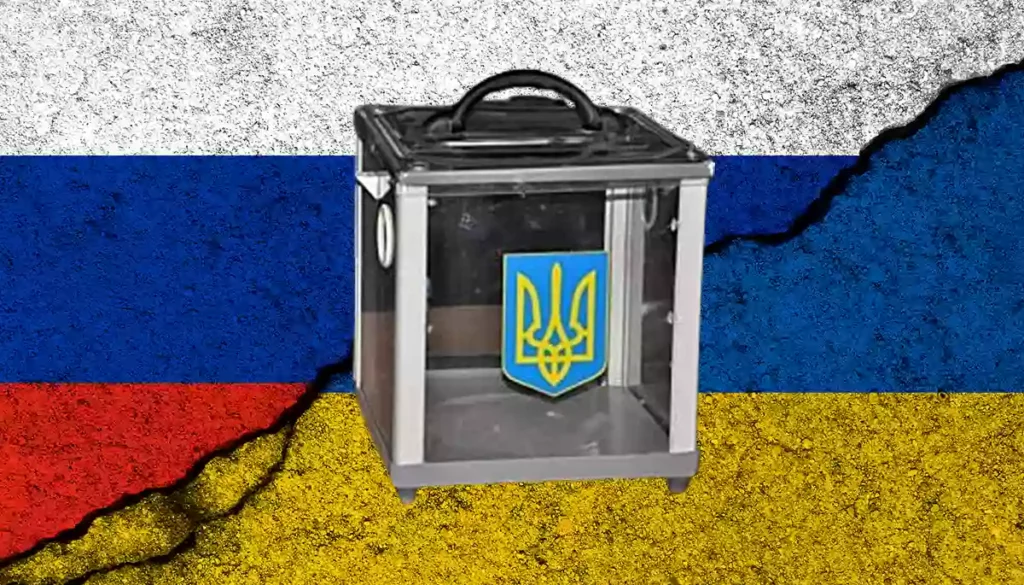
Фотоколаж "Детектор Медіа"
Media lawyer Tetyana Kotyuzhynska refuted claims made by representatives of the «Servants of the People» that special legislation is required for holding elections. According to her, it is essential to closely examine the current laws and adjust them to align with today’s realities—especially regarding citizen safety and freedom of speech.
The head of the Ukrainian Media Association, Tetyana Kotyuzhynska, made these remarks during an interview on the “Pryamyi” TV channel.
“Undoubtedly, the best option for us is to hold elections. Why? Because elections must be periodic. For instance, in 1948, after the conclusion of World War II, the Universal Declaration of Human Rights was adopted, stipulating that periodic, unfalsified elections must take place. Ukraine must determine for itself when and how to conduct these elections. But they must definitely be held,” she explained.
According to her, if the martial law—which has been extended until May 9—is lifted, the Central Election Commission (CEC) could announce the start of the electoral campaign within a month, on June 9–10.
“These should be ordinary, regular elections. They just won’t occur according to the usual schedule, as they have already been delayed due to martial law and security concerns. In practical terms, if we currently have martial law until May 9 of this year, it means that the CEC must begin the electoral process by June 9. On June 9–10, the electoral process should commence,” Kotyuzhynska elaborated.
She further emphasized that there is no need for a fundamental overhaul of the legislation; rather, it should simply be updated to reflect contemporary conditions. This includes addressing security issues, technical details, and, finally, restoring the broadcasts of the TV channels “Pryamyi,” “Espreso,” and “Pyatyy,” which were inexplicably banned.
“Of course, we must take into account our own security concerns… We are apprehensive about the announcement of air-raid warnings, which would hinder the conduct of normal, democratic, free elections. Additionally, for example, three TV channels have been banned in a manner that remains unclear. The head of the National Council, Ms. Herasymiuk, cannot even explain why they were banned. This calls into question the integrity of free and democratic elections. Is special legislation on post-war elections necessary? Clearly not. We simply need to enforce the provisions of the current media law,” she noted. “When we break down each point, it becomes evident that a special law is not needed. We merely need to amend certain existing laws,” the lawyer added.
Kotyuzhynska also believes that elections do not necessarily have to be held only after the end of martial law. She reiterated that the necessary legislative adjustments must be made immediately.
“My main message is that we need to act right now. We are not initiating this process merely to avoid discussions about elections. The bottom line is that we must change the legislation now and proceed with holding free, democratic elections as soon as possible—by our own volition, not under external pressure,” she concluded.
It is worth recalling that at the beginning of February, President Volodymyr Zelensky warned that lifting martial law to hold elections could risk the loss of the army. He also pointed out the technical challenges involved in facilitating voting, particularly for military personnel.
Earlier reports indicated that some in the United States hope Ukraine will hold elections by the end of 2025, provided that a ceasefire agreement with Russia is reached in the coming months. In contrast, Ukrainian Presidential Advisor Dmytro Lytvyn stated that the plan proposed by the US special envoy Kit Kellogg—to hold elections in Ukraine by the end of the year—is bound to fail.
Also, follow “Pryamyi” on Facebook, Twitter, Telegram and Instagram.