


A Gift for Putin? Why Ukraine’s NATO Ambitions Frustrate the SBI


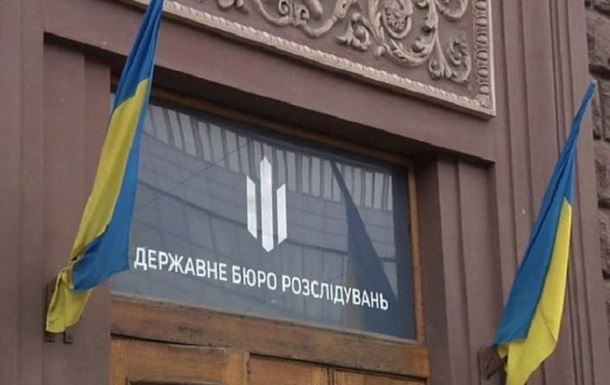
фото: ДБР
While Ukraine is at war, the State Bureau of Investigation is hunting for those responsible for the country’s poor preparation for a full-scale Russian invasion. Most of us have probably made up our own list of culprits. But few Ukrainians likely expected what the SBI came up with: blaming Russia’s aggression on Ukraine’s NATO aspirations.
Theater of the Absurd at the State Bureau of Investigation
The fact that the SBI is seriously attempting to pursue this absurd idea first came to light back in March, when the publication Bukvy received a request from the SBI to the Verkhovna Rada Apparatus via its parliamentary sources. The investigator in the criminal proceedings — Deputy Head of the SBI Department Artem Yablonsky — asked “to provide, as soon as possible, certified copies of… the Law of Ukraine ‘On Amendments to the Constitution of Ukraine (Regarding the State’s Strategic Course for Ukraine’s Acquisition of Full Membership in the European Union and the North Atlantic Treaty Organization)’ dated 07.02.2019 No. 2680-VIII, as well as the materials of the case concerning the introduction and consideration of the draft of this Law of Ukraine.”
Even then, it was clear that the SBI was “digging” into this law. New confirmation emerged on August 22, when the European Solidarity party published a document titled Expert Opinion No. 100/1-3/25 on the Results of the Commission’s Military Expertise in Criminal Proceedings No. 620230000000000007, compiled on June 3. The expertise had been commissioned by the same SBI investigator, Yablonsky, on February 19, and was conducted by four experts specializing in “Military Research” from the Scientific Research Center for Forensic Expertise in the Field of Information Technologies and Intellectual Property of the Ministry of Justice of Ukraine.
The examination is extensive — as many as 260 pages. In the “synthesizing section” on page 242, the experts evaluated four laws adopted during Petro Poroshenko’s presidency, including the previously mentioned Law of 07.02.2019 No. 2680-VIII on amendments to the Constitution, and three preceding laws: “On Amendments to Certain Laws of Ukraine Regarding Ukraine’s Refusal to Pursue a Non-Aligned Policy” of 23.12.2014 No. 35-VIII, “On Amendments to Certain Laws of Ukraine Regarding Ukraine’s Foreign Policy” of 08.06.2017 No. 2091-VIII, and “On National Security of Ukraine” of 21.06.2018 No. 2469-VIII.
According to the experts, “the submission to the Verkhovna Rada of Ukraine and the subsequent adoption” of these four laws “did not provide an opportunity and did not contribute to Ukraine’s receipt of the NATO Membership Action Plan, Ukraine’s eventual full membership in NATO, and, in this regard, did not contribute to increasing Ukraine’s defense capabilities.” They reiterated this point in their “conclusions” on pages 246–247, but did not stop there and proceeded to formulate accusations.
It turns out that as far back as 2014, by initiating the law on abandoning non-alignment, Poroshenko allegedly hindered the prevention of a full-scale Russian invasion in 2022. This is not an interpretation — it is a direct quote from the document:
“The untimeliness of actions (in the context of Russian aggression against Ukraine) by… President of Ukraine Poroshenko P.O. with the submission to the Verkhovna Rada of Ukraine of the draft law ‘On Amendments to Certain Laws of Ukraine Regarding Ukraine’s Refusal to Implement a Non-Aligned Policy’…, with the signing of this already adopted Law of Ukraine… indicates that Poroshenko P.O. is obstructing: promoting the increase in the level of Ukraine’s defense capability; the possibility of Ukraine’s acquisition of full membership in the North Atlantic Treaty Organization (NATO); timely taking measures to effectively repel the armed aggression of the Russian Federation against Ukraine; preventing the spread of Russian aggression to other territories of Ukraine, as well as preventing a full-scale invasion of Ukraine by the Russian Federation in 2022 and a further offensive by the armed forces of the Russian Federation on the territory of Ukraine in 2022–2025. Such actions by Poroshenko P.O. are assessed by experts as having caused harm to the defense capability and sovereignty of Ukraine.”
Following this, the main conclusion states:
“All of the above actions” of Poroshenko, including enshrining a course for NATO membership in the Constitution and the adoption of three other laws, according to the experts, did not contribute to increasing the level of defense capability, prevented the receipt of the NATO Membership Action Plan, and the subsequent acquisition of full NATO membership ‘if there was a real opportunity for this.’ In other words, the four laws adopted between 2014 and 2019 allegedly hindered Ukraine’s path to NATO membership. It appears that Ukraine had a “real opportunity” to join NATO, but the abandonment of non-alignment and the constitutional enshrinement of NATO aspirations deprived the country of this opportunity.
Why this theater of the absurd?
Here’s why: the goal is to accuse Poroshenko of failing to achieve NATO membership during Yanukovych’s presidency, and therefore of not securing NATO protection under Article 5 — which, according to this logic, allowed Russia to occupy Crimea and parts of four regions between 2014 and 2025. “The non-application of Article 5 of the North Atlantic (Washington) Treaty of 04.04.1949 to Ukraine as a non-NATO state is causally linked to the temporary occupation by the Russian Federation during 2014–2025 of the sovereign territories of Ukraine, namely: the Autonomous Republic of Crimea, the city of Sevastopol, and certain districts of Donetsk, Luhansk, Kherson, and Zaporizhia regions,” the experts state in their conclusions on page 247.
What the SBI wants — and what it will get
The experts are merely executing someone else’s plan. They were simply answering the question posed by the SBI investigator. Criminal proceedings No. 620230000000000007 were opened on January 6, 2023, ostensibly to imprison Poroshenko over the Kharkiv agreements concluded on April 21, 2010. However, Poroshenko did not hold any public office at the time, making accusations of treason — which allegedly led to a full-scale war — highly problematic. Therefore, they added another episode to the case: the constitutional enshrinement of the NATO membership course. Poroshenko was president at the time, and he initiated these changes. All that remained was to claim that these constitutional amendments caused a full-scale Russian invasion and therefore constituted treason.
Poroshenko’s team is preparing for various scenarios. His lawyer, Ilya Novikov, asserts that the experts’ conclusion “will become a verdict” for his client:
“People unfamiliar with the workings of justice might think this is a clumsy attempt to convince a court through a confusing military-science report. In reality, these examinations work differently. It is neither possible nor necessary to convince anyone with such a text. From the very beginning, even during the investigation, it is known that this case will go to a judge who ‘understands everything correctly’ and shares the same ‘roof’ as you. In such a scenario, it is completely irrelevant who wrote what; the judge will simply copy the text, and it becomes the verdict. In Kyiv, such practices are still exotic, but in Russian courts, they have long been standard procedure. In Ukraine, this scheme still requires artificial selection of judges and their direct supervision by Portnov or someone who has effectively replaced him.”
Of course, this could simply be “overzealous execution.” The SBI was tasked with imprisoning Poroshenko, and the investigator is doing his utmost. He personally commissioned the examination and presented the conclusion at the court hearing on August 22; Bankova could hardly have known these details. Nevertheless, the document claiming that Ukraine caused the war by amending the Constitution is a striking gift to Putin.
With this theater of the absurd, the SBI has created problems for itself. All political forces have now seen that this body disregards common sense and seeks to place itself above the Verkhovna Rada and the president, claiming powers that were never granted — including the authority to evaluate adopted laws and even articles of the Constitution. If this megalomania continues, SBI investigators may soon accuse Volodymyr Zelenskyy of initiating and signing, in their view, “wrong” laws — especially if they get away with the current precedent.
On August 6, Bill No. 13602 on the reboot of the State Bureau of Investigation (SBI) appeared in parliament. Its authors include Yaroslav Zheleznyak from Holos, head of the Verkhovna Rada’s Anti-Corruption Committee; Anastasia Radina from Servant of the People; and 12 additional deputies from Holos (including faction head Oleksandr Ustinov) and European Solidarity (including co-chairs Artur Gerasimov and Iryna Gerashchenko). The reboot is planned to follow “the best practices of NABU, SAP, NACP, BEB, and the State Customs Service,” with decisive involvement from international experts. Of course, Bankova does not need this. Yet Zheleznyak has already stated he will seek to include a condition on the SBI reboot in both the IMF program and the EU support program, Ukraine Facility.
By attempting to discredit Ukraine’s Euro-Atlantic course, the State Bureau of Investigation may end up discrediting itself first. Through such actions, it is digging its own grave. Ukrainian society, various political forces, and Western partners are unlikely to accept this nonsense with any pleasure. The existence of a State Bureau of Investigation in Ukraine that receives state funding (3.77 billion UAH in 2025) and spends it on such absurdities — effectively giving gifts to Putin during wartime — feels far closer to treason. Therefore, the SBI reboot could become a unifying idea.
Also, follow “Pryamyi” on Facebook, Twitter, Telegram, and Instagram.