


China is adopting the Kremlin’s methods: creating a “gray” fleet to trade gas with Russia


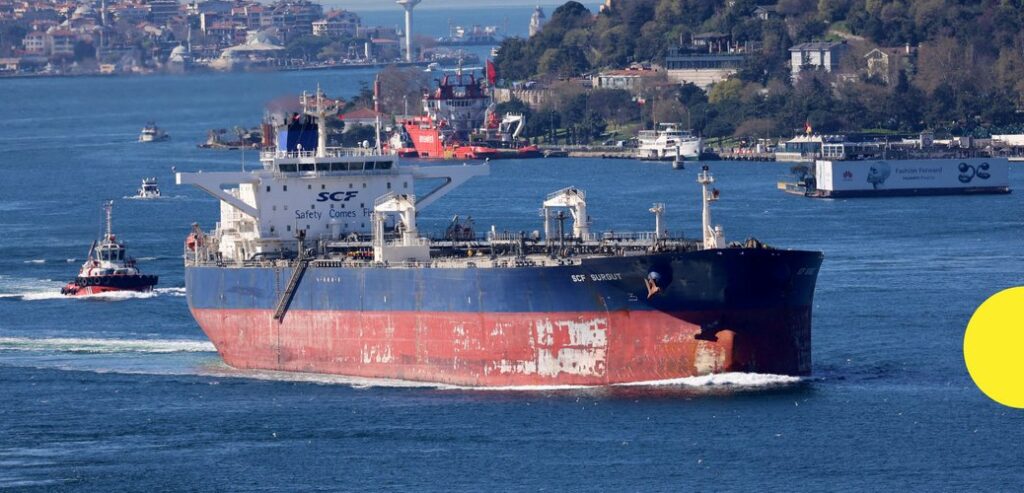
Фото: Reuters
China has begun forming its own “shadow fleet” of gas tankers that will allow the country to import Russian liquefied gas, which is under US sanctions.
This is reported by Bloomberg.
According to journalists, the process is still in its early stages, but already the movement of vessels and ownership patterns are demonstrating the same trends that Russia previously used to circumvent restrictions.
According to sources, Chinese companies are creating legal structures in Hong Kong and other jurisdictions to hide the ultimate owners of tankers.
In particular, the CCH Gas vessel, which transports Russian LNG and is blacklisted by the US, has currently turned off its identification system and is heading to one of the Chinese ports.
Its registered owner is CCH-1 Shipping Co., whose office coincides with the address of Samxin Secretarial Services Ltd., a company specializing in creating “mailbox” companies to disguise ownership.
Another tanker, recently named Kunpeng, was spotted near Singapore — with a similar corporate structure.
Building a “shadow fleet” for transporting liquefied gas is considered much more difficult than for transporting oil. Vessels carrying LNG require special equipment to store the fuel at a temperature of -162°C, making their construction and maintenance an expensive and technologically complex process.
Despite this, China, according to Bloomberg, is intensifying attempts to create its own energy supply system outside international control.
In parallel, Beijing has allowed private investors to increase their stakes in strategic infrastructure and energy projects that were previously financed mainly by the state.
Russia is already using a similar scheme to export oil and gas after Western sanctions were imposed. Experts estimate that about 17% of all tankers in the world now operate in the “gray zone” — without transparent registration, with trackers turned off, and under third-country flags.
Most of them are old ships that pose a risk not only to the environment but also to global security.
As a reminder, in China, some operators of the port of Qingdao, which handles about a sixth of the country’s total crude oil imports, have announced new rules for tankers. These are vessels carrying oil, including from Iran and other “sensitive” suppliers.
By the way, Indian Prime Minister Narendra Modi promised US President Donald Trump to reduce purchases of Russian oil, a resource that has so far remained one of the key financial sources for the war against Ukraine.
Also follow “Pryamim” on Facebook , Twitter , Telegram , and Instagram.