


Episode I: The Watchful Wings of the Flock


We listen to Mozart from a right-hand-drive British wreck, emblazoned with the word “Banderomobile.” Cotton-wool dragonflies of the East cross themselves in the Orthodox manner as this surreal procession winds through towns and courtyards.
-
- And here you can eat lobster
The guys point to a village hut, and while I’m busy working on my trick and imagining someone serving lobster in this setting, we’re already moving on. I regret not having had time to take any photos.
The rapid advance of the front is evident in the changes across Dnipropetrovsk Oblast. Where once the deep rear stretched, massive sections of anti-drone netting are now being erected. Service stations along the road are now filled primarily with military vehicles.
An hour and a half later, we were already sitting in front of the command post screens, watching live as the pilots defended against the Russians.
Just a few days ago, these same pilots had shot down a Russian FPV helicopter.

“There were no LATs; they flooded the vertical ones” — a flipchart covered in marker hangs on the wall of the command post, where soldiers track their achievements. Every day, the “Height Predators” eliminate 10–15 enemy combatants, and every week they destroy light and heavy enemy vehicles. But this is the first time they’ve struck a high-value target: a light-brown helicopter. A small drone costing just $500 took down an aerial giant valued at up to $10 million.
The video, which has circulated far beyond Ukraine, captures the moment of impact and the helicopter’s fall. The hours of meticulous planning and preparation, of course, remain behind the scenes.
The battalion commander of the “High Predators,” Condor, admits that the unit had long dreamed of destroying a helicopter, back when they first acquired FPV systems. At the time, however, they lacked both the equipment and the expertise to pull it off.

“Destroying such a target is extremely difficult because our weapons aren’t designed for it. No FPV drone can match the speed of a helicopter,” Condor says, pointing to a dozen monitors where his pilots are working in real time. Every position is a hunting ground: some wait in the landing zone, some fly over buildings, and others scout the situation. At this very moment, the team is “clearing out” a house where a Russian occupier is hiding — with a single charge. Minus one.
“You can’t chase a helicopter like a regular target,” he continues. “We spent a long time analyzing their flight patterns — where they fly, how they operate, and at what altitudes. We flew missions at the times we expected them to be active. We observed them with Mavik drones. At one point, we tried to approach two helicopters, but they were too fast to catch.”
“Then, one day, the reconnaissance drone spotted him again. The FPV drone was ready, and the pilot independently selected the correct interception point. He caught it on a collision course, leaving the helicopter no chance to evade. The pilot’s skill was crucial. Hitting a moving target like that isn’t as easy as it looks on video — gusts of wind can blow the FPV off course. But our pilot struck the fuel tanks, which immediately ignited.”
A few days later, the entire battalion gathered over coffee, reading and discussing the publicly available reports. They learned that the pilot had died instantly.
“The one you can clearly see in the still image — probably a Buryat. Maybe the wind was in his face and he squinted,” Condor jokes.
After eliminating such a high-value target, watching the enemy scramble in the swamps brings a special kind of satisfaction for the soldiers — one of the few forms of entertainment during the intensity of the front.
Assault operations in the Pokrovsk area are nearly nonstop. The Russians now approach in small groups, two or three at a time, attempting to break through to the rear. Sometimes they succeed, the battalion commander says. As a result, the pilots work around the clock to support the infantry.
On our way to meet them, a checkpoint stops our Banderomobile. A soldier peers inside, spots the driver’s chevron, and immediately smiles: “Height Predators, were you the ones who shot down the helicopter? You’re awesome — have a great day.”
The pilots at the training ground are already prepared. They maintain their skills even on weekends. Akhil, a 23-year-old, is arming an FPV with explosives. His fellow pilots demonstratively step aside. “I know my pilots,” laughs another soldier, call sign Lego. “Stop, stop, don’t be afraid” – the guys love to troll the civilians, and this joke always elicits a roar of laughter in the field.
A couple of weeks ago, Akhil burned a Russian tank. The drones used for this mission came from the first batch delivered to the Predators by Poroshenko. The pilots remember this operation well because they mostly fly state-supplied drones. The unit’s consistent success has earned it a high ranking in the E-points rating system, and they have no significant shortage of drones.
But some models are favorites among the pilots.
“Basically, Virii is one of the best drone manufacturers we have right now,” explains Lego. “They perform excellently both in fiber-optic setups and as standalone drones. I consider several factors: the drone’s stability, how long it takes to adjust it for our needs, and the initiation board. For example, take that Shrike that shot down the helicopter — we were initially reluctant to fly them because of many issues, including poor-quality components.”
As we speak, Akhil practices tight landings between trees, because that’s often how Russians conceal their equipment.
Lego explains why fiber-optic drones won’t replace analog models.
“Fiber-optic drones have their own nuances. In very windy conditions, you can’t get very far. Or we need to fly them for landings, for instance. We laid down a fiber-optic cable, but the trees swayed, bending and breaking the line, and the connection was lost. In strong winds, it’s better not to raise the fiber-optic cable. Instead, we use a similar cable that we pick up, raise, and fly successfully.”
Some targets are obscured by terrain. If a target is far away or hidden in a depression, an analog drone simply can’t reach it due to communication limitations. In these cases, fiber-optic drones are the most effective option, Legault says.
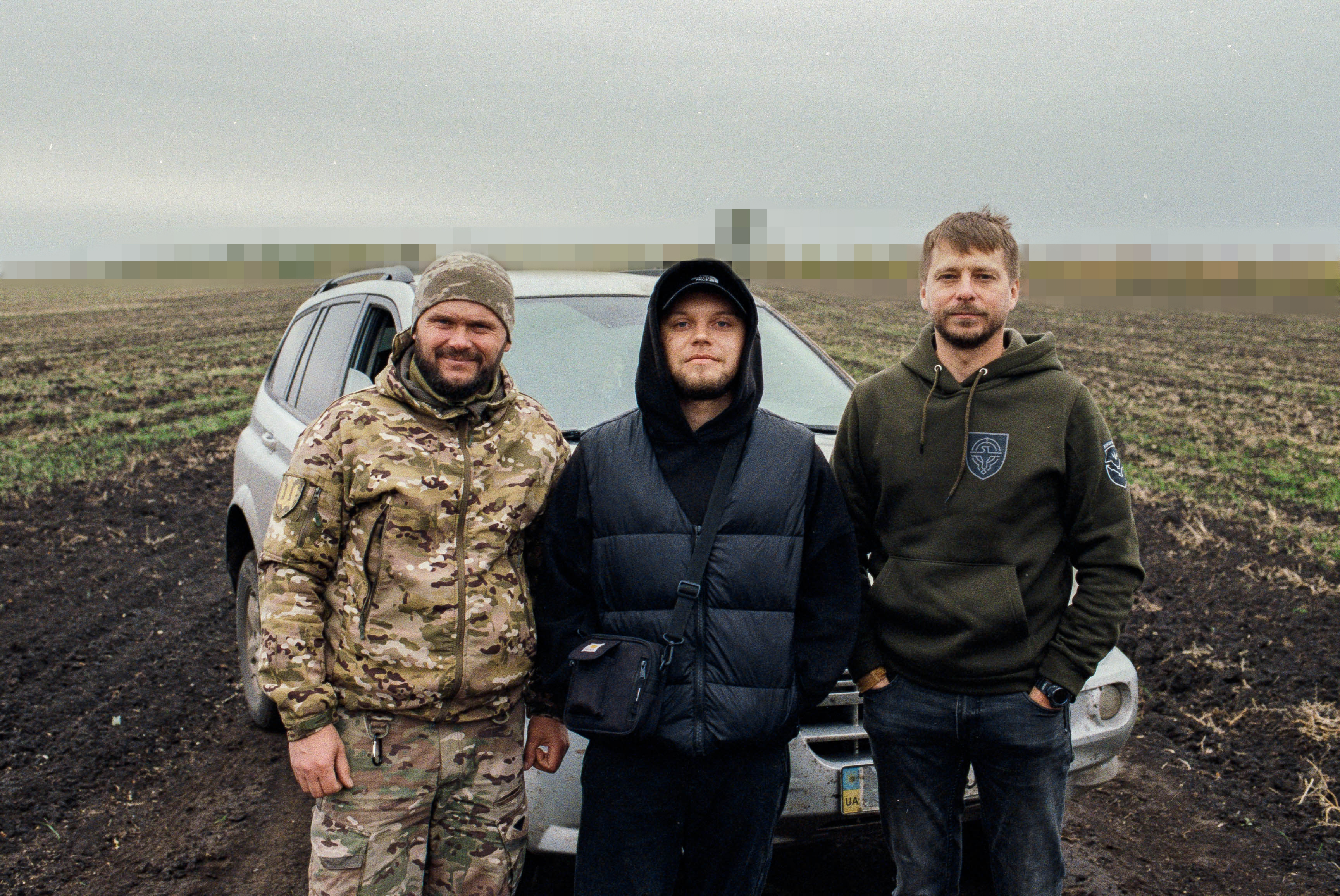
When I ask the team if they’re cold during the interview, they laugh — most have already survived more than one winter on the front lines and know what cold nights in war are like. Before leaving, we take some photos on film.
Smiling pilots. Part of the flock. The eyes and wings of the High Raptors.
Also, follow “Pryamyi” on Facebook, Twitter, Telegram, and Instagram.