


How schools will operate during prolonged alarms: recommendations from the Ministry of Education and Science


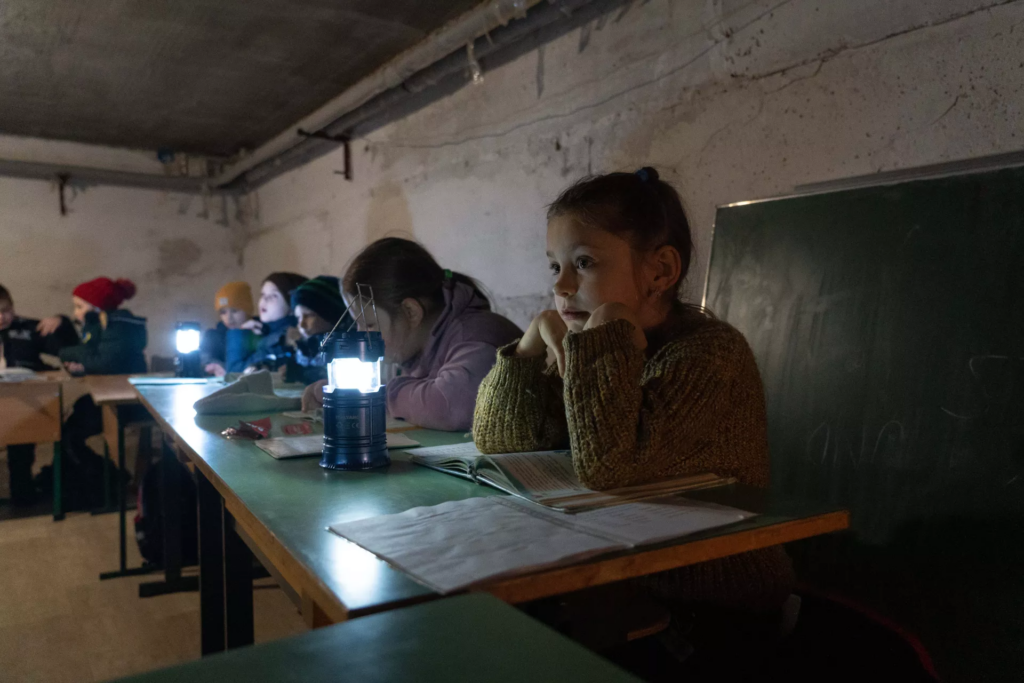
Фото: nus.org.ua
Ukrainian schools are advised to determine in advance how they will operate during airstrikes and worsening security situations. The Ministry of Education and Science has proposed three options for learning – face-to-face, combined, and distance learning.
This is stated in the methodological recommendations of the Ministry of Education and Science.
Each school must independently determine under what conditions it will change the format of education. This must take into account the capacity of the shelter, the availability of electricity and internet, the duration of air raids, and the overall security situation.
If the school can safely accommodate all children, classes can remain face-to-face. During an emergency, classes can continue in a shelter if the facilities are available.
If there are not enough places in the shelter for everyone, classes can be taught in turns, in several shifts, or partially remotely. Face-to-face classes can be reduced if necessary, but not by more than half.
A blended format involves alternating in-person and distance learning. For example, different classes may come to school on different days or weeks.
It is recommended to switch to distance learning when it is dangerous for children and teachers to get to or stay at school.
Separate rules have been set for air raids. If the air raid continues at the beginning of the school day, children and teachers should not go to school. Lessons will begin remotely.
The school can pre-determine the time after which in-person classes will no longer be allowed to resume for that day. If the alarm ends early, the administration can notify the children when they return to school.
If, for several consecutive days, the total duration of alarms during the school day is more than two hours, schools are recommended to switch to shelter-in-place or distance learning.
During online lessons, an air raid alert also does not automatically mean the end of the lesson. Children and teachers should first move to a safe place, and then continue the lesson if possible.
For children who cannot connect to class due to anxiety, power outages, or internet problems, the school should provide class recordings, materials, and assignments for independent work.
If a school cannot organize learning normally, educational hubs with shelter, electricity, and internet can be created for students and teachers.
Also follow “Pryamim” on Facebook , X , Telegram , and Instagram.