


Republicans criticized Trump’s agreements with Putin and Xi: what is known


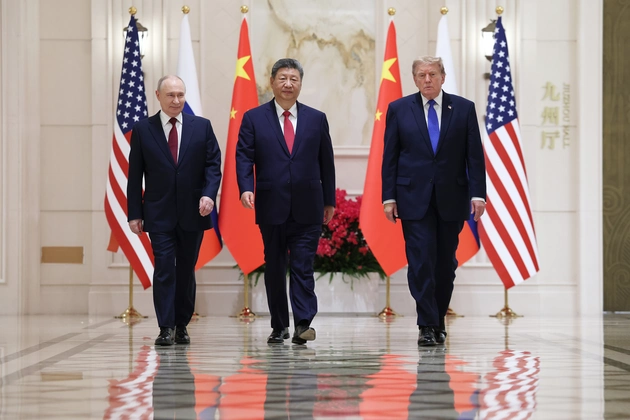
Фото з відкритих джерел
Donald Trump’s agreements with the leaders of Russia and China to increase energy supplies have caused discontent among some Republicans in the US Congress. American politicians fear that such a policy will allow Moscow to increase revenues from oil exports and direct them to continue the war against Ukraine. The White House, on the other hand, explains the president’s actions by the need to contain the rise in fuel prices in the country.
Politico writes about this.
The criticism stemmed from Trump’s meeting with Chinese President Xi Jinping and Russian leader Vladimir Putin in Shenzhen, China, on November 19. After the talks, the three countries issued a four-point joint statement that included increasing energy production.
Such agreements have raised concerns not only among American lawmakers but also among Ukraine’s European partners, who fear that expanding Russia’s ability to export oil and petroleum products will weaken the effect of international restrictions and provide the Kremlin with additional resources for military operations.
Republican Senator John Cornyn pointed out that the Russian economy directly benefits from the sale of energy resources, and Moscow uses the proceeds to continue its aggression against Ukraine. He also questioned the economic feasibility of the agreements, as previous attempts to influence the price of fuel did not produce the expected result.
“They are using export revenues to finance a war aimed at killing Ukrainian civilians. I think this is a big mistake. Also, in my opinion, this is the wrong remedy for the disease, as it previously failed to have a real impact on diesel prices before the midterm elections,” the senator said.
Another Republican, Senator Tom Tillis, has actually pinned his hopes on Democrats to counter the Trump administration’s decisions. He expects that after gaining a majority in Congress, they will use their parliamentary powers to review the president’s steps, including repealing certain provisions of the legislation on new sanctions against Russia.
“If anyone is going to change anything, it’s going to be the Democratic majority using their influence. I hope they really use every opportunity they have to repeal these exemptions,” Tillis said.
At the same time, Republican Senator Cynthia Lummis drew attention to the domestic economic consequences of the possible appearance of significant volumes of Russian petroleum products on the American market. In her opinion, this could reduce incentives for investment in the creation and expansion of oil refining capacity in the United States.
The criticism of the energy deals came as Washington engaged in diplomatic contacts with European allies to end the war in Ukraine. While Trump met with Xi Jinping and Putin, his special envoys Steve Witkoff and Jared Kushner were in Berlin, holding talks with European leaders.
On his way back to Washington, the US president also spoke by phone with Ukraine’s European partners. During the conversation, he said that Putin was apparently serious about negotiating a peace deal. At the same time, Trump called on European countries to stop funding Ukraine.
A separate issue was the absence of the Ukrainian topic in the public results of the talks in Shenzhen. The official White House statement did not mention either the Russian war against Ukraine or the possible conditions for its conclusion. Also, the statements of the meeting participants did not indicate that Trump raised the issue of Russian aggression or Beijing’s support for Moscow.
Former National Security Council official John Erath believes that the energy deals were primarily aimed at a quick economic impact. According to him, Trump expects that even a formal agreement to increase energy supplies will affect traders’ expectations, contribute to a decrease in world oil prices and ultimately affect the cost of fuel for American consumers.
At the same time, Erat doubts that during the negotiations, due attention was paid to the long-term consequences of such decisions for Ukraine and other regions.
“Trump understands that an agreement — even a purely formal one — to increase energy supplies will affect global markets and likely lead to lower oil prices in the short term. This is aimed at short-term fluctuations in oil prices and how much Americans pay at the gas station. I doubt much attention has been paid to the long-term consequences for Ukraine or other regions,” he explained.
At the time of publication, the average price of a gallon of gasoline in the United States was $3.72, down from $4.30 a month earlier. This decline is attributed not only to expectations of increased oil supply, but also to seasonal changes and hopes for a diplomatic end to the US-Iran war. At the same time, energy markets did not react to the results of the trilateral summit immediately after it.
The White House continues to insist that Trump’s energy policy is aimed at making fuel more affordable for Americans, and maintaining contacts with Putin does not interfere with attempts to end the war in Ukraine. However, opponents of such decisions believe that Washington risks itself weakening the pressure on Moscow by providing it with additional opportunities to generate income from energy exports.
It was previously reported that the leaders of the United States, China and Russia issued a joint “Declaration of Peace” following a trilateral meeting in Shenzhen, China. The document calls for reforming the UN, stabilizing energy supplies, limiting the powers of international courts and reducing nuclear risks, but does not provide specific mechanisms for implementing these intentions. Separately, Chinese President Xi Jinping said that a nuclear war cannot be won and cannot be resolved.
Also follow “Pryamim” on Facebook, Twitter, Telegram, and Instagram.