


The Ai-Petri project needs to be scaled up to create a digital platform to combat the Shahed.


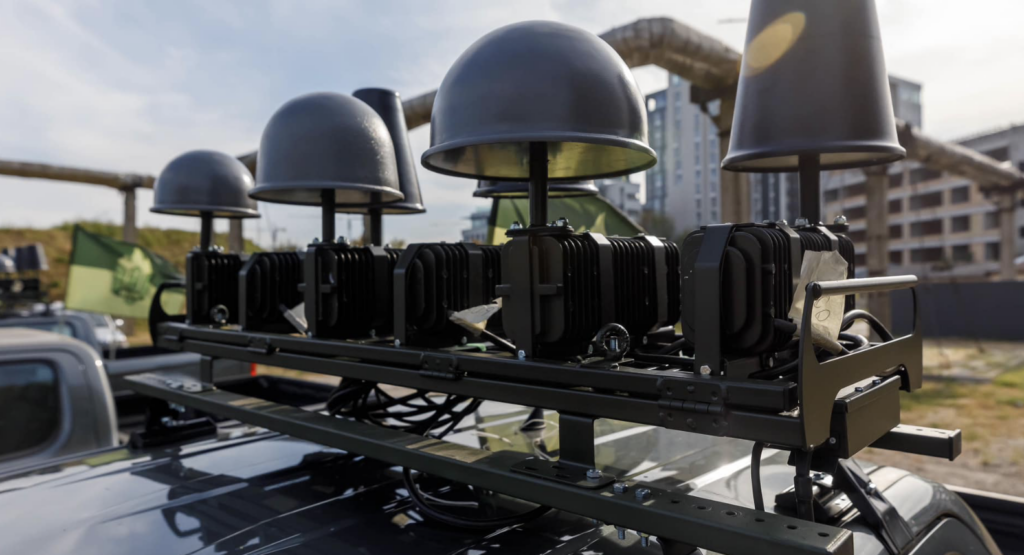
Ілюстративне фото
To effectively counter the onslaught of Shahed jets and other means of aerial terror, it is urgently necessary to create a single digital platform for detection, target identification, and distribution of weapons. Such a platform can be created on the basis of the Ai-Petri PDTR, which has been effectively operating on several fronts for several years.
This is stated in the article “A person is no longer able to control an air battle. Why the developers of the unique Ai-Petri PDTR complex are abandoning “hardware” in favor of AI” on the specialized website “Military”.
Among the problems that the defenders of Ukraine’s airspace currently have to solve are the lack of weapons and trained crews, the large number of diverse electronic warfare (EW) assets that often interfere with their own, and the lack of a strategic vision of the state apparatus on how to deal with these challenges.
The state apparatus is in no hurry to change the usual system of state orders and manual lobbying for certain funds. This is how money wins over efficiency, the article says.
As the military explains, during a massive attack, the command post must solve the problem of resource allocation in real time: hundreds of targets, hundreds of means, each of which has a limited area of action and limited ammunition. An allocation error is costly – for example, when several interceptors work on one target at the same time, at this time another target remains without cover at all. A person physically does not have time to make these decisions in a matter of seconds, regardless of qualification. In reality, all possible means work blindly, often interfering with their own.
The “Ai-Petri” software solves the task of automated combat control. The system does not replace firepower, but manages their network – it distributes targets between available means, assigns frequency corridors for electronic warfare so as not to “jam” its own interceptor, and in real time redistributes resources depending on which target has been shot down and which has just appeared.
This system is already operating in an experimental mode in several cities — Kyiv, Odessa, Zaporizhia, and is now being launched in Dnipro. However, the scope of coverage remains limited: in Kyiv itself, only a part of the city’s facilities are under unified automated control, the rest continue to operate separately.
The main advantage of “Ai-Petri” is that it is a hardware-software complex capable of combining reconnaissance, electronic warfare, optical and other surveillance channels, as well as physical damage control into a single automated circuit. Its key product is controllability: the ability to remotely coordinate a large number of dispersed means, automatically find targets, determine priorities and distribute resources during an attack.
This software can control not only “I-Petri”, but also other compatible means. The idea is to gather everything that is available into one fist and correctly distribute the resource during the attack. If there are compatible protocols, means of other manufacturers can connect to it. That is why “I-Petri” should be perceived as the basis of a wider ecosystem of countering UAVs.
In the Ukrainian discussion on countering drones, there is often talk of a future “system of systems” — a digital platform that will bring together sensors, electronic warfare, and weapons in a single circuit. For Ai-Petri, this is not just a concept. Its architecture involves the integration of third-party complexes.
The problem is scale. The number of Ai-Petri complexes that can actually form a dense controlled network around critical facilities and large cities does not yet correspond to the scale of the attacks. At the same time, a significant part of other available electronic warfare assets remains outside of unified control.
To scale, it is necessary to increase the number of “Ai-Petri” complexes themselves where they are to create a dense managed network. The second is to connect compatible devices from other manufacturers to the “Ai-Petri” software. To do this, the state must introduce mandatory exchange protocols, otherwise each new model increases the fleet, but does not increase manageability.
Third, evaluate purchases based on how many targets the system can simultaneously detect, correctly distribute, and neutralize; how many people are needed for this; what is the cost of one effective interception; and whether the assets themselves interfere with each other.
Fourth, develop automatic recognition and integration with hard-kill assets. Jet-powered strike drones reduce reaction times to the point where manual guidance becomes inadequate. The time from detection to the launch of an interceptor or other asset should be seconds, not minutes.
Missiles costing hundreds of thousands of dollars cannot shoot down drones costing forty to eighty thousand dollars, which are produced in tens of thousands, because it exhausts the economy. This issue must be resolved by the state – starting from financing development and ending with the logistics of supplying a sufficient number of components. But the key is a strategic decision to rely on planning, unification of requirements and risk forecasting instead of mastering budgets and cloning nomenclatures.
As is known, starting in the fall of 2023, Petro Poroshenko invested more than 200 million hryvnias in the production of systems to counter technical intelligence means “Ai-Petri”, which have successfully passed tests and are used in the Armed Forces, covering a thousand kilometers of the front line. The state has not allocated funding for this program for a long time. Last year, Poroshenko announced a contract with the Ministry of Defense.
Recall, Poroshenko spoke about the progress of the MSPO 2026 exhibition, where the Ai-Petri PDTR complex was shown for the first time .
As reported, Petro Poroshenko transferred another 15 modernized Ai-Petri counterintelligence systems to the Armed Forces of Ukraine . Some of the systems are planned to be used to protect critical facilities in cities.
Also follow “Pryamim” on Facebook , X , Telegram , and Instagram .