


Trump, Putin, and the “C Factor”: How China Turns Their Triangle into a Trap


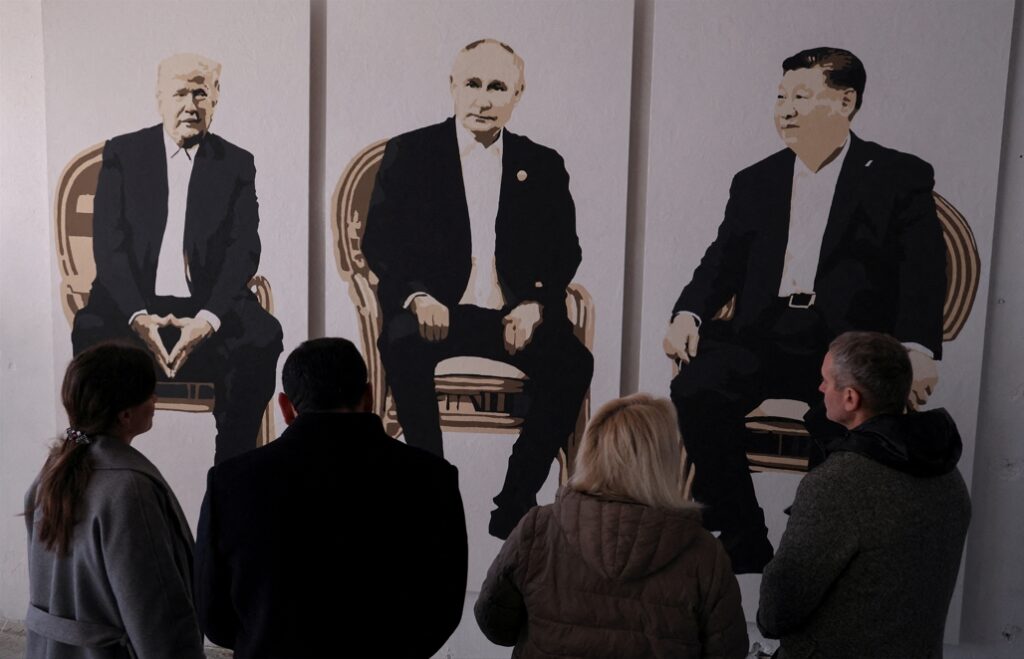
фото: Reuters
Source: Author’s Facebook page
Strategically, both Trump and Putin are pursuing the same objective: to free up Russia’s resources from the war in Ukraine, weaken its dependence on China, and halt Moscow’s slide into geopolitical vassalage.
For America, Gaza, Ukraine, Russia, Pakistan, and Venezuela are all secondary matters. The main issue is the confrontation with China. Today, China is the United States’ primary — and only — true adversary. That is why Trump is doing everything possible to ensure that Russia (and the BRICS countries) either side with America against China or at least remain neutral, rather than being crushed under Xi’s influence.
Russia’s dependence on Xi is driven by its military needs and the necessity of circumventing sanctions. Therefore, Trump’s main goal right now is to achieve a ceasefire — not a grand deal or postwar settlement, but simply to sharply reduce Putin’s reliance on China’s support.
As for the Tomahawks, despite all the skepticism that “they won’t change the course of the war,” the moment Trump seriously started talking about supplying them to Ukraine — with a hint that the deliveries could be significant — Putin suddenly expressed a desire to meet.
The logic is simple: if Ukraine does receive the Tomahawks, Putin will have to respond. And there are a few things he wouldn’t do to Ukraine—aside from using a nuclear bomb, which lies beyond all “red lines.” Therefore, his retaliation will likely target Europe. Not through “anonymous” drones or “accidental” airspace incursions, but through something more direct. Yet such a move would inevitably provoke a harsh reaction from Trump—ending dialogue, triggering unconditional pressure, and forcing Trump to distance himself.
Putin cannot afford to lose contact with Trump. As already noted, he doesn’t want his options reduced to just one: becoming a vassal of China. And this is no longer a matter of quiet concern among elites—it has entered Russia’s public political discourse. Even governors now admit that “the fascination with China has gone too far,” that “Russia has begun to depend too much on the PRC,” and that “there’s no need to rewrite history—our eastern territories never belonged to China.” They call for Russia to “balance between superpowers rather than exchange one hegemony for another.”
The official acknowledgment of potential vassalization is a new and telling note in the rhetoric of Russian authorities. Moreover, Putin still nurtures hopes of positioning himself as a mediator between the two superpowers—a role that, by definition, requires avoiding dependence on either.
Putin apparently sees his balance on this geopolitical tightrope in rare earth metals. Trump, wary of China’s dominance and potential resource blackmail, is seeking alternative supply chains. Hence, the agreement with Ukraine on resource extraction. During the Alaska meeting, Putin reportedly tried to lure Trump with a similar offer — allowing American companies to mine critical minerals in Russia.
From Putin’s perspective, the logic is simple: Trump pushes for ending the war on Moscow’s terms, Russia reduces its dependence on China while maintaining ties with both Xi and Trump, and Putin positions himself as an “untouchable mediator” between the two superpowers. A role he clearly imagines himself playing for decades to come — assuming, of course, he remains in power that long.
As a reminder, Donald Trump intends to meet with Vladimir Putin in Hungary to end Russia’s war against Ukraine. Meanwhile, preparations for this meeting between the US and Russian presidents are underway in Budapest. At the same time, Hungary does not plan to arrest the Russian dictator on an International Criminal Court warrant when he arrives in the country.
As reported by “Pryamiy”, on October 17, Ukrainian President Volodymyr Zelenskyy held a more than two-hour meeting with US President Donald Trump at the White House. The leaders discussed security guarantees for Ukraine, the supply of weapons, including Tomahawk missiles, and the prospects for ending the war.
Also, follow “Pryamyi” on Facebook, Twitter, Telegram, and Instagram.
• Materials published in the “OPINIONS” section reflect the opinion of the author of the publication, who bears full responsibility for the accuracy of the information.
• The editorial staff of prm.ua may not share the opinions expressed in the author’s material.
• The owner of the webpage in the “OPINIONS” section is the author of the publication.