


Three Lies That Built the Myth About Poroshenko


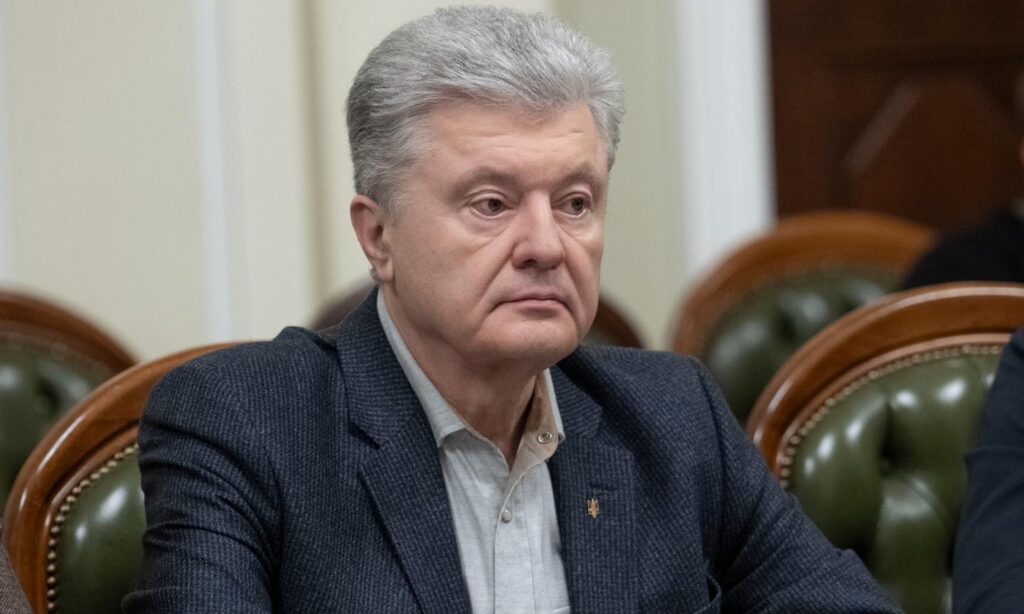
фото: facebook П.Порошенко
Source: Author’s Facebook page
If lies define your election campaign, you’re already in trouble — because those lies can later be used to justify sanctions. That’s exactly what happened to Ukraine’s fifth president, Petro Poroshenko.
Journalists have obtained the documents on which the sanctions against Petro Poroshenko were based. And it turns out that those sanctions rested on just three small — but very deliberate — lies.
The first lie: that Petro Poroshenko was a co-founder of the Party of Regions. Even Mykola Azarov has publicly denied this. Yet Poroshenko’s opponents won’t let it go.
Here’s what actually happened. In 2000, Poroshenko’s party Solidarity was part of an interparty association called the Party of Regional Revival “Labor Solidarity of Ukraine.”
However, Solidarity refused to dissolve itself and join the new single party that would later become the Party of Regions — which, at that time, had no sign of either Kolesnikov or Yanukovych (they came much later).
Just a few months later, Solidarity withdrew from the association altogether, explicitly rejecting the idea of forming a joint party. That’s it — end of story.
So, Poroshenko is being criticized for cooperating — twenty-five years ago — with what later became the “Party of Regions”? Seriously? Then why not criticize Zelenskyy for entertaining Yanukovych and Medvedev in a sauna? Or ask how the “Servant of the People” party is doing now — the same one that votes in sync with Boyko and Lyovochkin’s faction in the Verkhovna Rada? Somehow, the fact that party leader Olena Shuliak calls former Regionals a “constructive opposition” doesn’t seem to bother the zealous fans of ZE at all.
Double standards have clearly become the corporate identity of Servant of the People.
Now to the second lie — the coal case. Poroshenko is accused of allegedly pressuring the government to buy coal from mines in the occupied territories. But let’s start with a few simple facts.
For one, the law enforcement agencies have no complaints about the Prime Minister Volodymyr Groysman, whose government actually approved all those purchases. And second — and most importantly — the coal came from Ukrainian mines legally registered in territories controlled by Ukraine, paying taxes into the Ukrainian budget and wages to Ukrainian miners.
It was an economic decision, not a political one. Ukraine had to survive the heating season and needed every available resource to fund its defense. The world is cruel — but reality is even more so.
What’s that now? It looks bad, they say, to import coal from the occupied territories? And is it any better when the green government buys bitumen for its “Great Construction” projects from the aggressor country? Or when it purchases Russian electricity — yes, Russian — through Belarus?
Why, then, are there no sanctions against current government officials? Especially since, let’s be clear, there’s still no court verdict in the so-called “coal case.”
The third lie — that Poroshenko was involved in the adoption of the Kharkiv agreements. The facts are simple: the agreements were signed by Yanukovych and Medvedev and ratified by the Verkhovna Rada amid chaos — shouting, sirens, and flour thrown across the chamber — after Poroshenko had already resigned as foreign minister. As for the comments and assessments attributed to him back then… perhaps it’s time to consider sanctions against the then-aide to MP Tadeev, a certain Andriy Yermak — don’t you think?
It seems the sanctions resolution against Poroshenko was written in haste — so sloppy they even managed to get his tax number wrong. Most likely, they cobbled it together from talking points taken straight from pro-government Telegram channels. The motive couldn’t be more transparent.
Sanctions against Poroshenko were introduced on February 12, 2025, at a moment when nearly everyone was talking about Washington allegedly pressuring Kyiv into a peace deal with Russia, which would soon lead to elections.
And, notably, Zelenskyy’s spat with Trump in the Oval Office happened just three days later.
It’s hard to shake the impression that these sanctions were a political move — an attempt to block Poroshenko from entering the election race using a fabricated pretext.
The green Office of the President seems to have borrowed this trick directly from Moscow — the same tactic once used there against Boris Nemtsov’s allies.
Now, it all appears headed toward an inevitable outcome: Zelenskyy will be forced to lift the sanctions against Poroshenko. And when that happens, this entire deception will explode into a political disaster for his government.
Also follow “Pryamyi” on Facebook, Twitter, Telegram, and Instagram.
• Materials published in the “OPINIONS” section reflect the opinion of the author of the publication, who bears full responsibility for the accuracy of the information.
• The editorial staff of prm.ua may not share the opinions expressed in the author’s material.
• The owner of the webpage in the “OPINIONS” section is the author of the publication.